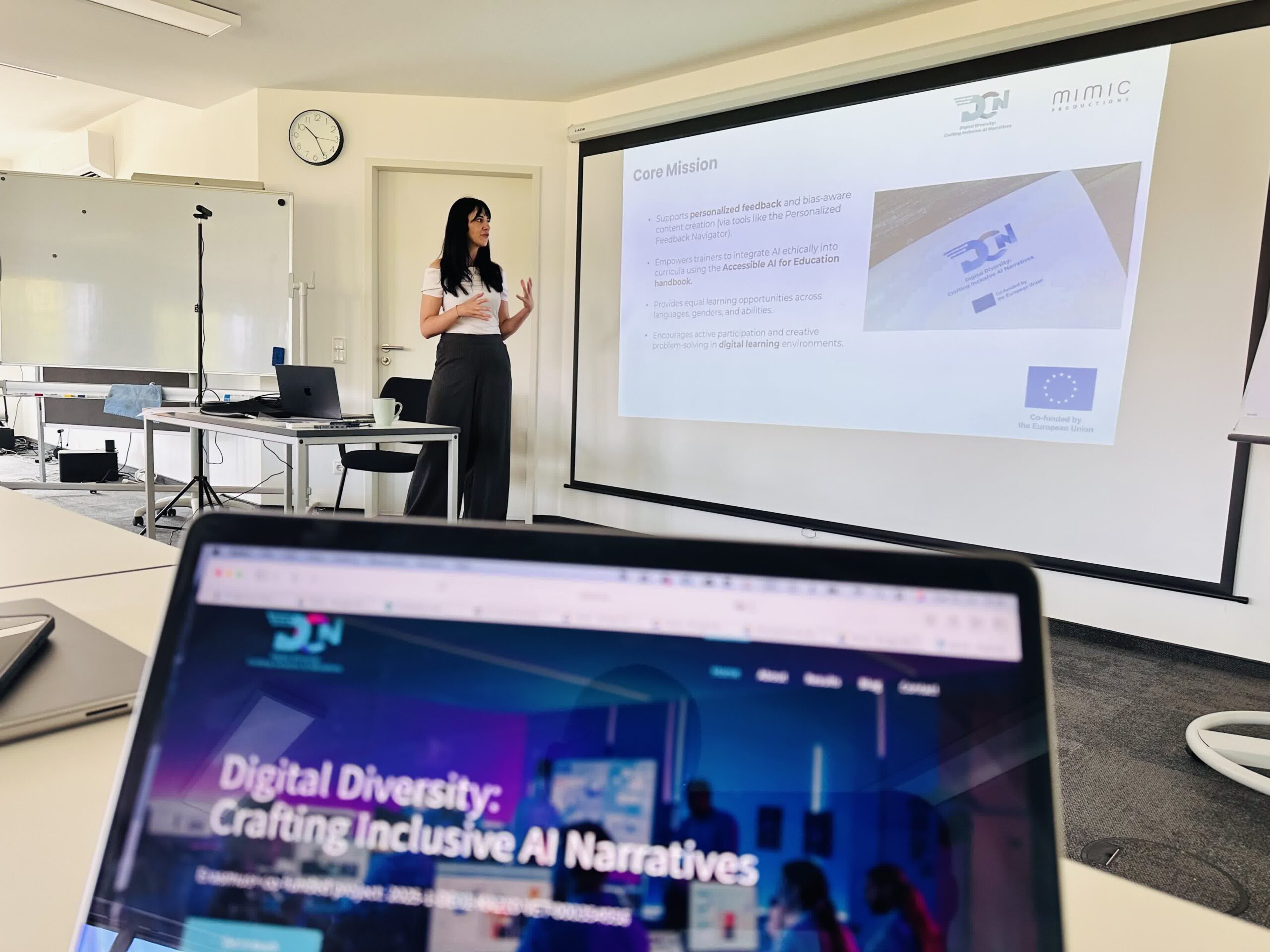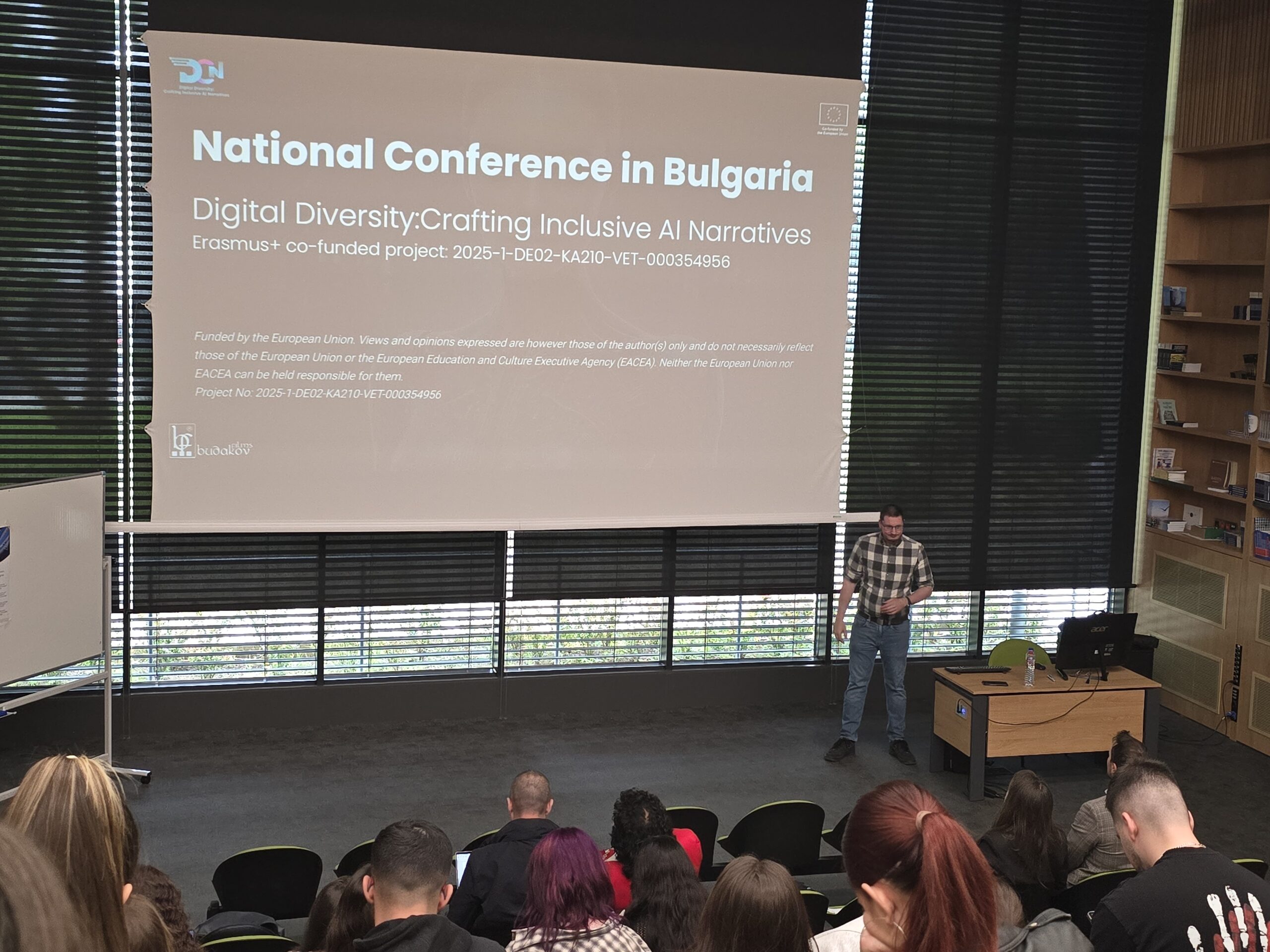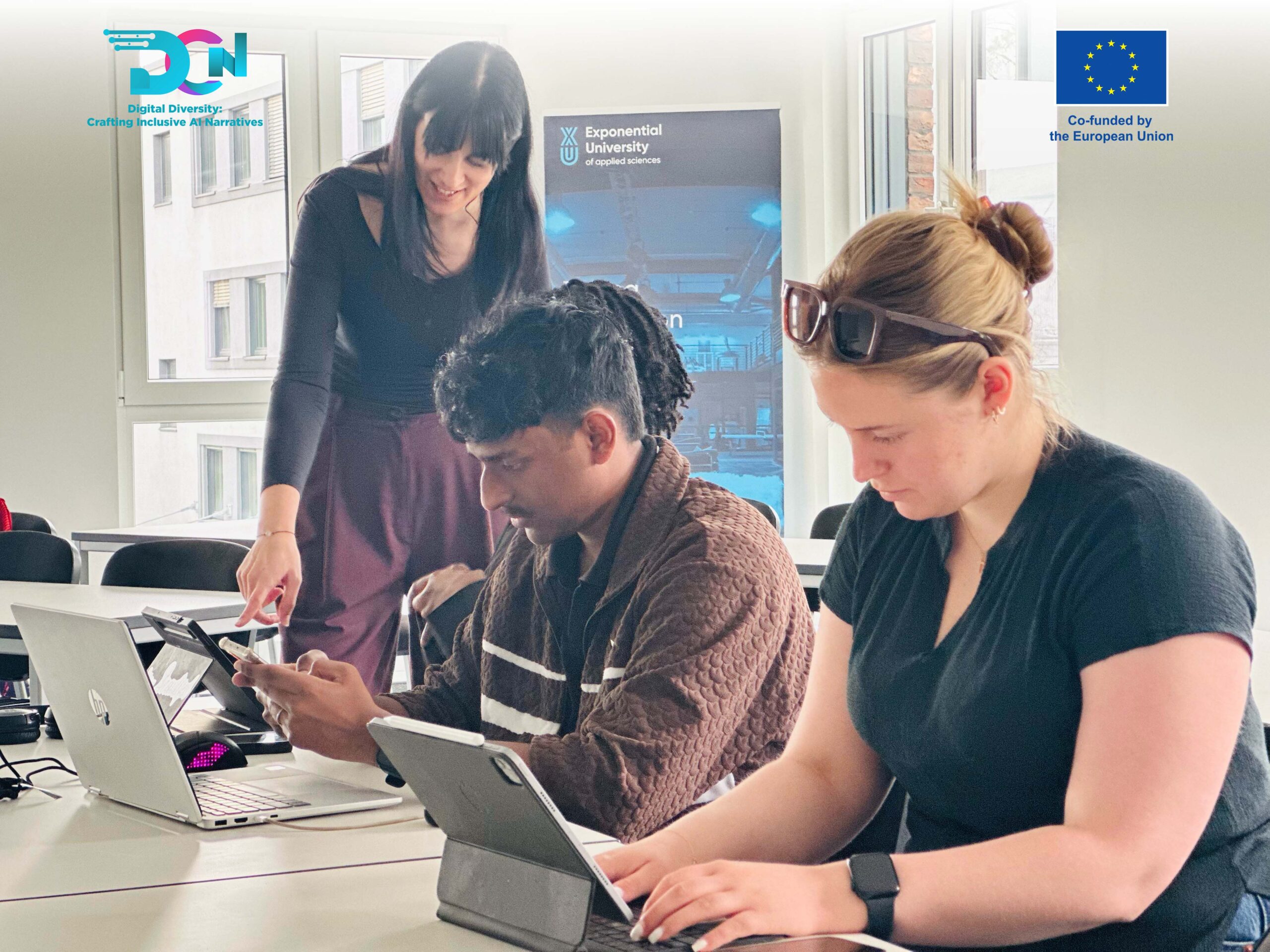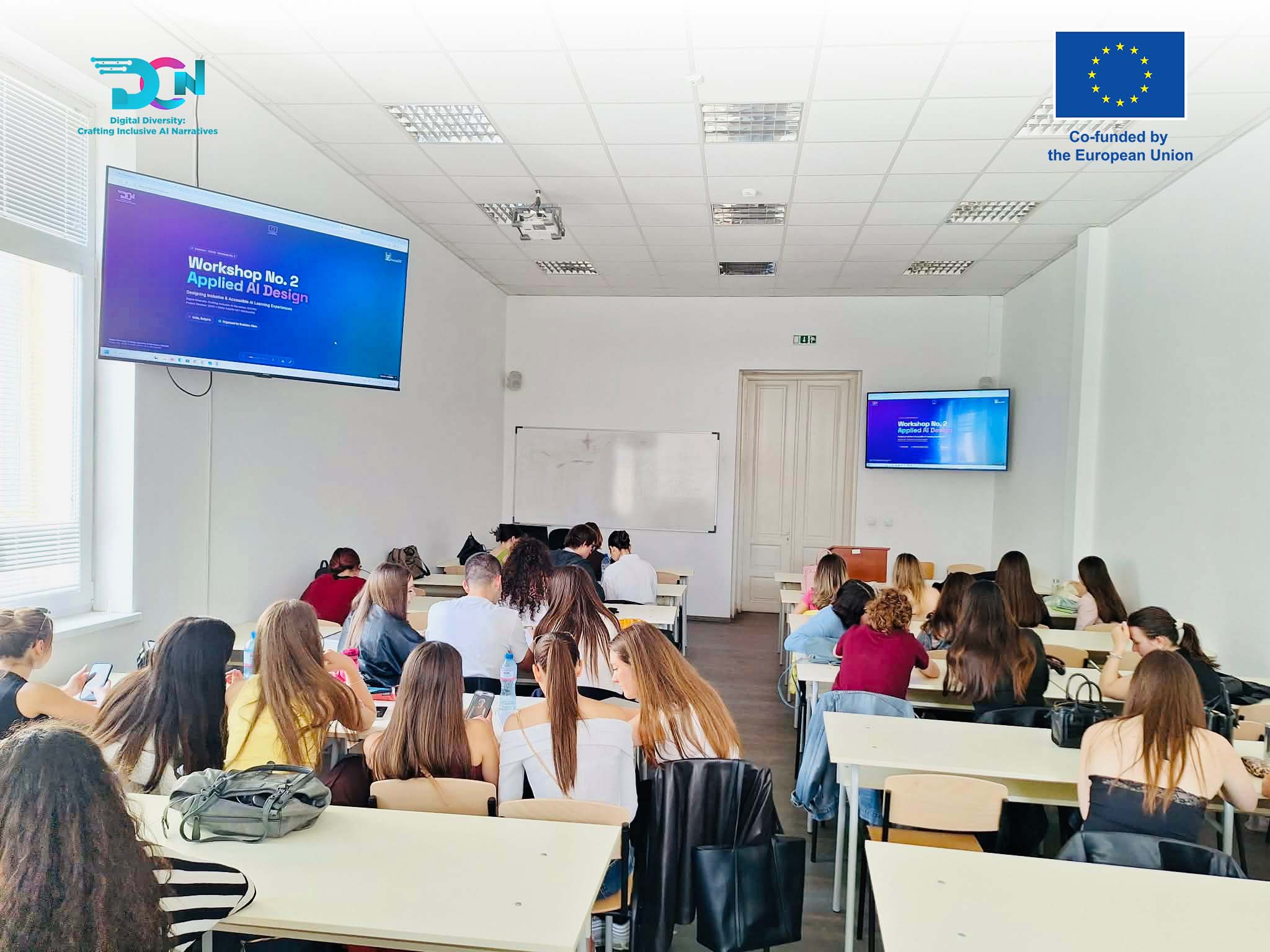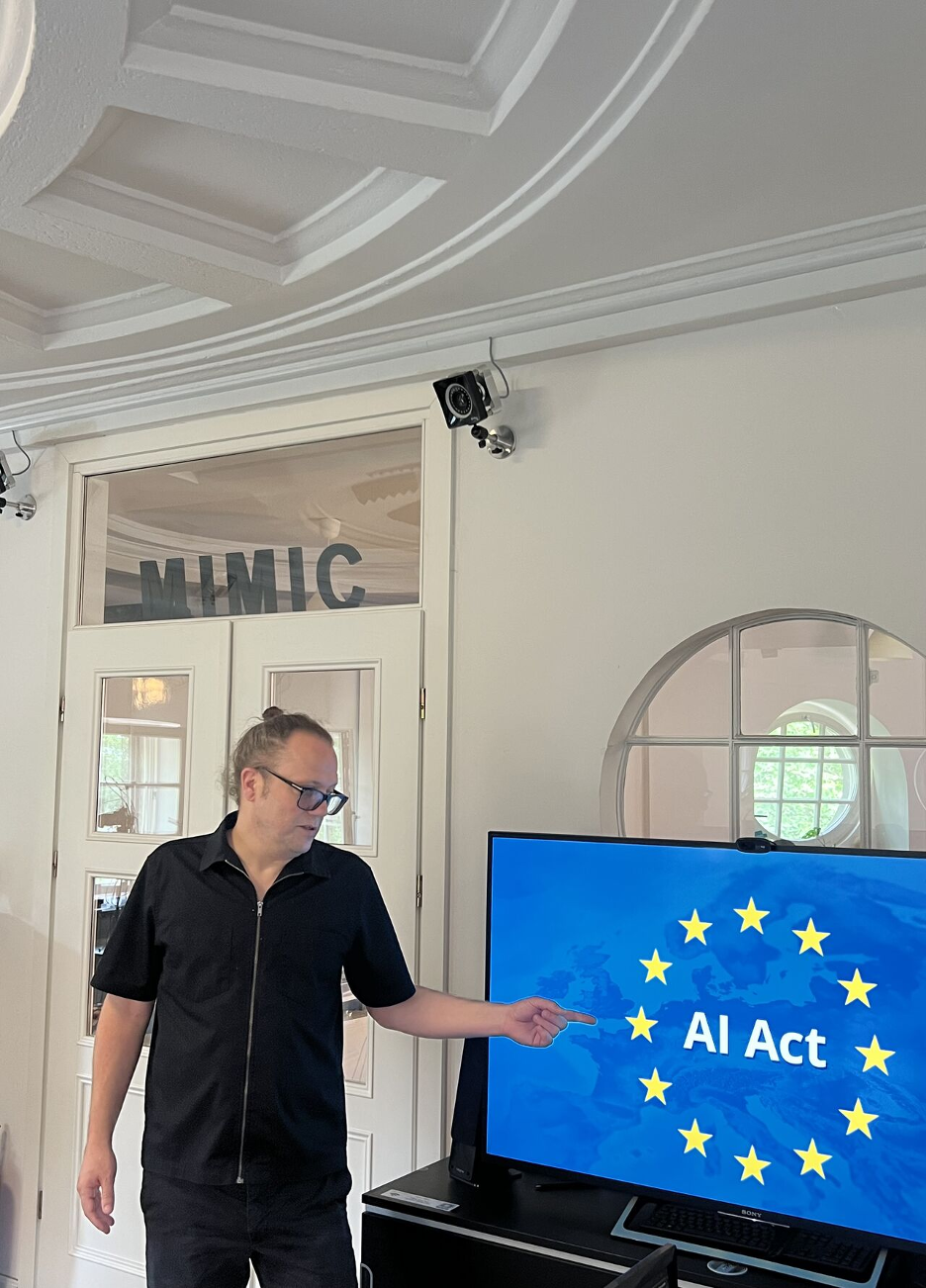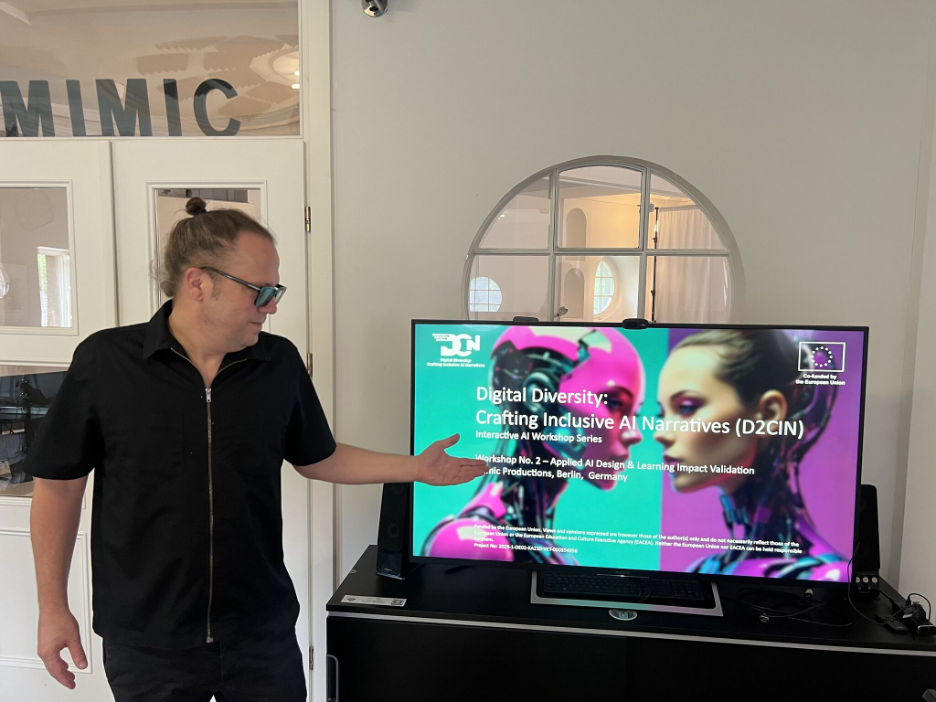

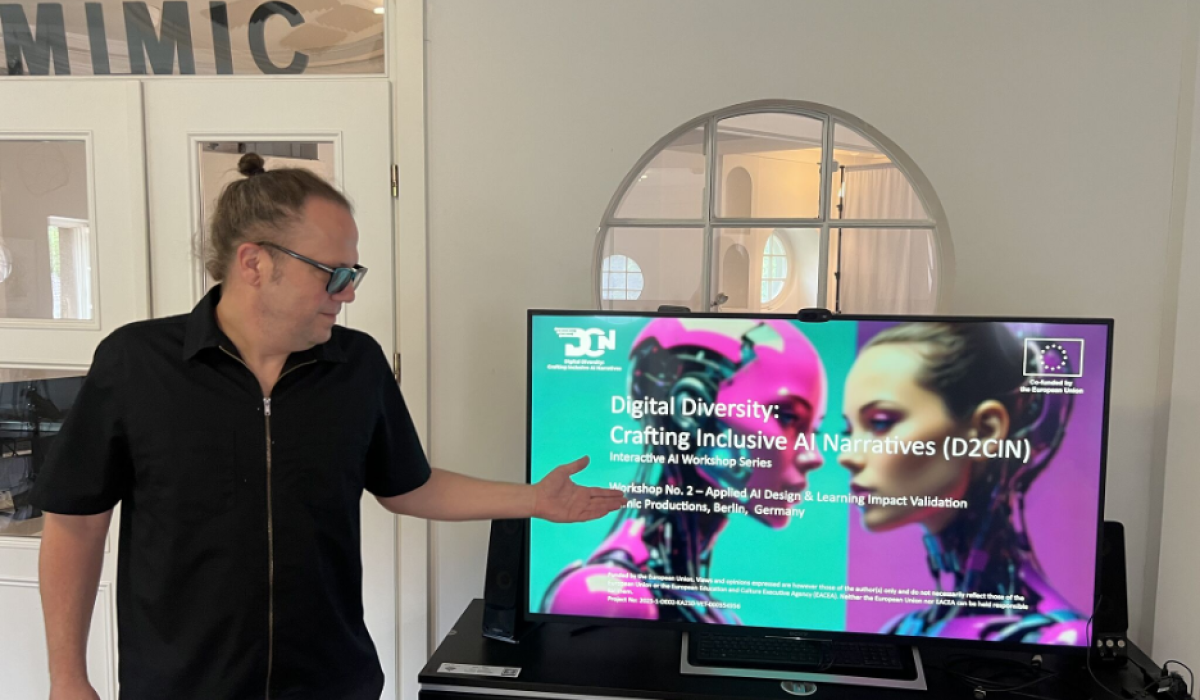
Mimic successfully hosted Workshop No. 2 in Berlin as part of the Erasmus+ co-funded project Digital Diversity: Crafting Inclusive AI Narratives (D2CIN) . The workshop brought together participants, facilitators, and invited guests from Berliner Hochschule für Technik to explore how interactive AI, applied AI, accessibility, and inclusive design can shape more inclusive learning experiences.
Building on the validation work carried out during Workshop No. 1, the second workshop focused on practical AI applications, user-centred design, feedback, and iteration. Through hands-on activities and collaborative discussions, participants worked with conversational AI and 3D avatars, exploring how these technologies can support more engaging, accessible, and inclusive learning experiences.
The workshop created a dynamic learning environment where participants could experiment with emerging technologies, exchange ideas with facilitators and invited guests, and reflect on the role of artificial intelligence in improving learning, communication, interaction, and educational access.
From Pilot Feedback to Practical AI Use
While Workshop No. 1 concentrated on testing and validating the Inclusive AI Handbook and the Personalized Feedback Navigator, Workshop No. 2 moved the learning process forward by placing greater emphasis on practical experimentation. Participants were invited to apply inclusive AI principles in realistic learning scenarios and to examine how interactive AI tools can be used to support learner engagement and accessibility.
The session focused on the workshop topic areas highlighted in the communication: interactive AI, applied AI, accessibility, and inclusive design. These themes were explored through practical demonstrations, group activities, and reflective discussions that encouraged participants to connect technology with real educational needs.
Exploring Conversational AI and Avatars
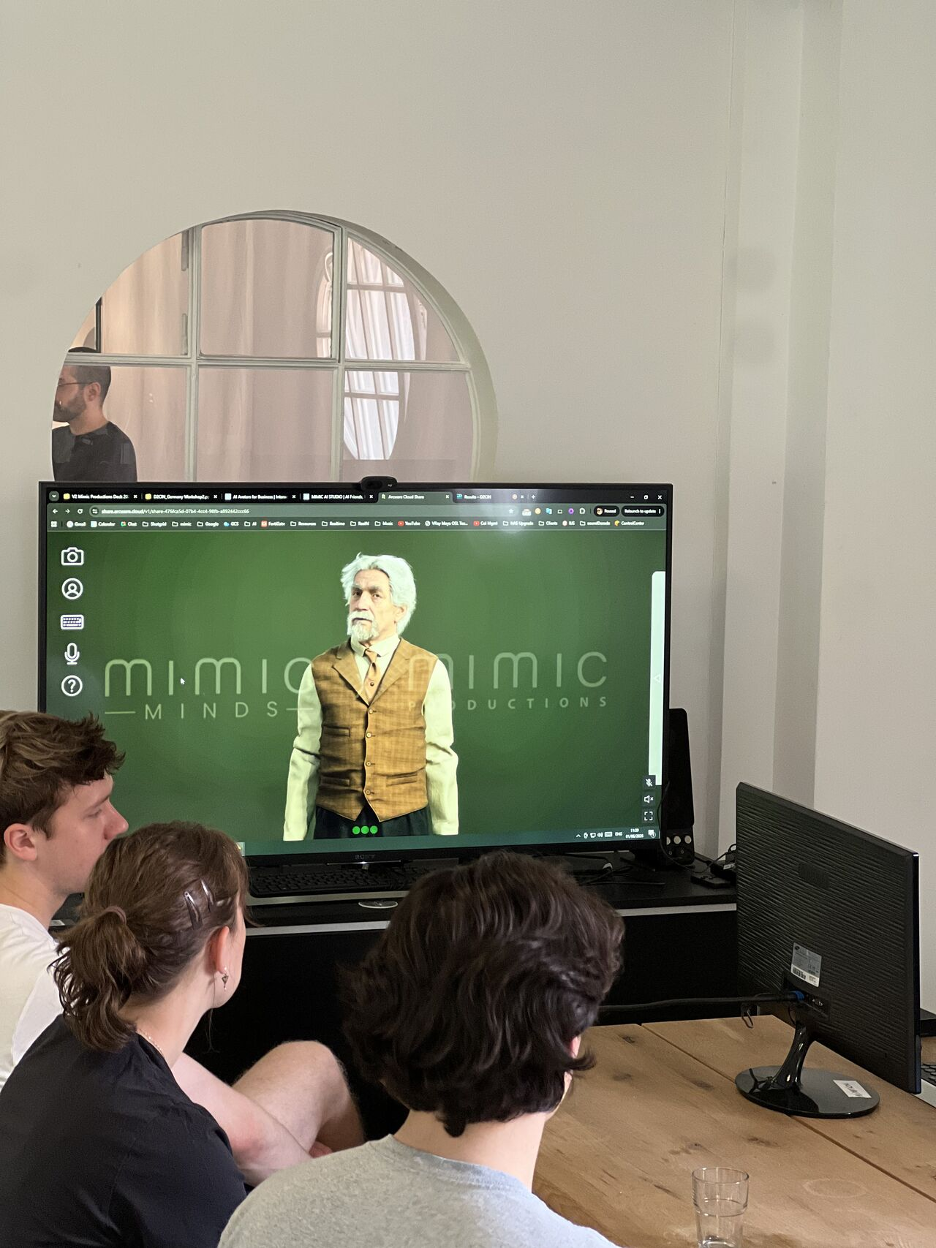
A key element of the Berlin workshop was the exploration of conversational AI and 3D avatars. Participants examined how AI-powered interaction can support communication, guidance, and learning engagement in educational settings. They also reflected on how avatar-based tools can be used to create more accessible and user-centred learning experiences when designed with inclusion and diversity in mind.
The hands-on activities allowed participants to move beyond theoretical discussion and directly engage with AI-supported tools. By working with conversational interfaces and avatar-based technologies, participants considered how digital learning environments can become more interactive, adaptive, and responsive to different learner profiles.
Group Work and Idea Exchange
The workshop brought together participants, facilitators, and invited guests in a collaborative format that encouraged exchange, experimentation, and co-creation. Participants discussed how AI can support inclusive communication, how accessibility can be embedded into digital tools, and how applied AI solutions can be developed responsibly for education and vocational training.
Group-based activities supported peer learning and enabled participants to test ideas in a practical setting. The discussions highlighted the importance of designing AI-powered tools that are not only innovative, but also understandable, accessible, and useful for diverse learners and educators.
Presentations and Reflections
The day concluded with presentations and reflections, showcasing creative approaches to AI-powered learning, communication, and interaction. Participants presented their thoughts on how conversational AI and 3D avatars could be used to support inclusive education, strengthen learner engagement, and improve accessibility in digital learning environments.
These reflections demonstrated the value of combining applied AI with inclusive design approaches. Participants identified opportunities for AI-supported learning tools to provide more personalised interaction, support different communication needs, and create more engaging pathways for learners in diverse educational contexts.
Inclusive Learning Through Applied AI
The Berlin workshop confirmed the relevance of interactive AI and avatar-based learning tools for the future of inclusive education. By focusing on accessibility and user-centred design, the workshop encouraged participants to think critically about how technology can be used to remove barriers and support equitable participation.
The activities also reinforced the D2CIN project’s wider mission to develop ethical, accessible, and inclusive AI narratives for vocational education and training. The workshop showed how applied AI can be used not only as a technical innovation, but also as a practical instrument for improving learning experiences and supporting diverse educational communities.
Contribution to the Wider D2CIN Goals
Workshop No. 2 in Berlin contributed directly to the objectives of Activity 3. By combining interactive AI, applied AI, accessibility, and inclusive design, the workshop supported competence development, collaborative learning, and the practical application of D2CIN methodologies.
The outcomes of the workshop will continue to inform the refinement and dissemination of the project resources. Insights from participants, facilitators, and invited guests from BHT will support the project’s efforts to strengthen inclusive AI practices and promote responsible digital innovation in education and vocational training across Europe.
Continuing the Work
The successful implementation of Workshop No. 2 in Berlin marks another important step for D2CIN. The workshop demonstrated how conversational AI, 3D avatars, accessibility, feedback, iteration, and inclusive design can come together to create more engaging and learner-centred educational experiences.
The insights, ideas, and reflections gathered during the session will contribute to the ongoing development of Mimic’s inclusive AI tools and support the project’s mission of fostering innovation and inclusion across diverse learning communities throughout Europe.
Funded by the European Union. Views and opinions expressed are however those of the author(s) only and do not necessarily reflect those of the European Union or the European Education and Culture Executive Agency (EACEA). Neither the European Union nor EACEA can be held responsible for them.
Project No: 2025-1-DE02-KA210-VET-000354956