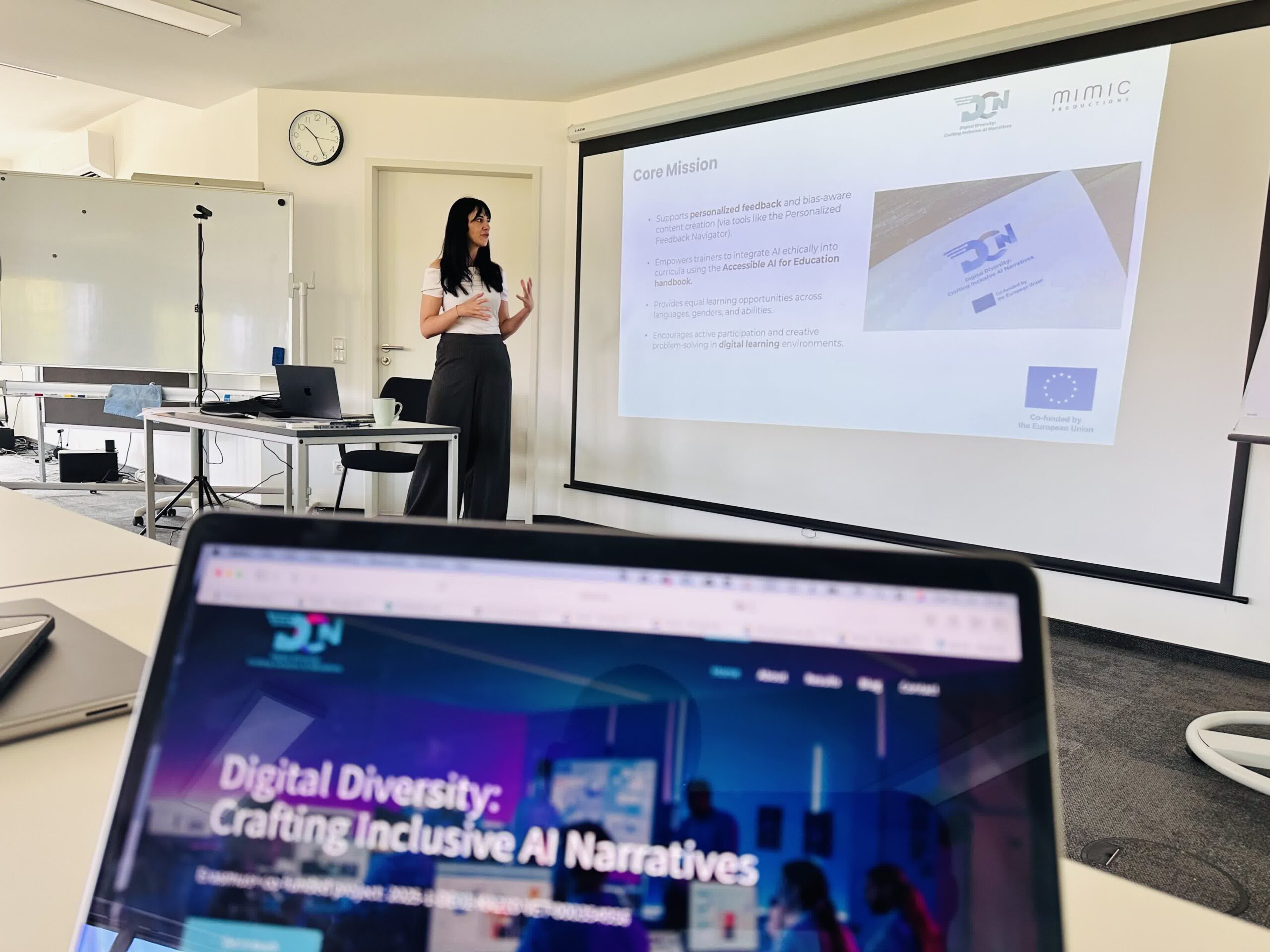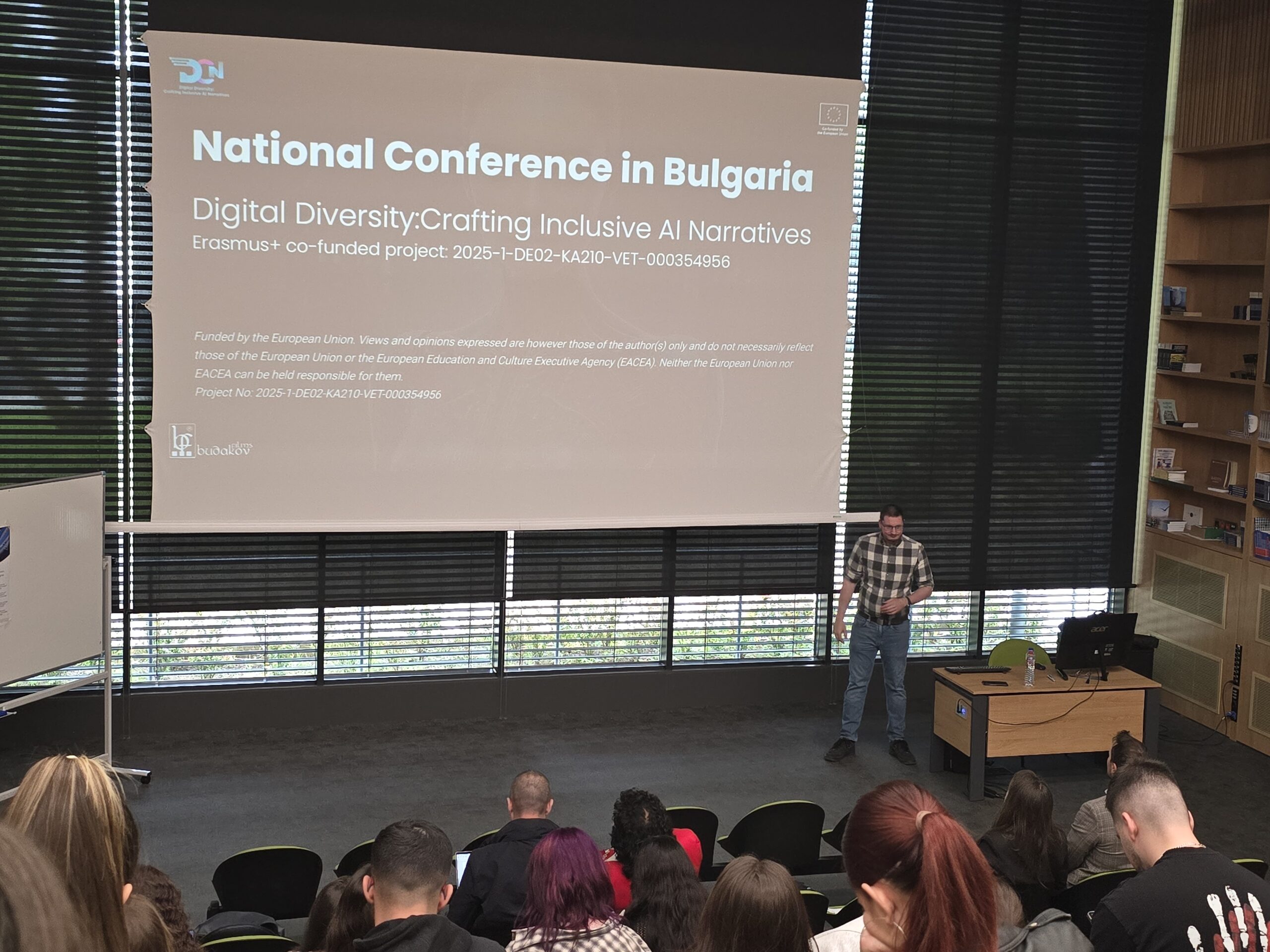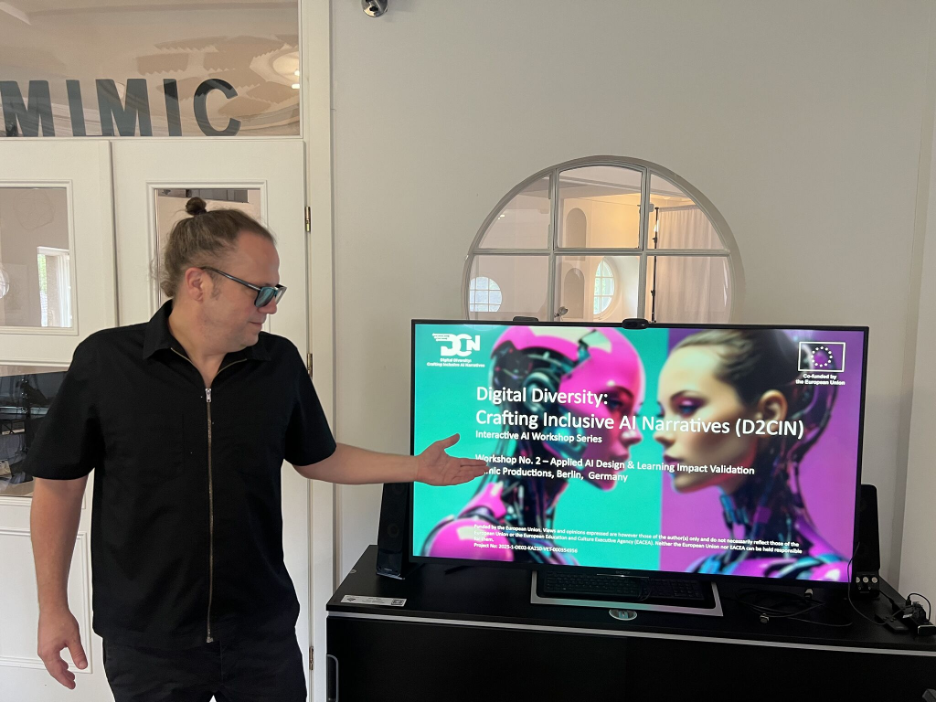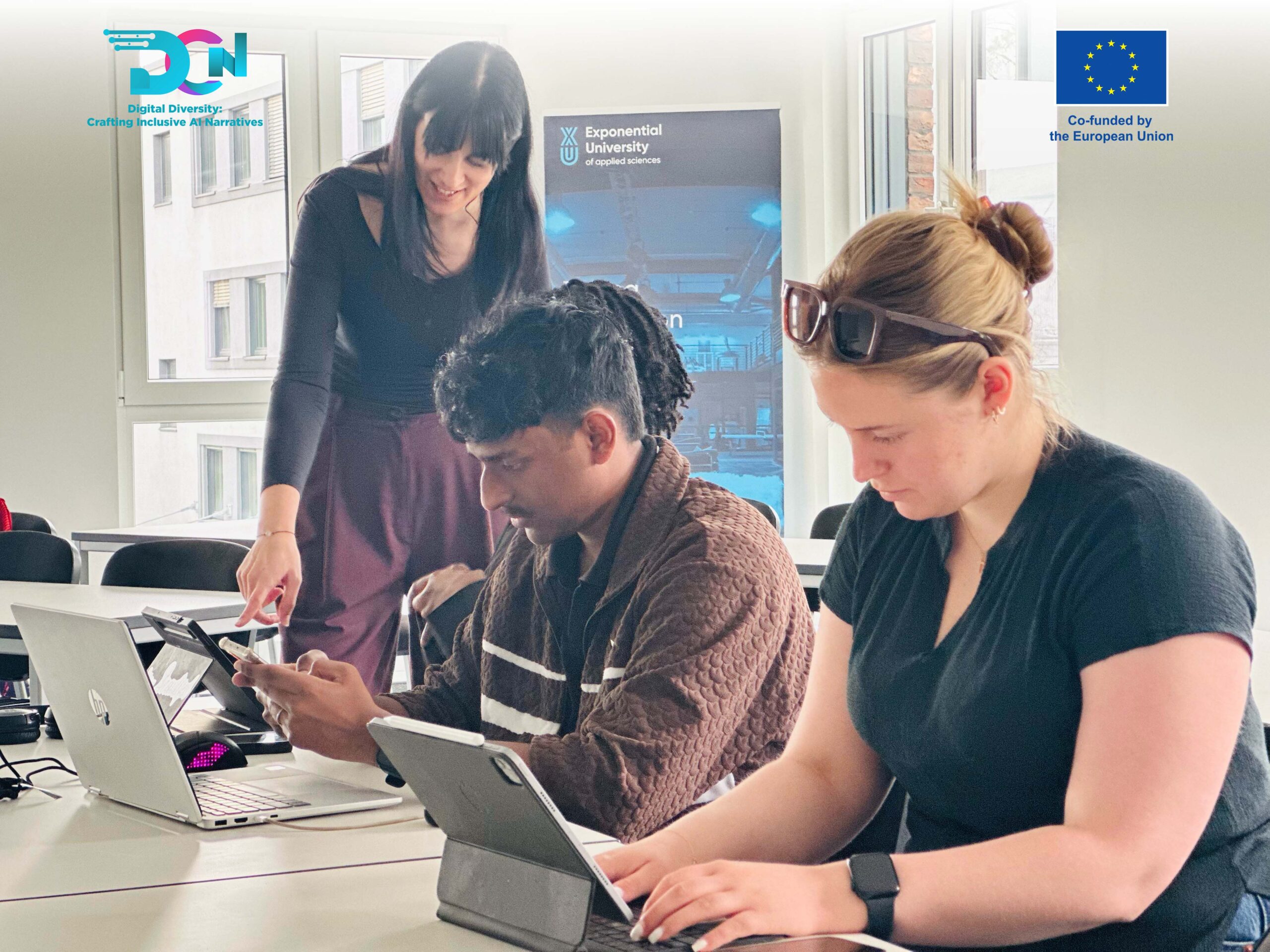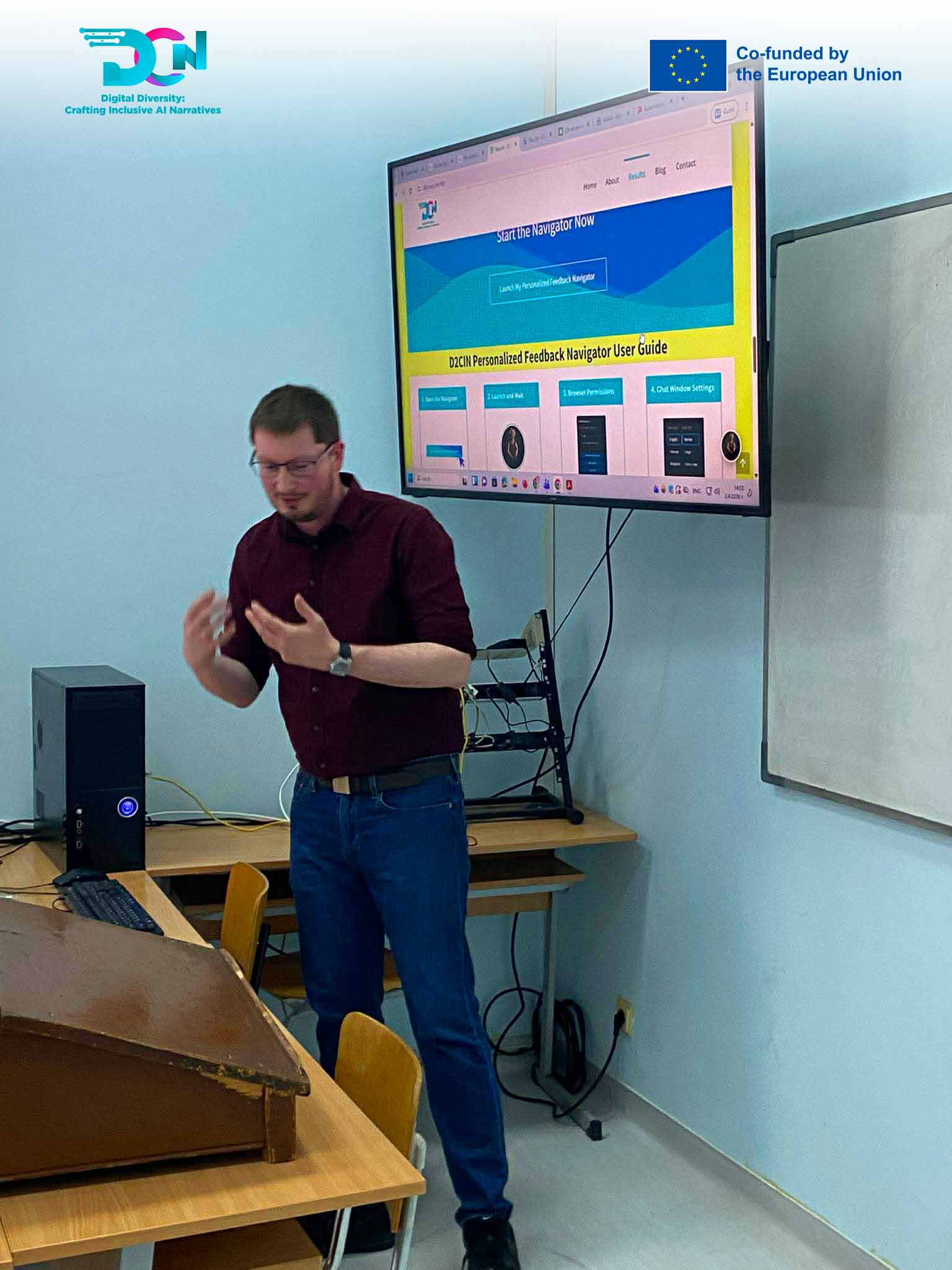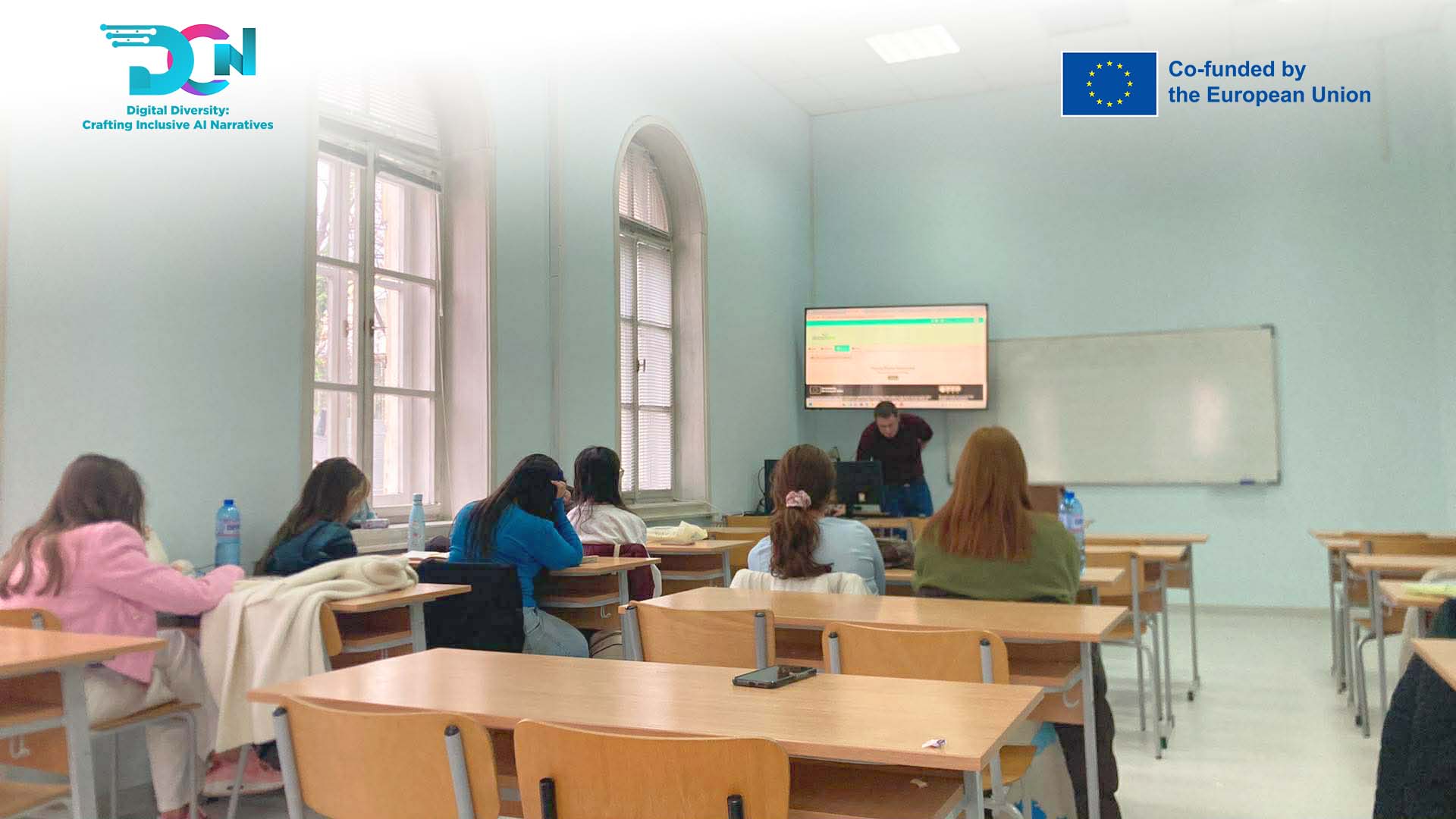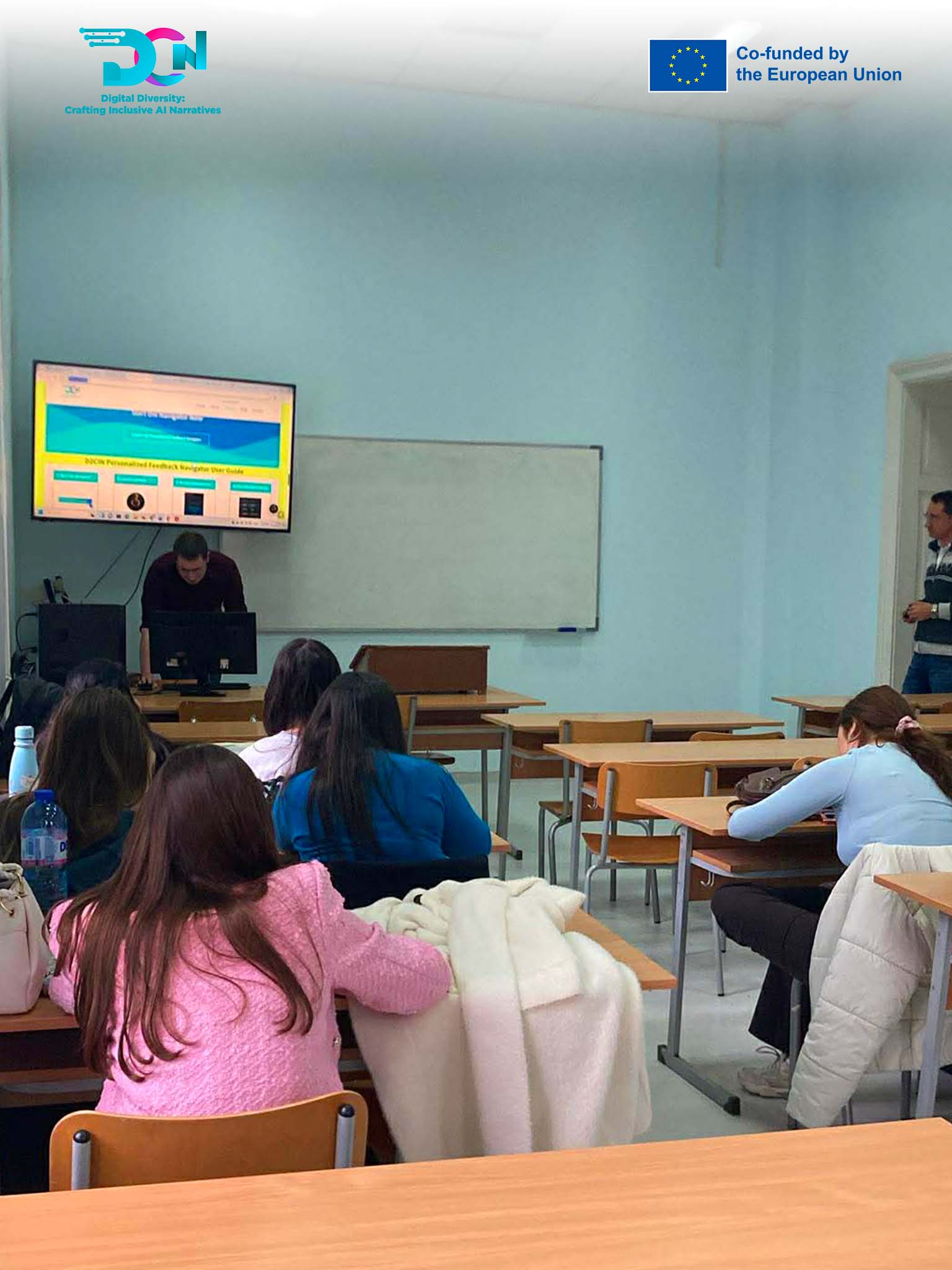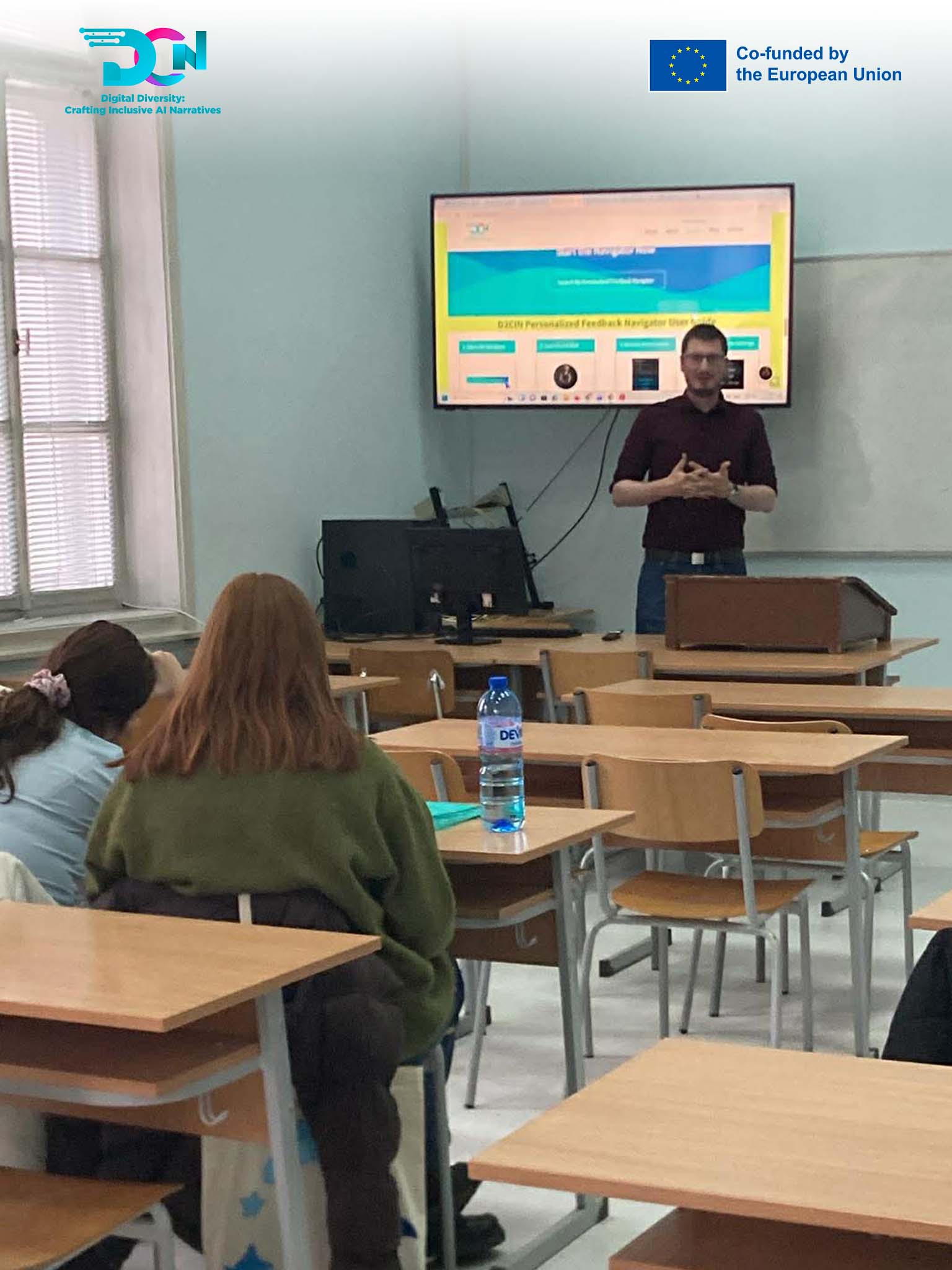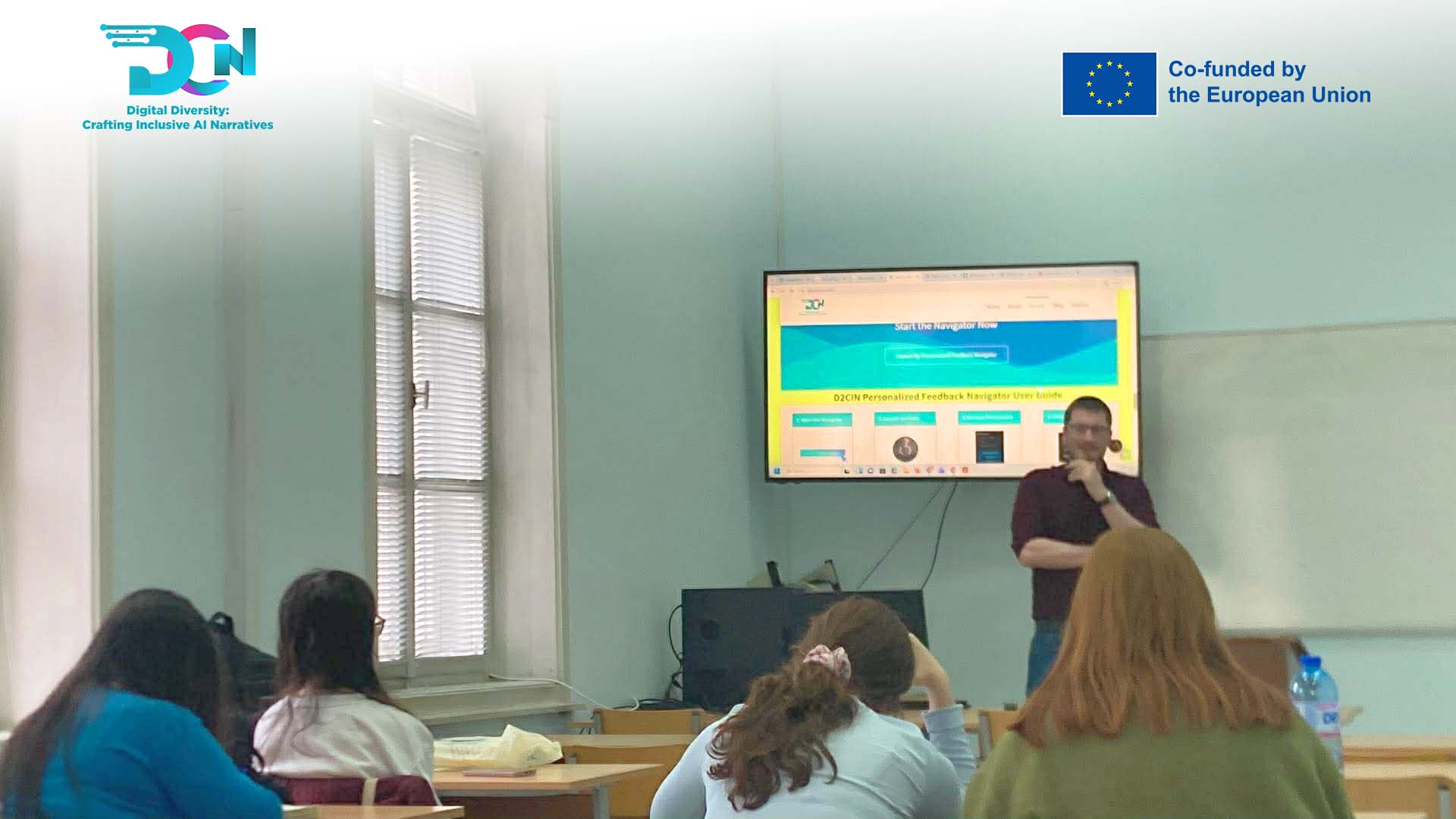

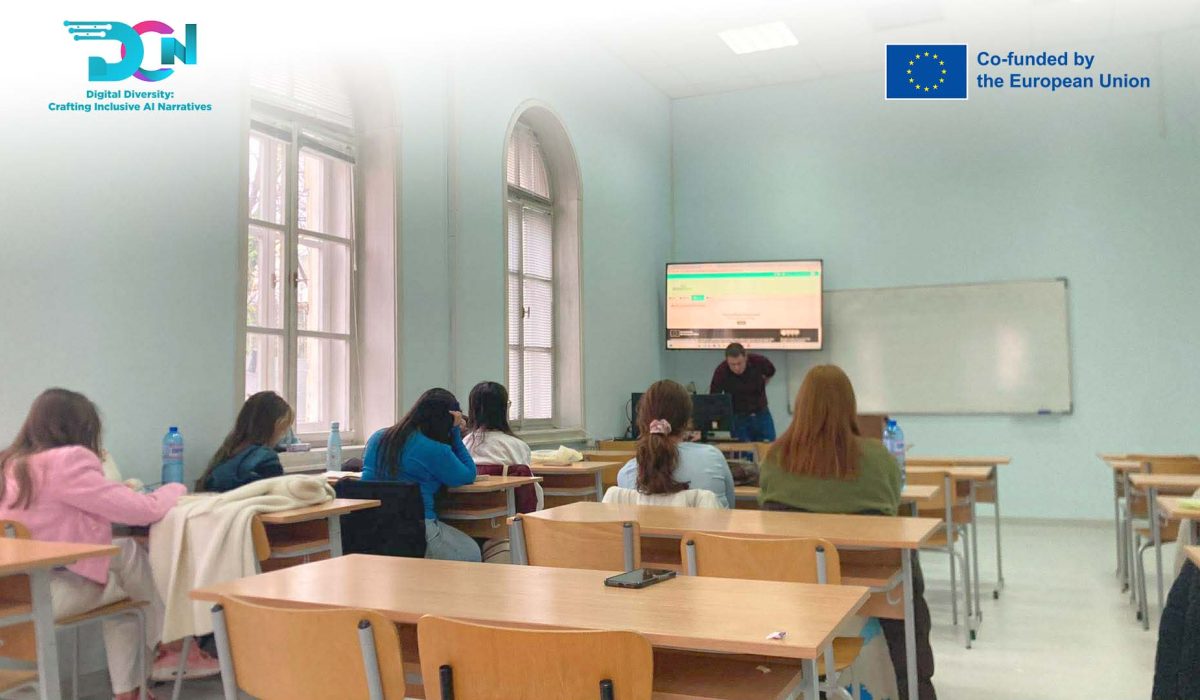
On 13 May 2026, Budakov Films successfully organised the first national pilot workshop in Sofia, Bulgaria, as part of the Erasmus+ co-funded project Digital Diversity: Crafting Inclusive AI Narratives (D2CIN) (Project No: 2025-1-DE02-KA210-VET-000354956). The event took place at Sofia University and gathered 17 representatives of the project’s target audience, including educators, researchers, digital professionals, AI practitioners, and experts in inclusive education.
The workshop represented an important milestone within Activity 3: Inclusive AI Impact Pilot & Collaborative Outreach Summit, focusing on the validation and practical testing of the project’s educational resources and AI-based tools in a real learning environment.
The session was moderated by Chief Assistant Professor Yordan Karapenchev, Ph.D., who guided participants through a structured and highly interactive programme dedicated to inclusive AI methodologies, accessibility, and ethical digital innovation in vocational education and training (VET).
Focus of Workshop No. 1
The workshop was implemented according to the official Workshop Strategy and Pilot Assessment Framework developed by the D2CIN consortium. The framework establishes a clear methodology for piloting and evaluating the project results through both quantitative and qualitative assessment approaches.
Workshop No. 1 was specifically designed to test:
- The usability and clarity of the Inclusive AI Handbook
- The functionality of the Personalized Feedback Navigator
- The accessibility and practical relevance of the project tools
- The overall user experience and learning impact
The event also contributed to the broader objective of ensuring that the project outputs respond effectively to the real needs of educators and learners working in diverse and inclusive educational contexts.
Interactive Activities and Practical Engagement
During the workshop, participants actively engaged in a series of practical and collaborative activities. The agenda included:
- Introduction to inclusive AI concepts and ethical considerations
- Guided exploration of the Inclusive AI Handbook
- Scenario-based exercises focused on accessibility and inclusive design
- Hands-on interaction with the Personalized Feedback Navigator
The workshop methodology encouraged participants to critically evaluate how AI tools can support inclusive learning environments while also identifying potential barriers related to accessibility, usability, and digital participation.
The scenario-based exercises enabled participants to apply the principles presented in the Handbook to realistic educational and professional situations. Through group discussions and practical experimentation, attendees explored how conversational AI systems and digital feedback mechanisms can be adapted to support learners with diverse backgrounds and abilities.
Validation and Feedback Collection
An important component of the workshop was the pilot validation process. Following the methodology established within the project framework, participants completed structured assessment activities combining:
- Quantitative evaluation through Likert-scale questionnaires
- Qualitative feedback through open reflection and discussion
The evaluation focused on several key areas:
- Clarity and usability of the Handbook
- Ease of use of the Personalized Feedback Navigator
- Relevance of the workshop activities to participants’ professional contexts
- Learning effectiveness and participant engagement
- Accessibility and inclusiveness of the educational resources
The collected feedback will support the next stage of the project, where the consortium will analyse participant input and further refine the educational materials and AI tools.
Supporting Inclusive and Accessible AI Education
The workshop in Sofia demonstrated the growing importance of inclusive AI practices within education and training sectors. Participants expressed strong interest in developing practical competences related to ethical AI implementation, accessibility standards, and learner-centred digital innovation.
The D2CIN project places particular emphasis on ensuring accessibility and inclusion throughout all project activities. According to the project framework, all workshops are designed to:
- Follow WCAG 2.2 AA accessibility principles
- Use clear and accessible language
- Provide multimodal educational content
- Ensure compatibility with assistive technologies
This approach reflects the consortium’s commitment to supporting equitable participation and strengthening digital inclusion within European VET education.
Looking Ahead
The successful implementation of Workshop No. 1 in Bulgaria marks an important achievement for the D2CIN partnership and confirms the practical relevance of the project’s outputs. The workshop provided valuable insights into how inclusive AI tools can support educators, trainers, and learners in increasingly digital learning environments.
The results from the pilot testing phase will contribute directly to the continuous improvement process established within the project methodology, ensuring that the Handbook and Personalized Feedback Navigator remain user-centred, accessible, and aligned with the needs of diverse educational communities.
Further workshops and dissemination activities will continue throughout the project, strengthening collaboration between education professionals, AI experts, and inclusive learning communities across Europe.
Funded by the European Union. Views and opinions expressed are however those of the author(s) only and do not necessarily reflect those of the European Union or the European Education and Culture Executive Agency (EACEA). Neither the European Union nor EACEA can be held responsible for them.
Project No: 2025-1-DE02-KA210-VET-000354956