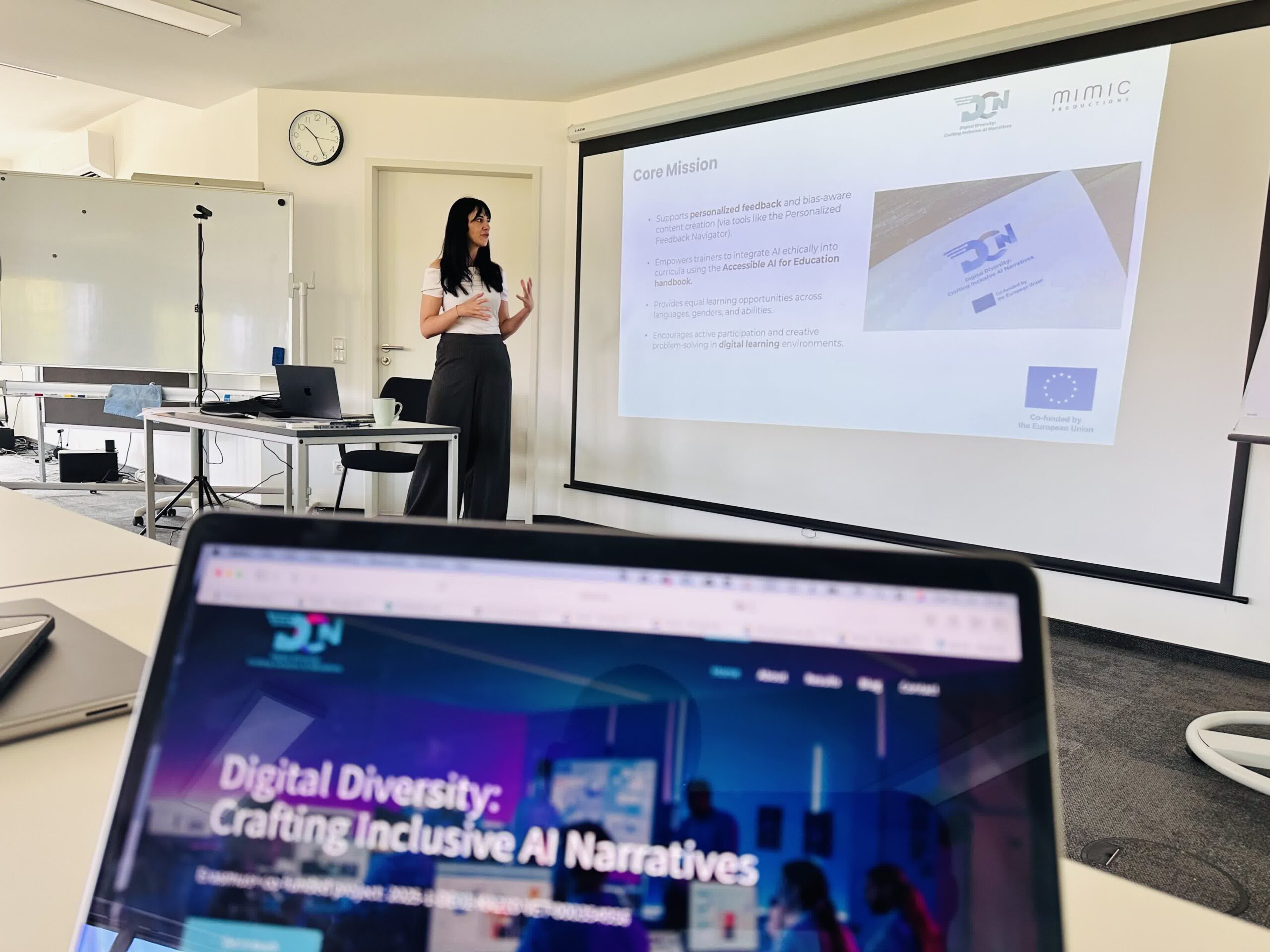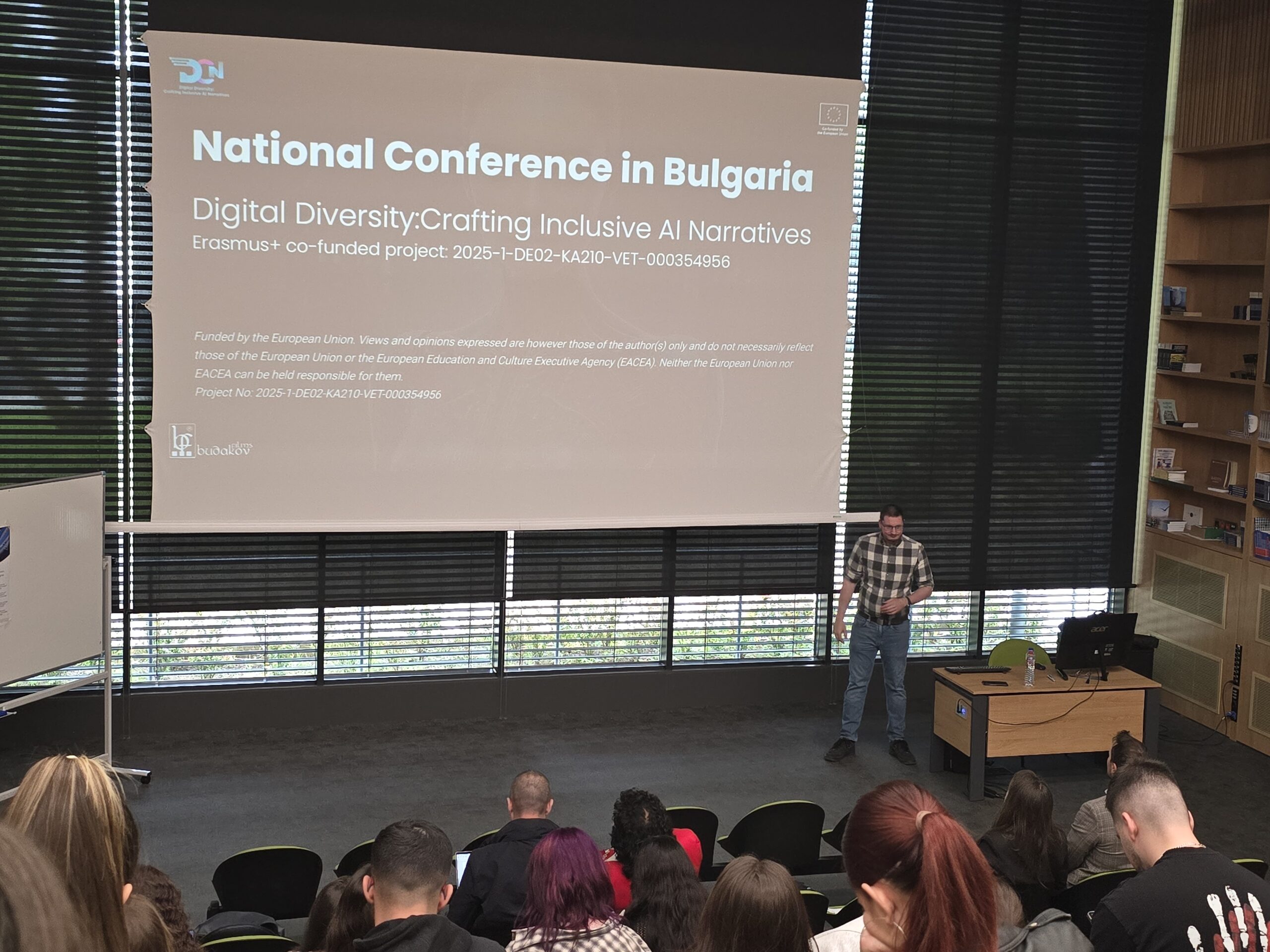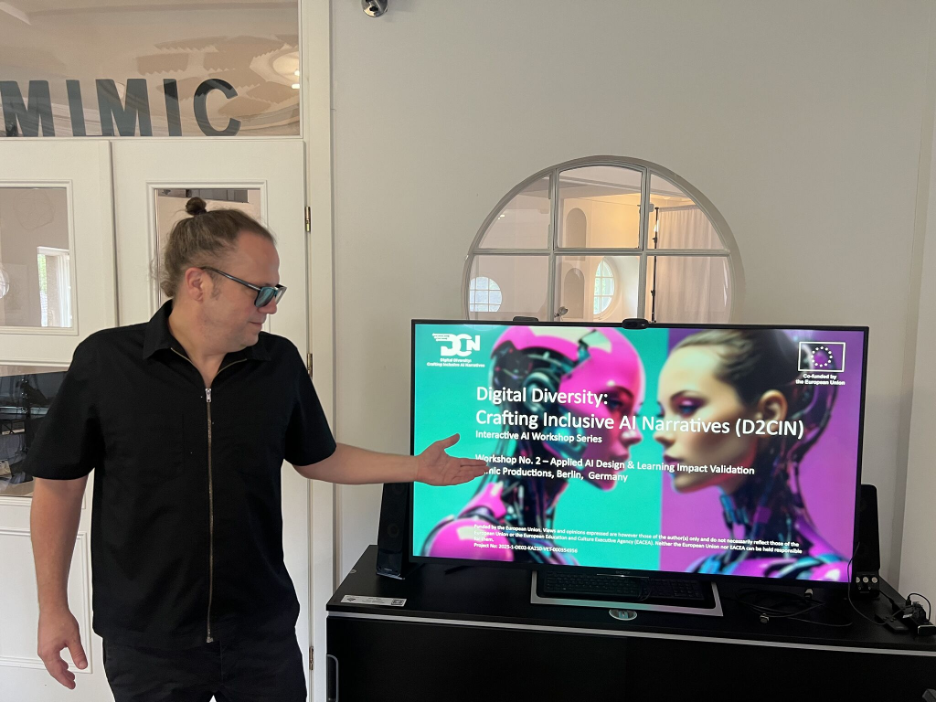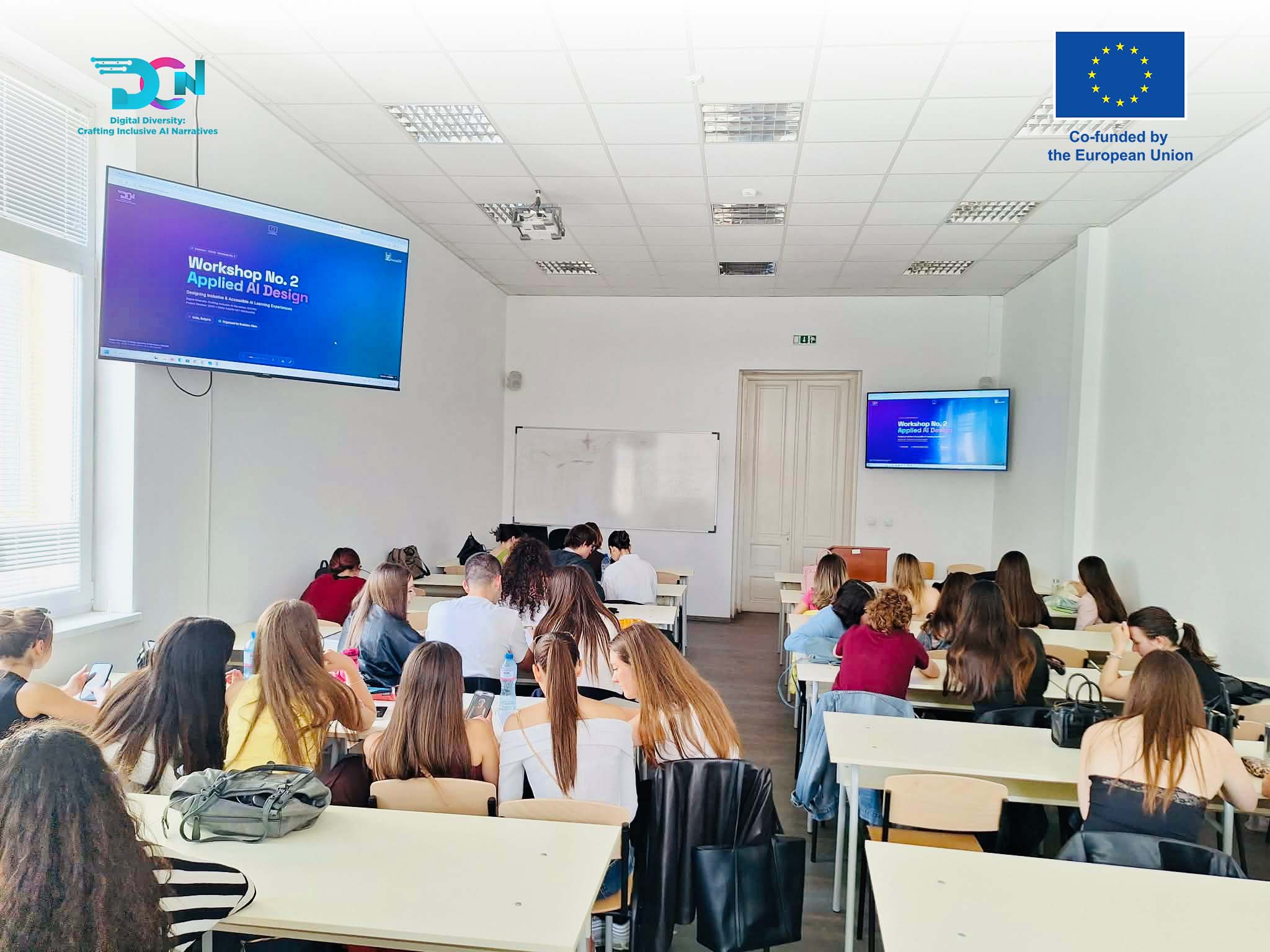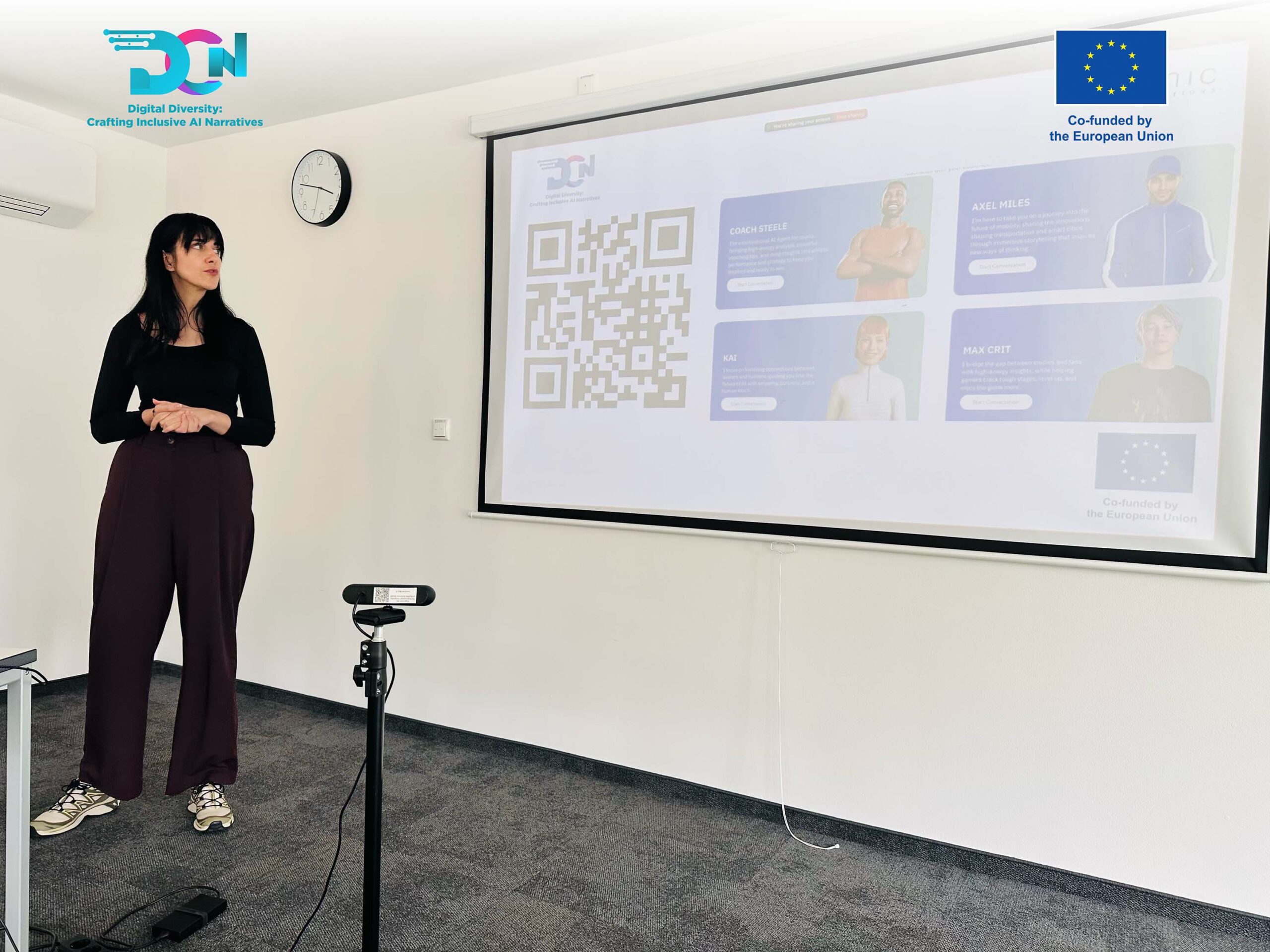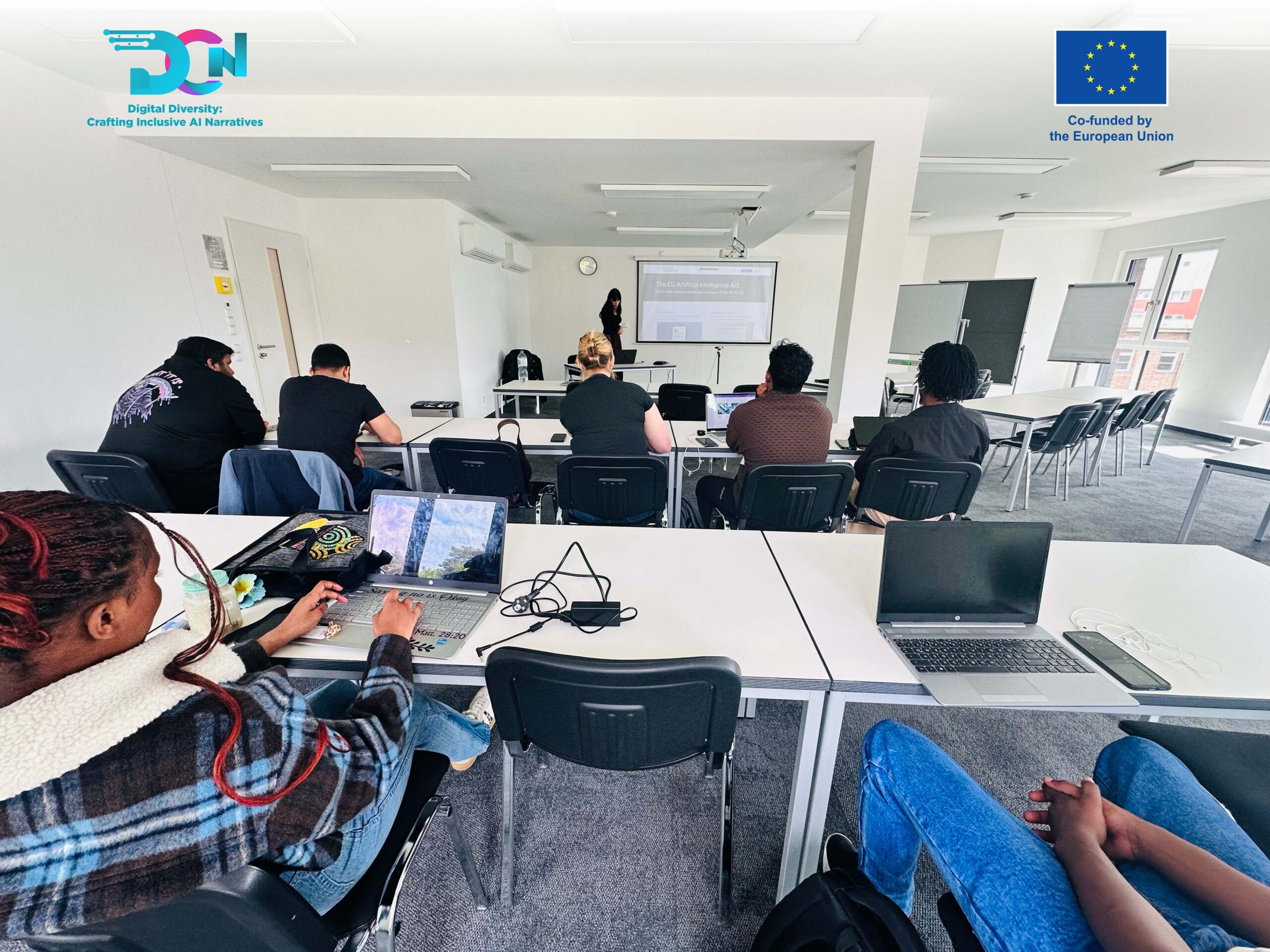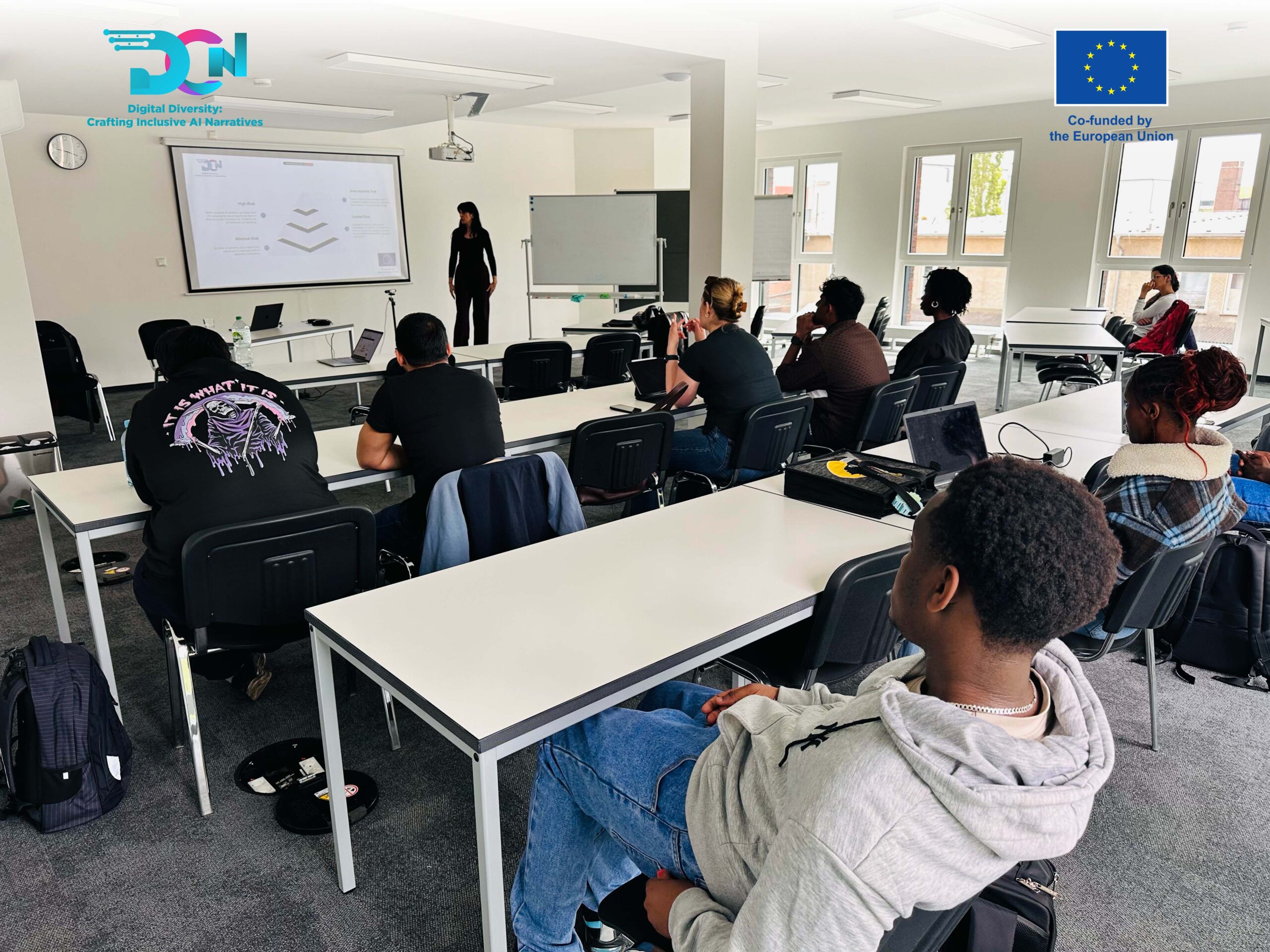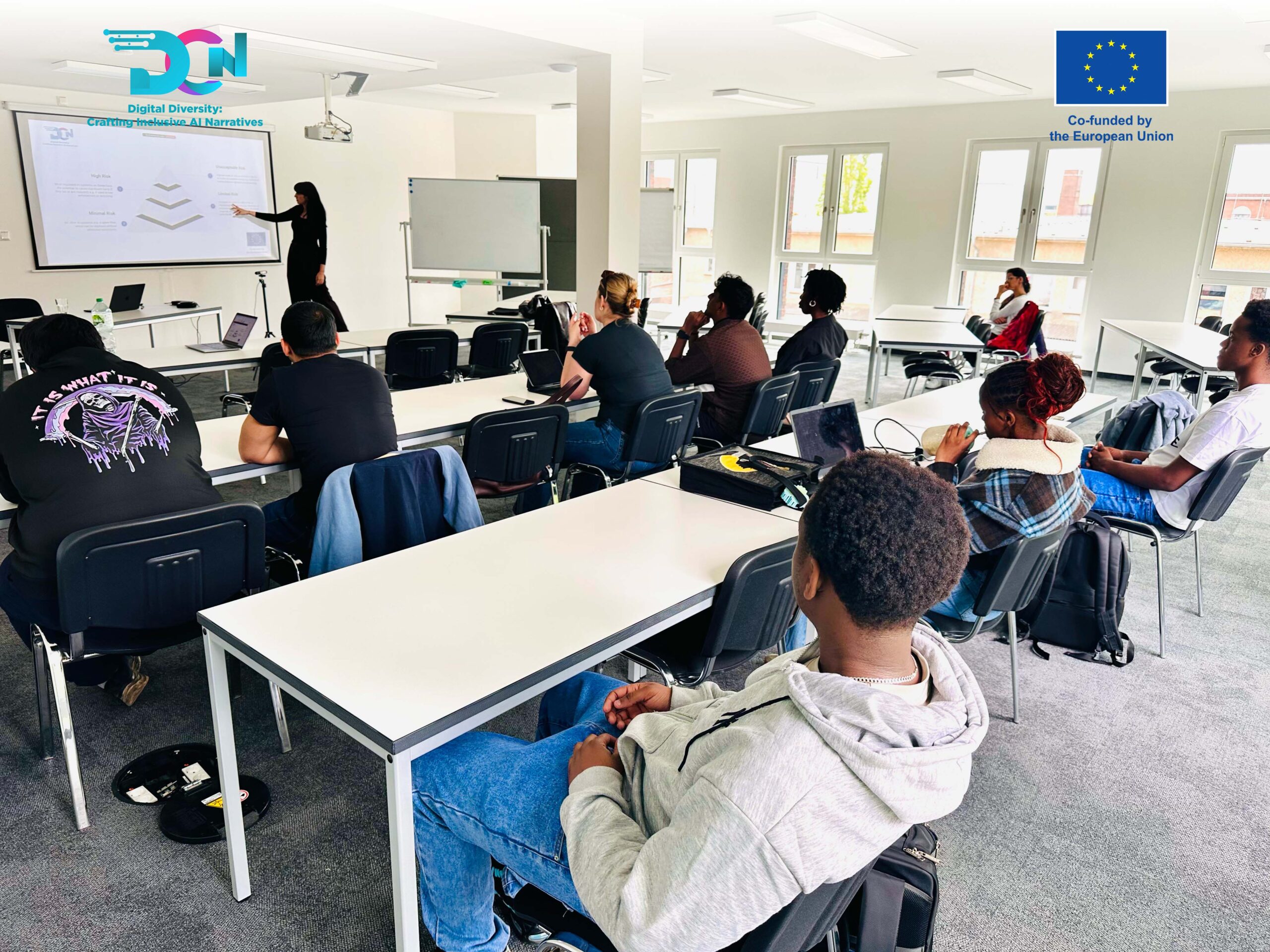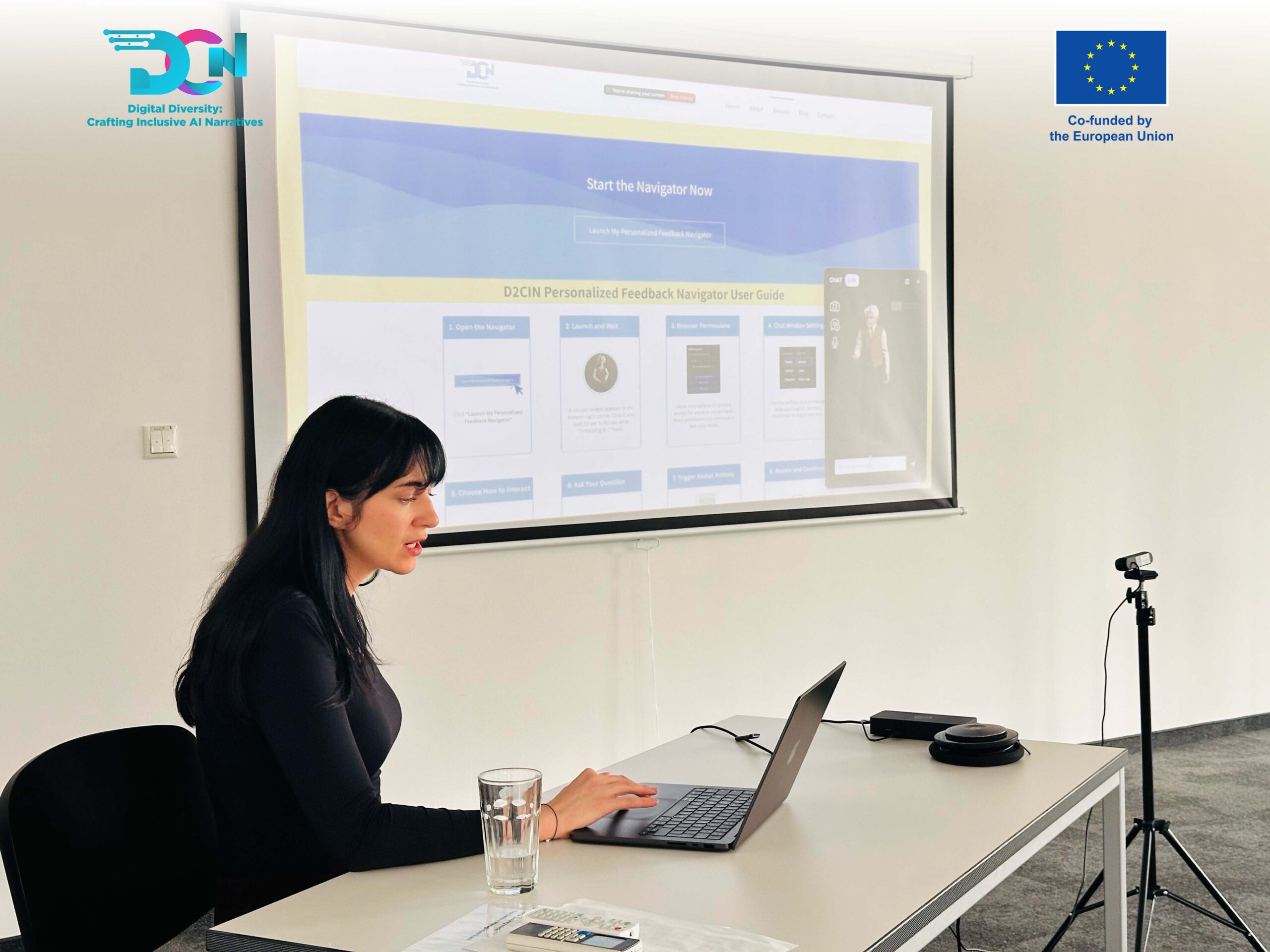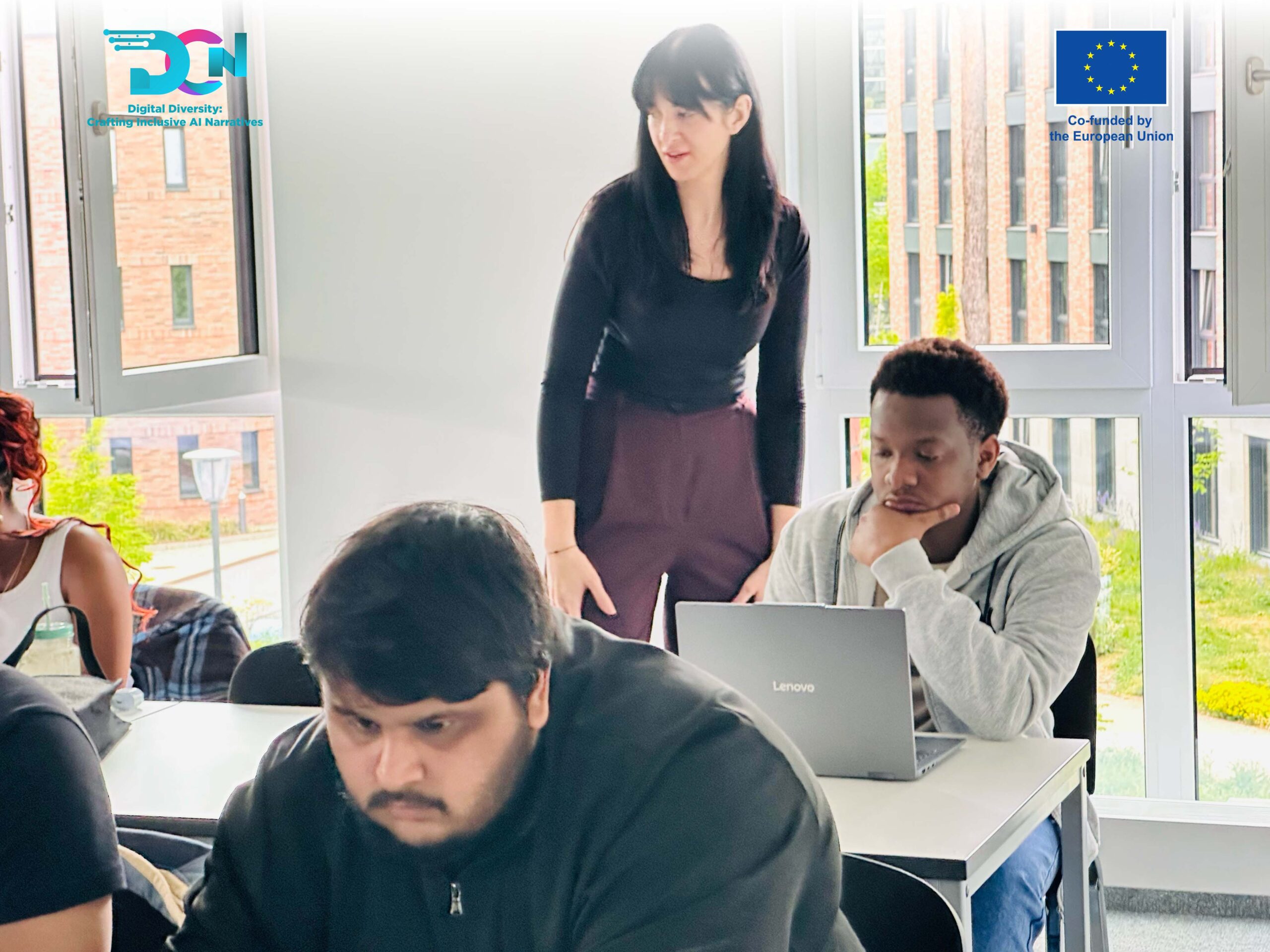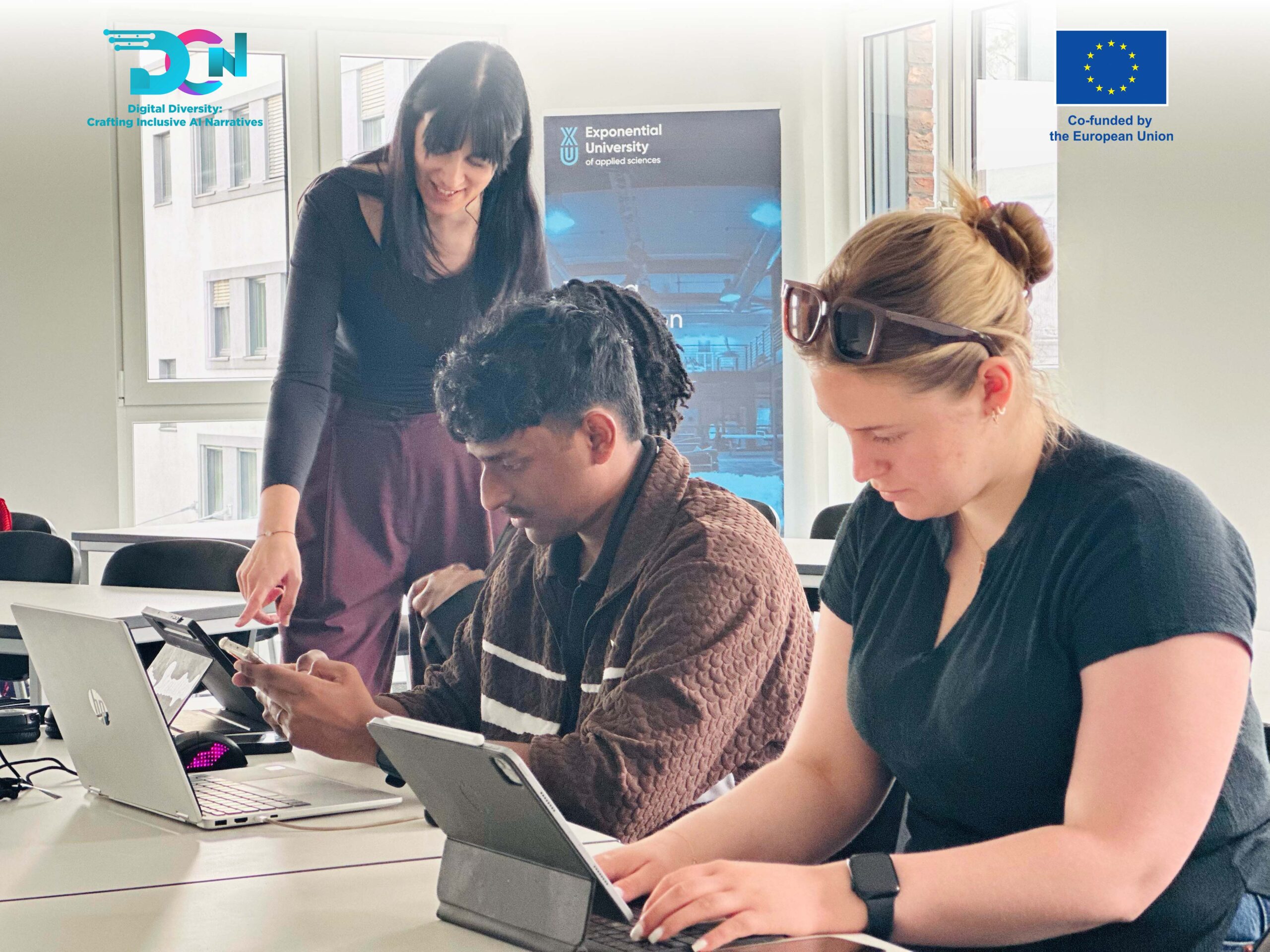

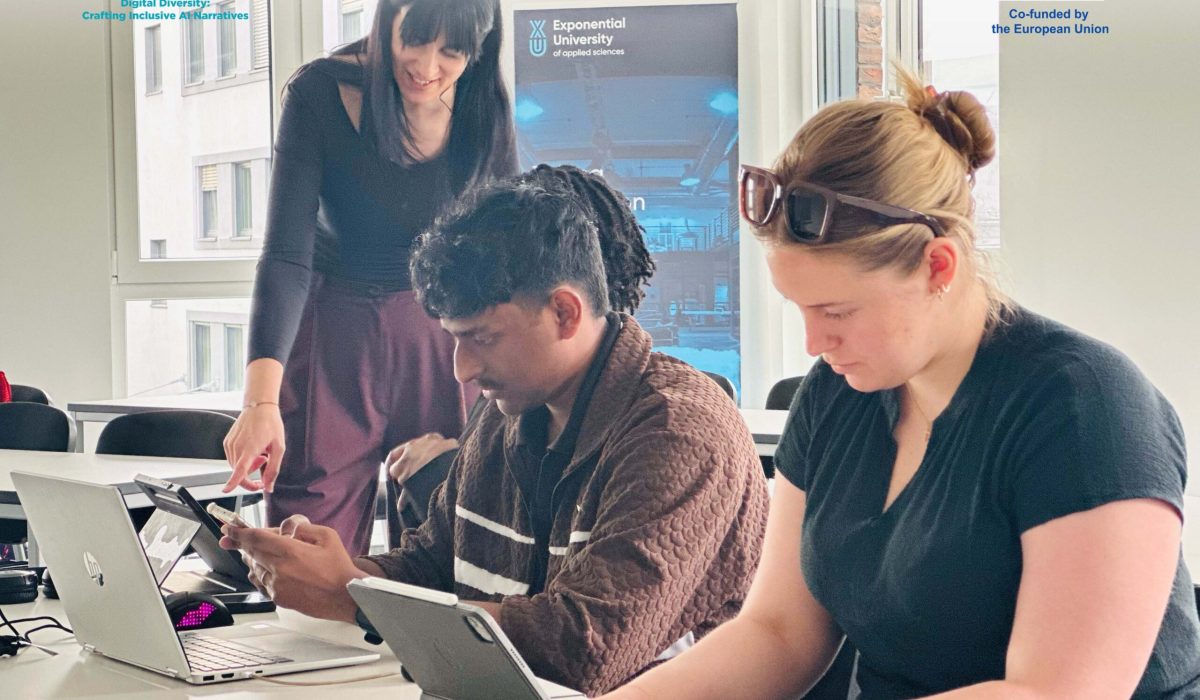
Mimic successfully hosted Workshop No. 1 in Germany as part of the Erasmus+ co-funded project Digital Diversity: Crafting Inclusive AI Narratives (D2CIN). Held at XU Exponential University of Applied Sciences, the workshop brought together representatives from the project’s target audience to pilot and validate the Inclusive AI Handbook and the Personalized Feedback Navigator developed within the initiative.
The workshop represented an important milestone, focusing on the validation and practical testing of the project’s educational resources and AI-based tools in a real learning environment.
Moderated by Violeta Vasileva, the session guided participants through an interactive programme dedicated to inclusive AI concepts, accessibility in digital learning, scenario-based learning, AI-driven educational tools, and AI avatars for learning and engagement. Through this approach, participants explored how artificial intelligence can be designed and applied in ways that are ethical, accessible, learner-centred, and responsive to diverse educational needs.
Focus of the German Pilot Session
Workshop No. 1 was designed as a validation and feedback session for the main project outcomes developed within D2CIN. In line with the project’s piloting approach, the workshop aimed to test the usability, clarity, accessibility, and practical relevance of the Inclusive AI Handbook and the Personalized Feedback Navigator with members of the target audience.
The session focused on the key topic areas highlighted in the workshop communication:
- Inclusive AI concepts
- Accessibility in digital learning
- Scenario-based learning and education
- AI-driven educational tools
- AI avatars for learning and engagement
By combining these themes, the workshop encouraged participants to consider not only how AI can support learning processes, but also how AI-based educational resources can be designed to reduce barriers, increase participation, and respond to the needs of learners with different backgrounds, abilities, and digital competences.
Introducing the AI Handbook & Testing the Personalized Feedback Navigator
A central component of the workshop was the guided exploration of the Inclusive AI Handbook. Participants reviewed the Handbook as a practical resource for understanding inclusive AI principles, ethical considerations, accessibility requirements, and learner-centred approaches to digital education.
Participants also piloted the Personalized Feedback Navigator, one of the project’s AI-supported tools designed to assist users in reflecting on learning needs, accessibility considerations, and inclusive educational design. The testing process provided important insights into how the tool can support personalised guidance, structured reflection, and more inclusive learning pathways.
Exploring Learning Scenarios with AI
The workshop methodology encouraged active participation through practical activities and collaborative discussion. Participants explored realistic educational scenarios and reflected on how inclusive AI tools can be used to support learning, engagement, communication, and feedback. These activities helped connect the project’s theoretical framework with practical examples that could be applied in educational and professional contexts.
Scenario-based learning was an important part of the session. Participants considered how AI-driven educational tools and AI avatars could make learning experiences more accessible, interactive, and engaging. The discussions highlighted the potential of conversational and avatar-based technologies to support learners in different situations while also raising important questions around usability, ethics, inclusion, and accessibility by design.
Participant Insights and Recommendations
Participants provided valuable qualitative and quantitative feedback throughout the workshop, helping the project team identify strengths, improvement areas, and opportunities for further refinement of the D2CIN outcomes. Their input contributed directly to the ongoing efforts of the Inclusive AI Handbook and the Personalized Feedback Navigator, ensuring that both resources remain relevant to real learning environments and the needs of the project’s target audience.
The feedback process also supported the project’s wider objective of strengthening ethical, accessible, and inclusive AI solutions for education and vocational training across Europe. By involving participants in the validation process, the workshop ensured that the project outcomes are not only technically functional, but also meaningful, usable, and responsive to diverse educational contexts.
Strengthening Inclusive AI Practice
The successful implementation of Workshop No. 1 in Germany demonstrated the importance of inclusive AI practices in modern digital learning. The event highlighted how accessibility, ethical design, and user-centred methodologies can be integrated into AI-supported educational tools from the earliest stages of development and testing.
Held at XU Exponential University of Applied Sciences, the workshop provided a strong setting for dialogue, experimentation, and practical learning around digital innovation and inclusive education. The participants’ engagement confirmed the relevance of the D2CIN approach and reinforced the project’s commitment to supporting educators, trainers, learners, and digital professionals in creating more accessible learning experiences.
What Comes Next for D2CIN
The outcomes of Workshop No. 1 in Germany will support the continued refinement and continuous improvement of the Inclusive AI Handbook and the Personalized Feedback Navigator methodology.The feedback gathered from participants will help the consortium further improve the clarity, accessibility, usability, and educational value of the project outcomes.
As D2CIN continues, the insights from the German workshop will contribute to the broader development of inclusive AI narratives and practical tools for vocational education and training during the project and beyond. Further workshop activities and dissemination actions will strengthen collaboration among educators, AI practitioners, creative professionals, and inclusive learning communities across Europe.
Funded by the European Union. Views and opinions expressed are however those of the author(s) only and do not necessarily reflect those of the European Union or the European Education and Culture Executive Agency (EACEA). Neither the European Union nor EACEA can be held responsible for them.
Project No: 2025-1-DE02-KA210-VET-000354956