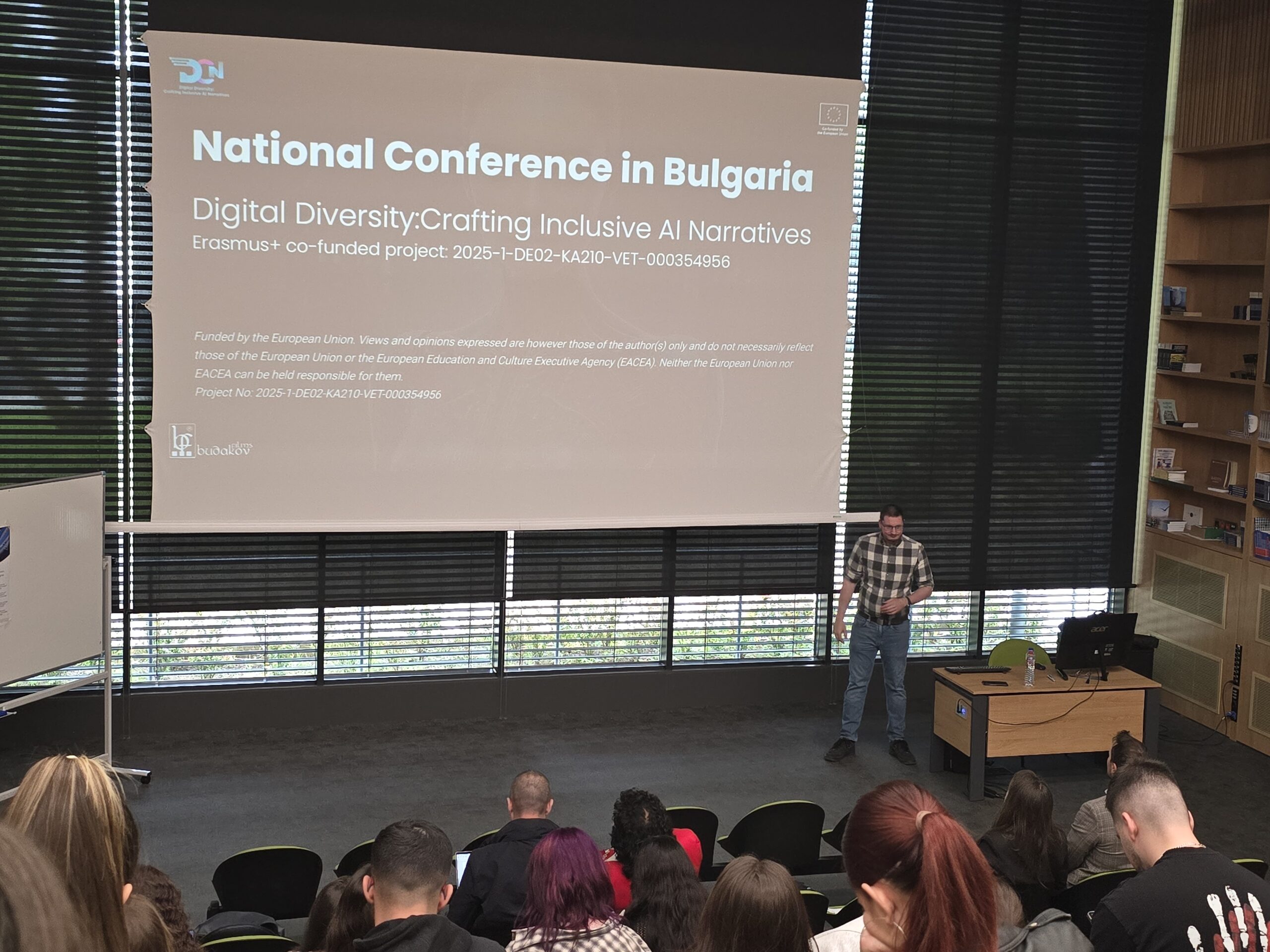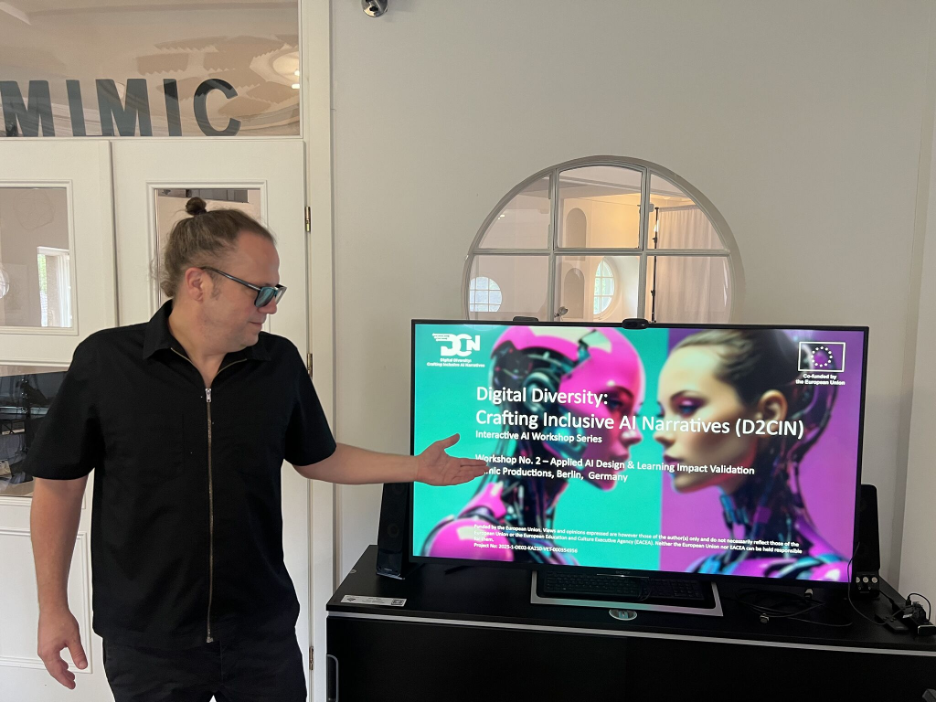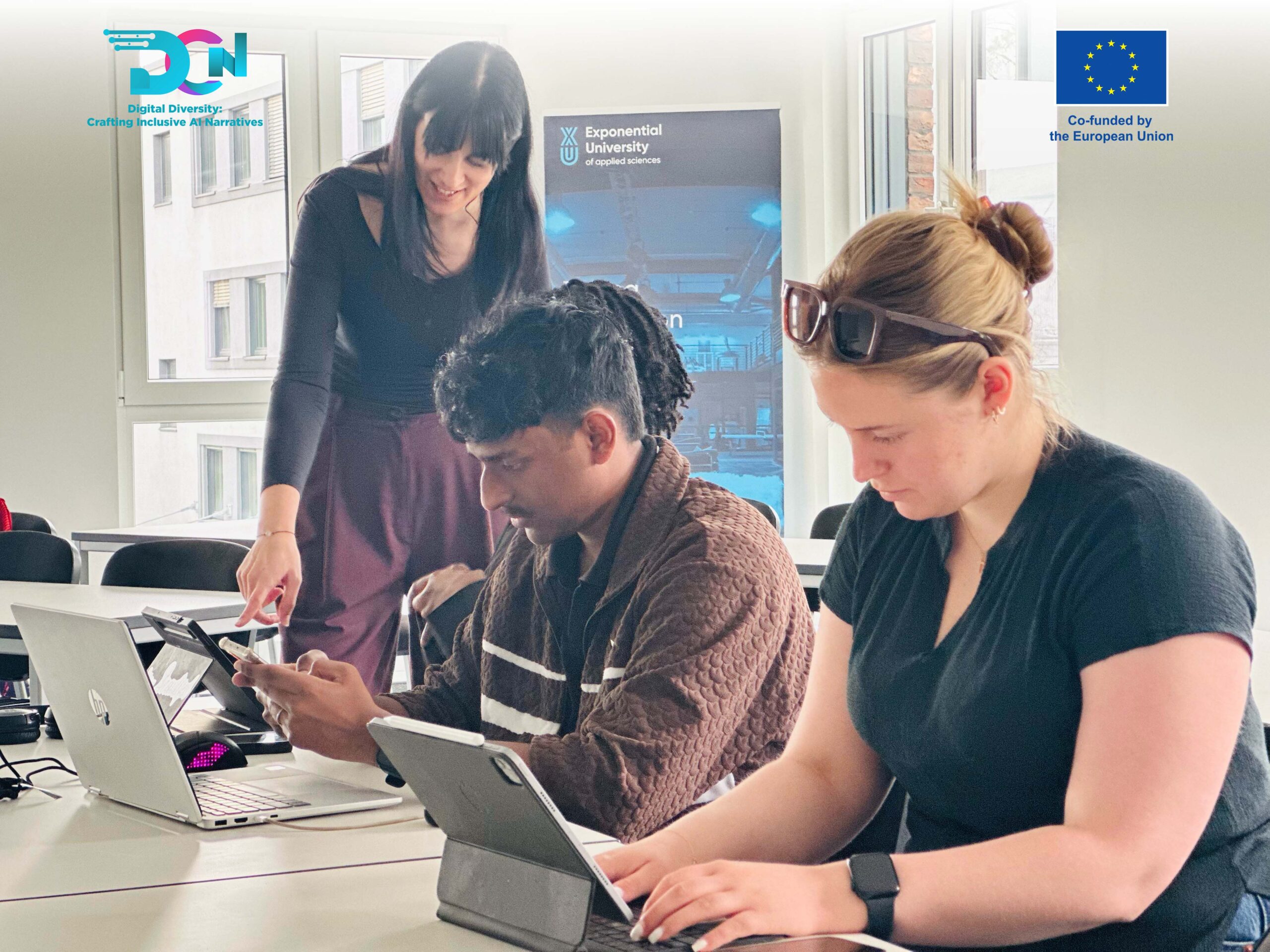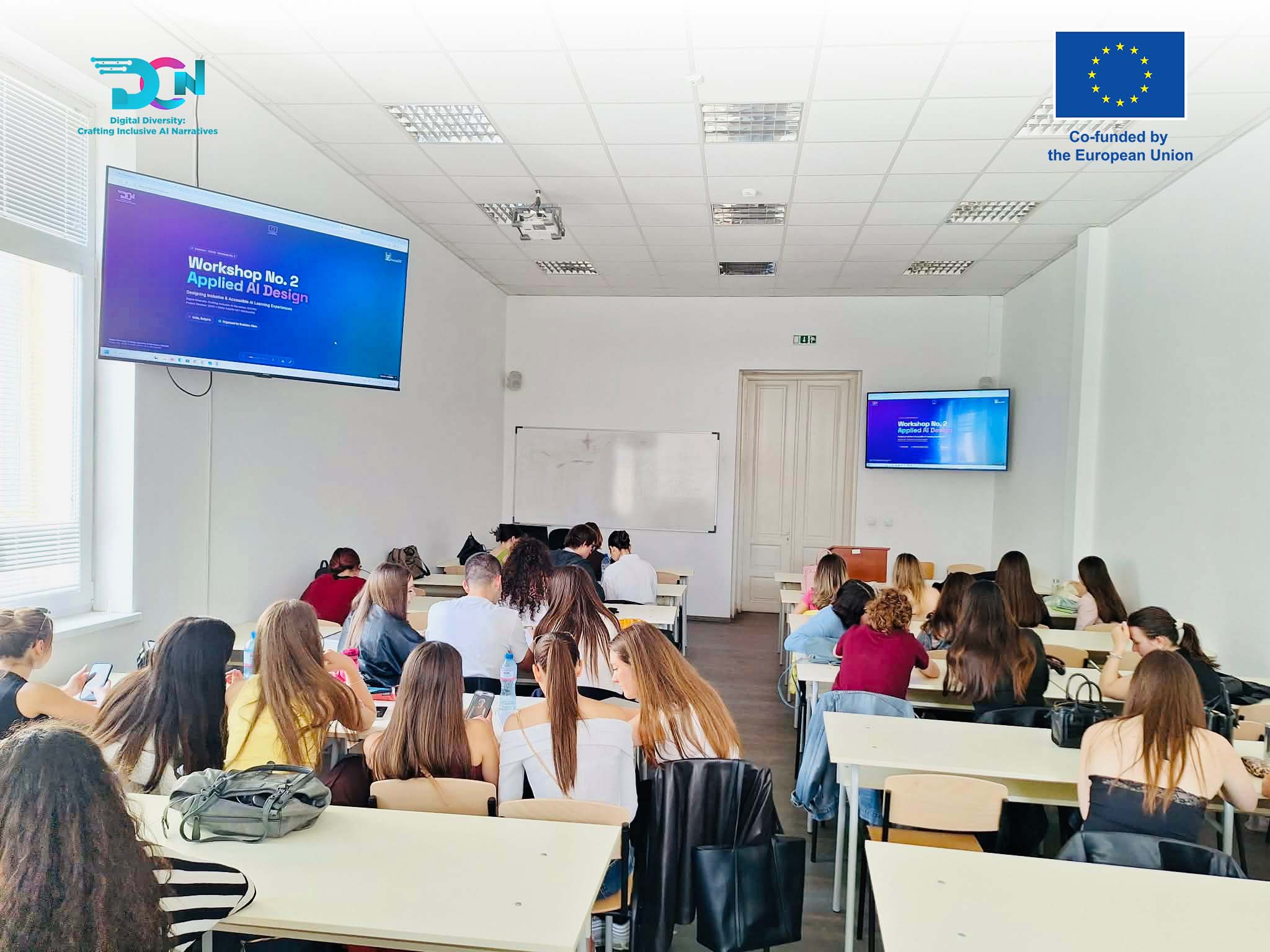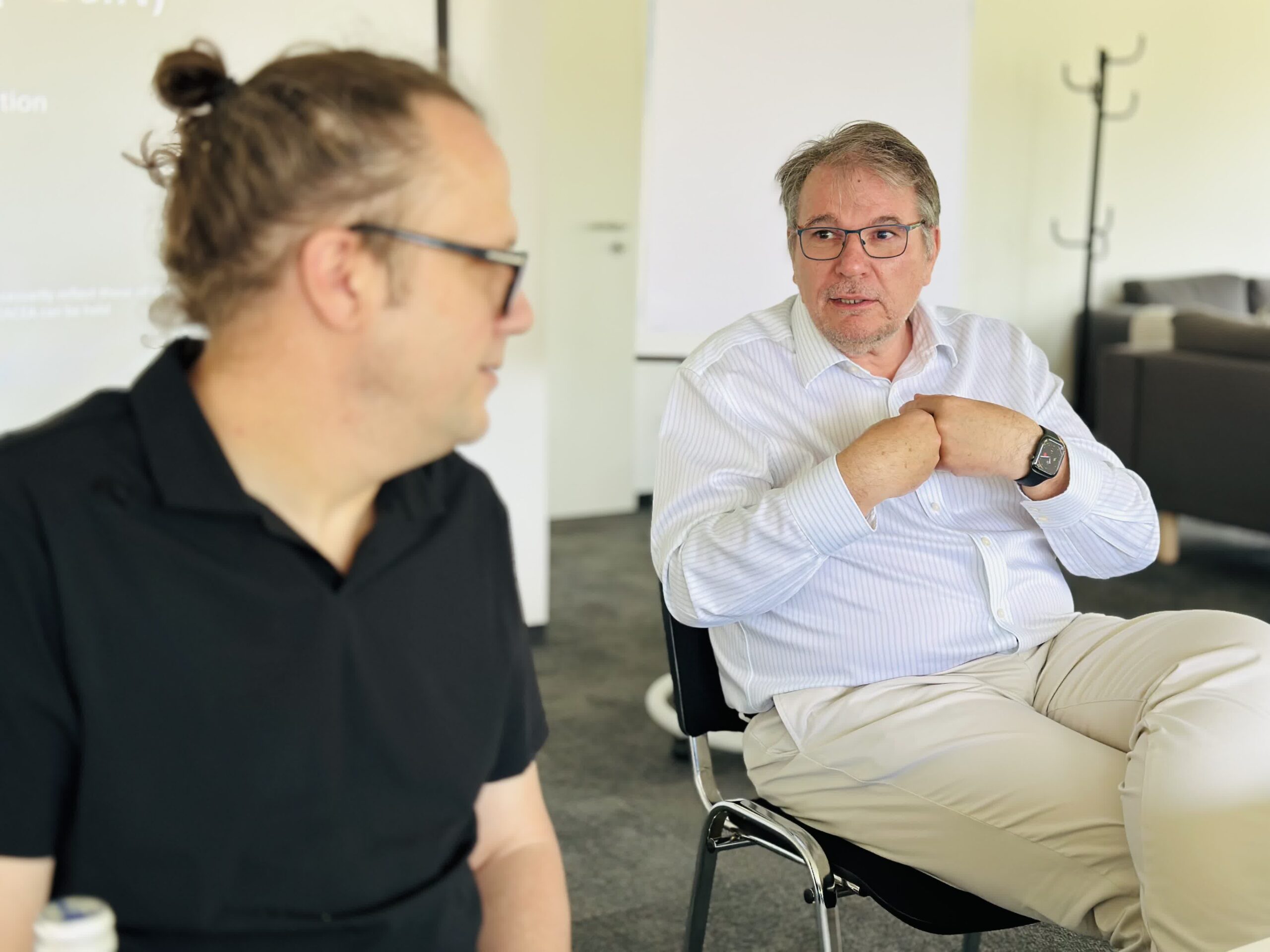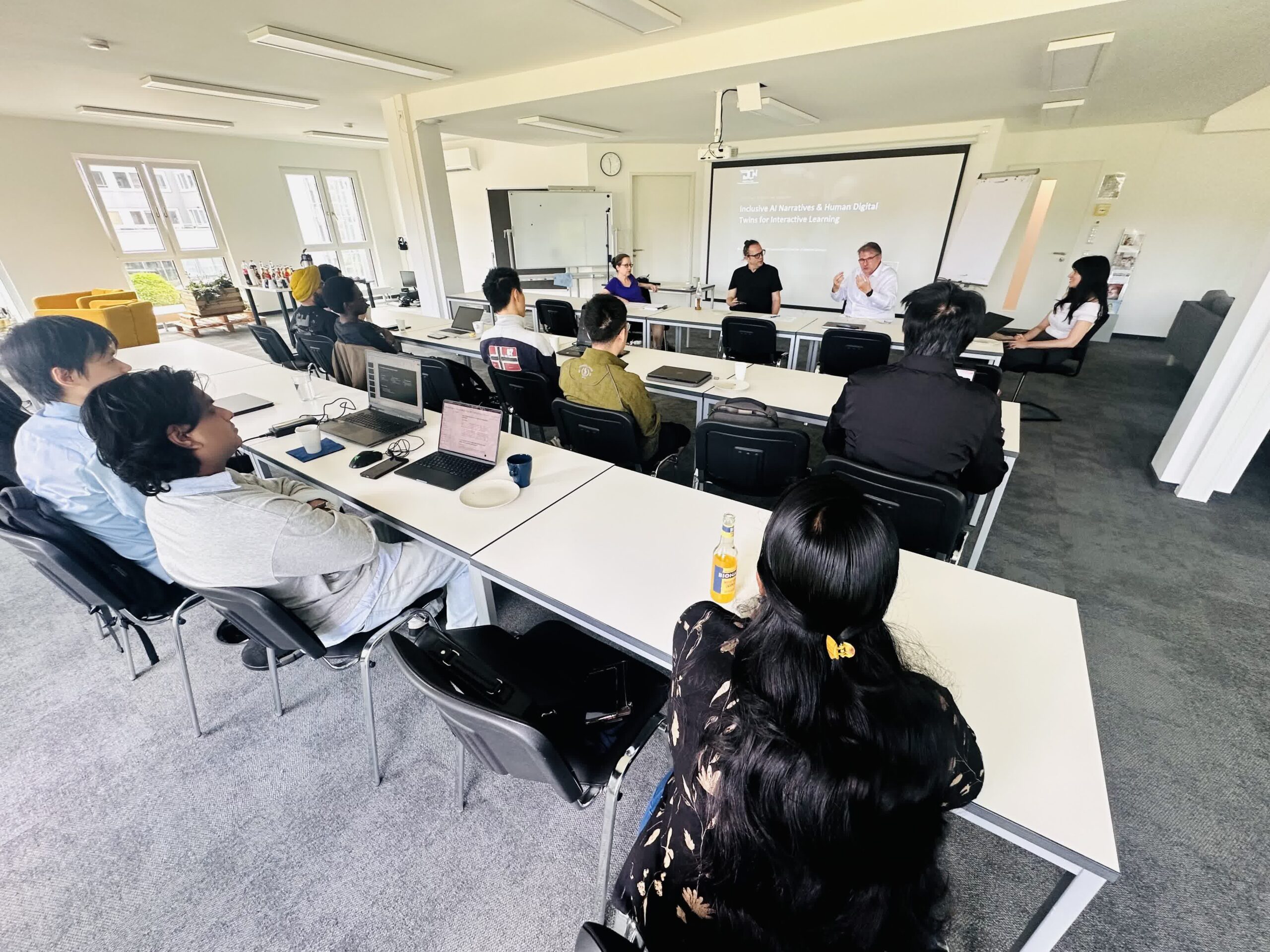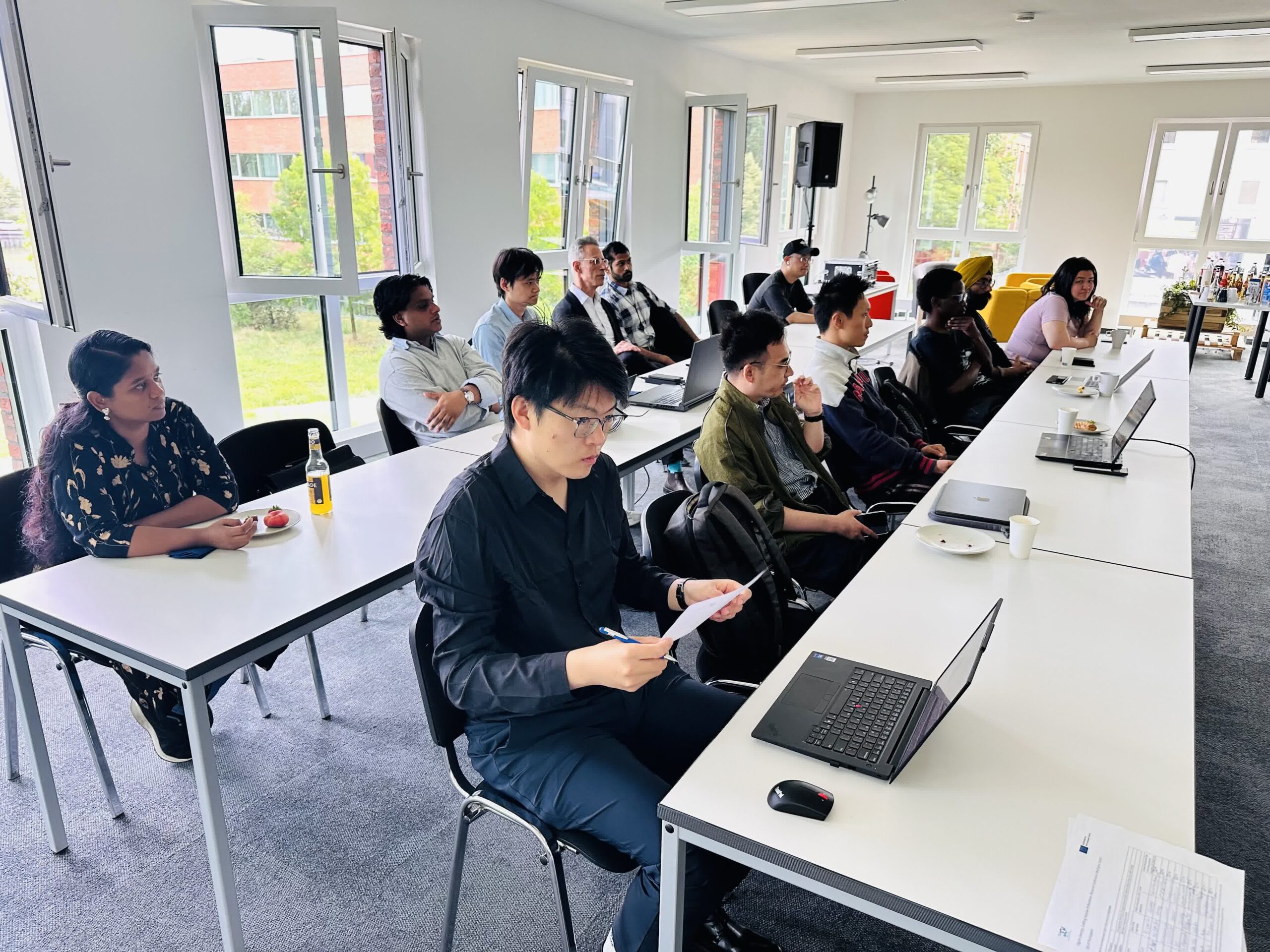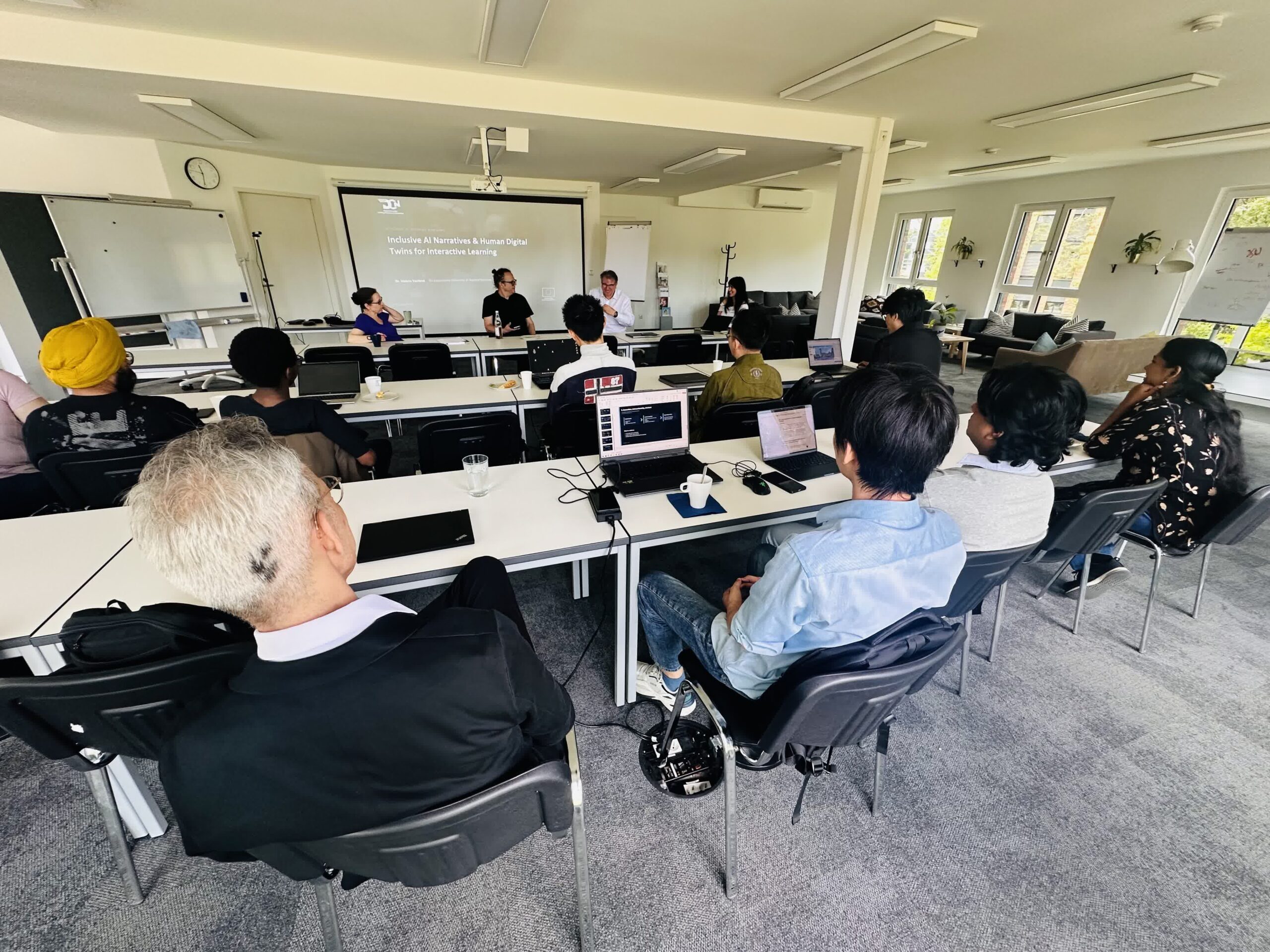

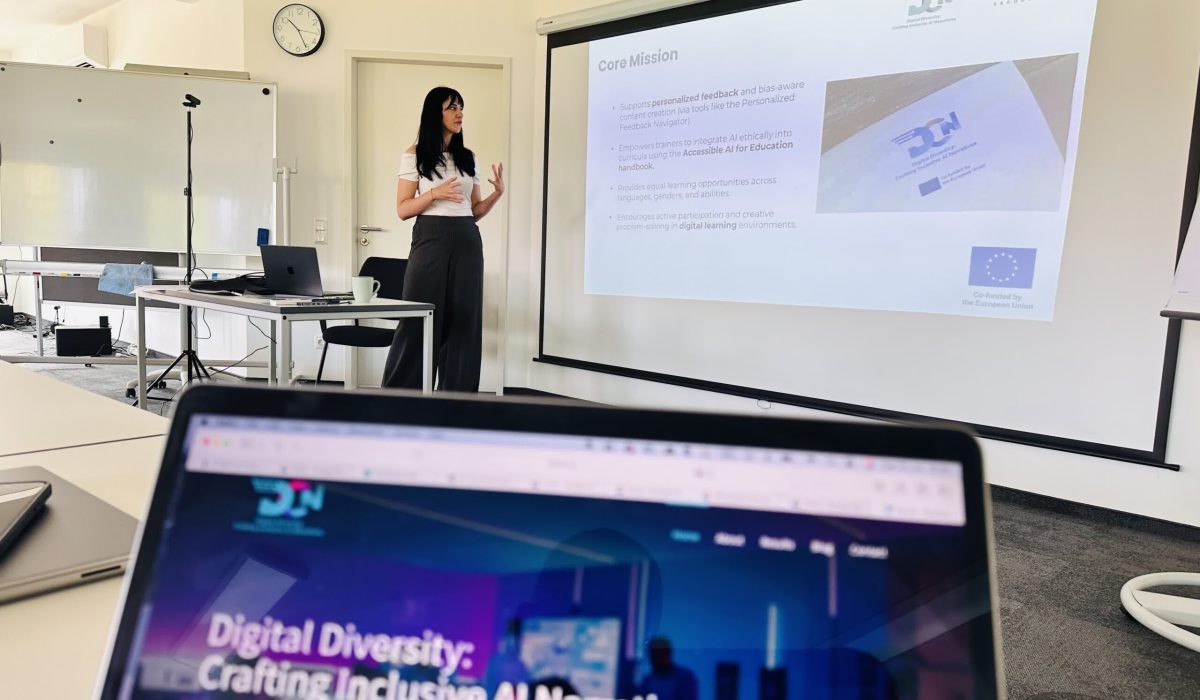
The Erasmus+ co-funded project Digital Diversity: Crafting Inclusive AI Narratives (D2CIN) reached an important milestone with its Germany final conference, “Inclusive AI Narratives & Human Digital Twins for Interactive Learning,” hosted in Berlin in collaboration with XU Exponential University of Applied Sciences. The event brought together voices from academia, education and the creative technology industry to explore how artificial intelligence can support learning while remaining inclusive, accessible and fundamentally human-centred.
Delivered as part of Activity 3: Inclusive AI Impact Pilot & Collaborative Outreach Summit, the conference built on the practical workshops held in Germany and Bulgaria. It created a space to present the project’s results, demonstrate applied technologies and encourage new collaboration among educators, researchers, AI practitioners and digital learning specialists.
Bringing Together Academia, Education and Industry
The final conference reflected the interdisciplinary approach at the heart of D2CIN. Participants examined how inclusive AI can be developed through dialogue between educational practice, academic research, accessibility expertise and technological innovation. Rather than treating inclusion as a final compliance step, the discussions emphasised the importance of embedding accessibility, diversity and learner-centred thinking throughout the design and implementation of AI-supported learning tools.
The programme combined expert presentations, practical demonstrations, an open panel discussion and audience questions. This format encouraged participants to connect emerging technologies with real educational needs and to consider both the opportunities and responsibilities associated with AI in vocational education and training.
Expert Perspectives on Inclusive and Human-Centred Innovation
The conference featured contributions from experts working across digital humans, emerging technologies, education and responsible innovation:
- David Bennett, Founder and CEO of Mimic Productions, presented the direction of digital humans and AI avatars across education, entertainment and industry. His contribution demonstrated how conversational and visually embodied AI can create more natural, engaging and interactive learning experiences.
- Prof. Dr. Stefan Stein of XU Exponential University of Applied Sciences shared perspectives on digital innovation and the wider influence of emerging technologies on learning and society.
- Prof. Dr. Astrid Nelke explored responsible, inclusive and human-centred approaches to innovation, reinforcing the need to align technological progress with accessibility, ethics and real user needs.
Key Takeaways from the Panel Discussion
A central takeaway from the panel was that inclusive AI cannot be developed by technology teams alone. Meaningful progress depends on close collaboration between educators, researchers, accessibility specialists, creative professionals, technology developers and the learners themselves. This interdisciplinary approach lies at the heart of the D2CIN project, which brings together partners from across Europe to co-design inclusive digital learning experiences that reflect diverse educational needs and cultural contexts.
The discussion also reinforced that AI avatars and human digital twins are most valuable when they complement, rather than replace, human educators. By making complex information more engaging, providing personalised support, and enabling more flexible forms of interaction, these technologies can help create more inclusive learning environments. However, their success depends on embedding accessibility, transparency, ethical responsibility, and human oversight from the earliest stages of development.
Together, the presentations highlighted that truly inclusive AI emerges when technological innovation is guided by educational expertise, social responsibility, and the lived experiences of diverse learners, an approach that closely aligns with D2CIN’s mission to develop human-centred, accessible, and trustworthy inclusive learning environments.
Live Demonstration of D2CIN Personalised Feedback Navigator
A live AI avatar demonstration gave participants a practical view of how conversational digital humans can support interactive learning and communication. The demonstration showed how D2CIN Feedback navigator in the form of an interactive avatar can respond in real time, present information in an engaging format and create a more approachable interface between learners and complex digital systems.
The session also encouraged critical reflection. Participants discussed how human digital twins and AI avatars should be designed to support, rather than replace, human educators and trainers. Accessibility, transparency, representation, data responsibility and ease of use were identified as essential considerations for responsible adoption in educational environments
Sharing the D2CIN Project Results
The conference provided an opportunity to share the resources and methods developed through the D2CIN project. These outcomes were informed by earlier pilot workshops, where members of the project’s target audiences tested inclusive AI concepts, scenario-based learning activities, conversational AI tools and avatar-based educational experiences.
Participant feedback from the German workshops helped the consortium improve the clarity, usability, accessibility and practical relevance of the project resources.
Key project outcomes presented during the final conference included:
• The Inclusive AI Handbook, providing practical guidance on accessible, ethical and learner-centred AI design for education and vocational training.
• The Personalized Feedback Navigator, supporting structured reflection on learner needs, accessibility considerations and inclusive educational design.
• Practical findings from the German and Bulgarian pilot workshops, including the use of conversational AI and 3D avatars in interactive learning scenarios.
• Open project resources for educators, trainers, creators and organisations interested in implementing inclusive AI approaches.
The D2CIN results are openly available through the project website under a Creative Commons licence, supporting continued use, adaptation and knowledge exchange beyond the formal project period.
From Discussion to Future Collaboration
The expert panel and open audience discussion created space for participants to question, exchange experiences and identify opportunities for future cooperation. Conversations addressed how inclusive AI resources can be integrated into vocational education, how educators can build confidence in using emerging tools, and how technology providers can better respond to the needs of diverse learning communities.
Networking during the event also supported the formation of new professional connections across academia, education and industry. These relationships will help extend the project’s impact by encouraging further experimentation, dissemination and collaboration around responsible AI-supported learning.
A Major Milestone for D2CIN
The Germany final conference marked the culmination of an important phase of the D2CIN project. Following hands-on workshops in Germany and Bulgaria, the event demonstrated how collaborative development, testing and reflection can transform inclusive AI principles into practical educational resources and real-world learning experiences.
The conference reaffirmed a central message of the project: artificial intelligence can make education more interactive and personalised, but meaningful progress depends on keeping accessibility, diversity, ethics and human agency at the centre of innovation.
Mimic Minds extends its sincere thanks to the speakers, project partners, host institution and all participants who contributed their questions, expertise and ideas. Their engagement helped make the final conference a valuable platform for dialogue and strengthened the growing European community committed to inclusive AI in vocational education and training.
Continuing the Conversation
Although the final conference represented a major project milestone, the work of building inclusive and accessible AI learning environments continues. The D2CIN resources remain available to educators, trainers, researchers, creators and technology professionals seeking practical ways to place people, diversity and accessibility at the heart of digital innovation.
Funded by the European Union. Views and opinions expressed are however those of the author(s) only and do not necessarily reflect those of the European Union or the European Education and Culture Executive Agency (EACEA). Neither the European Union nor EACEA can be held responsible for them.
Project No: 2025-1-DE02-KA210-VET-000354956