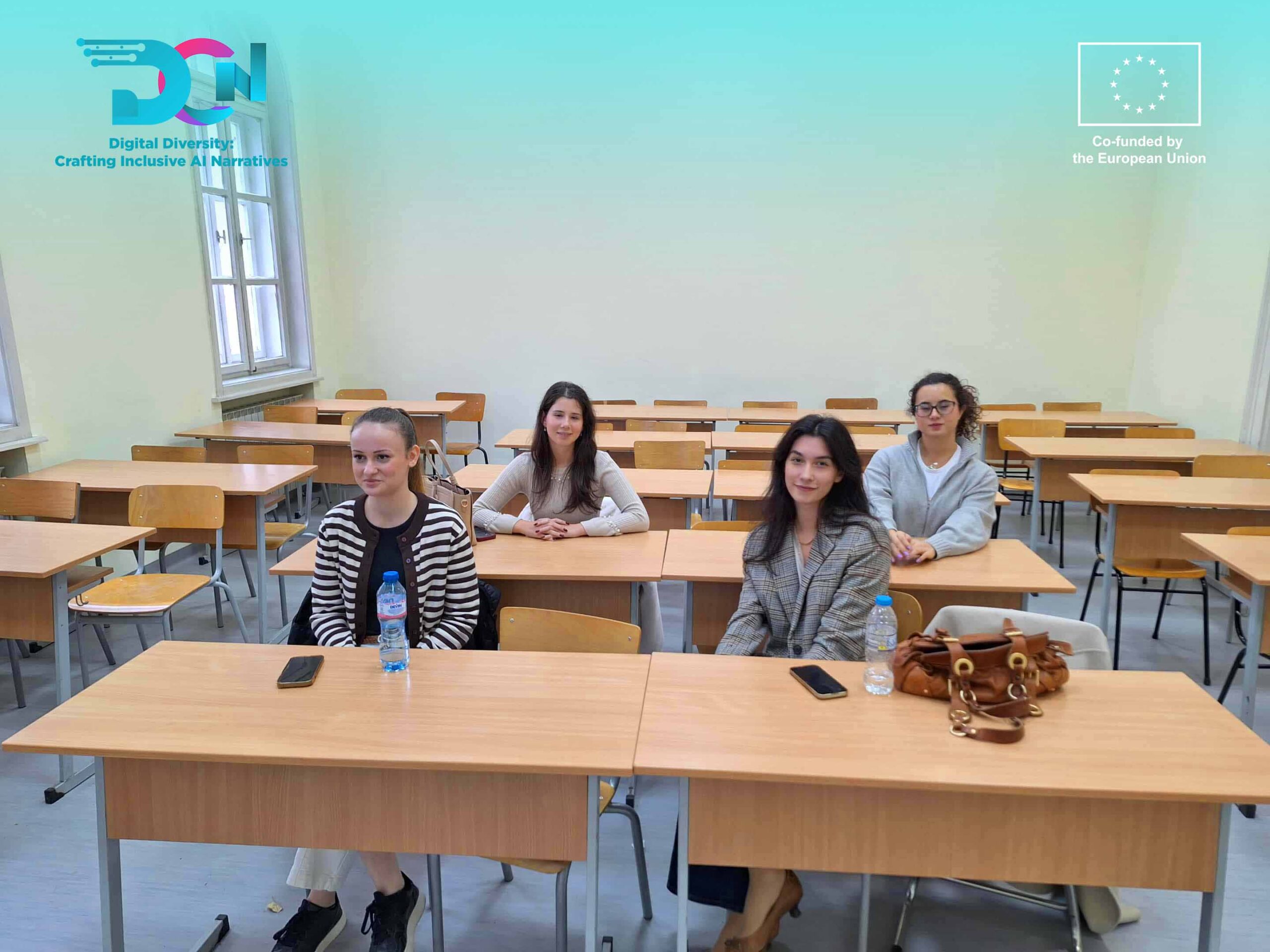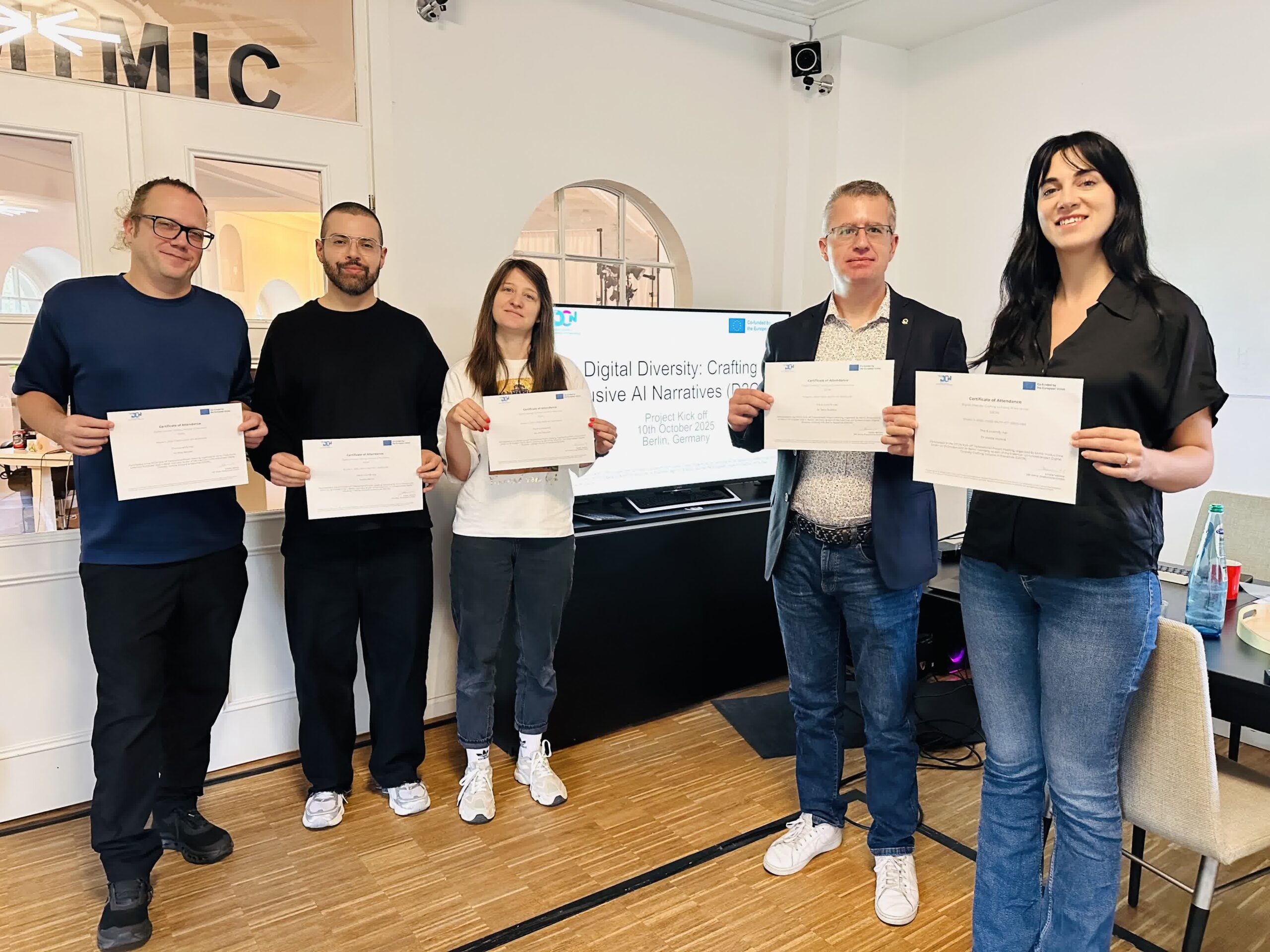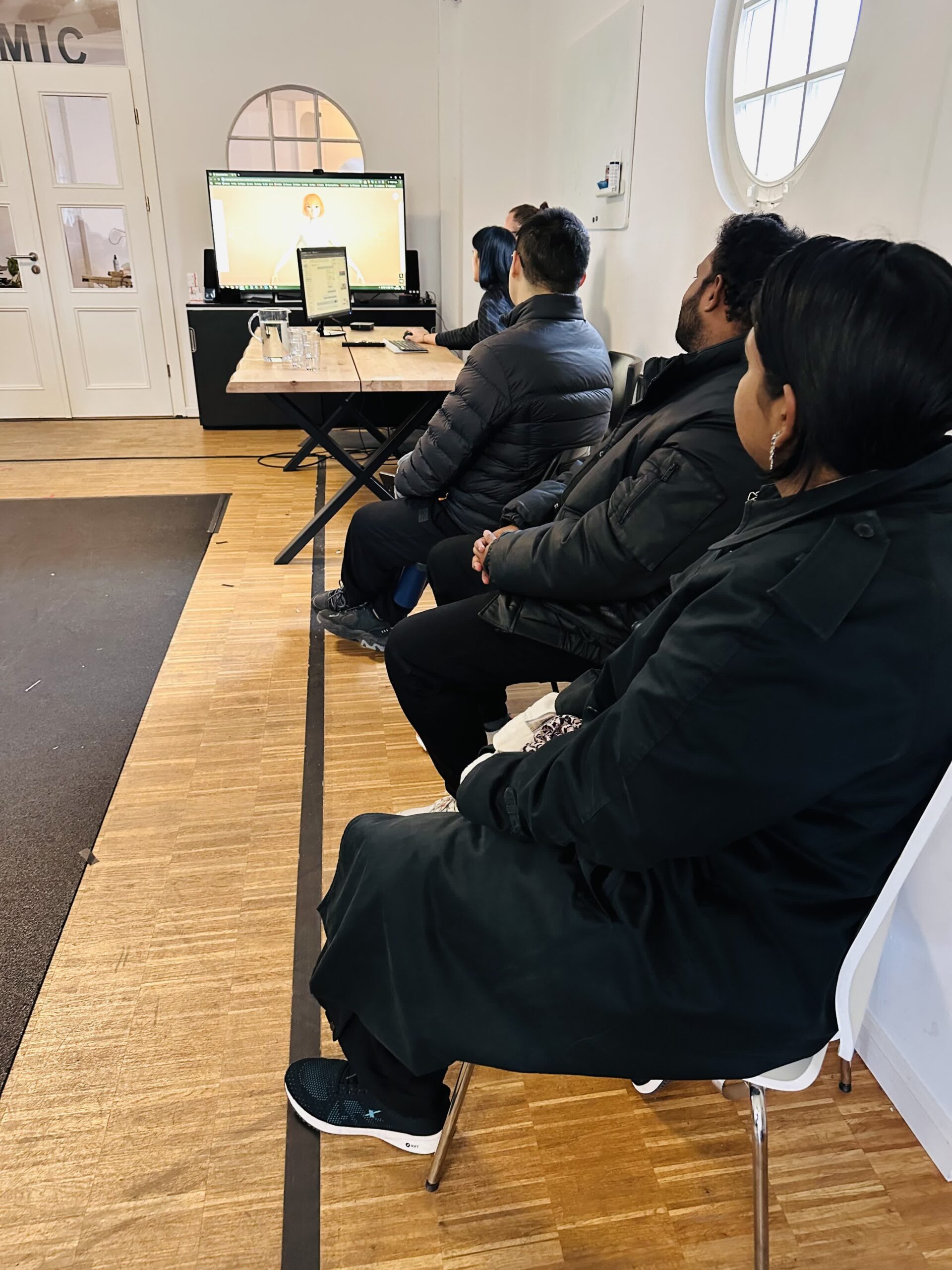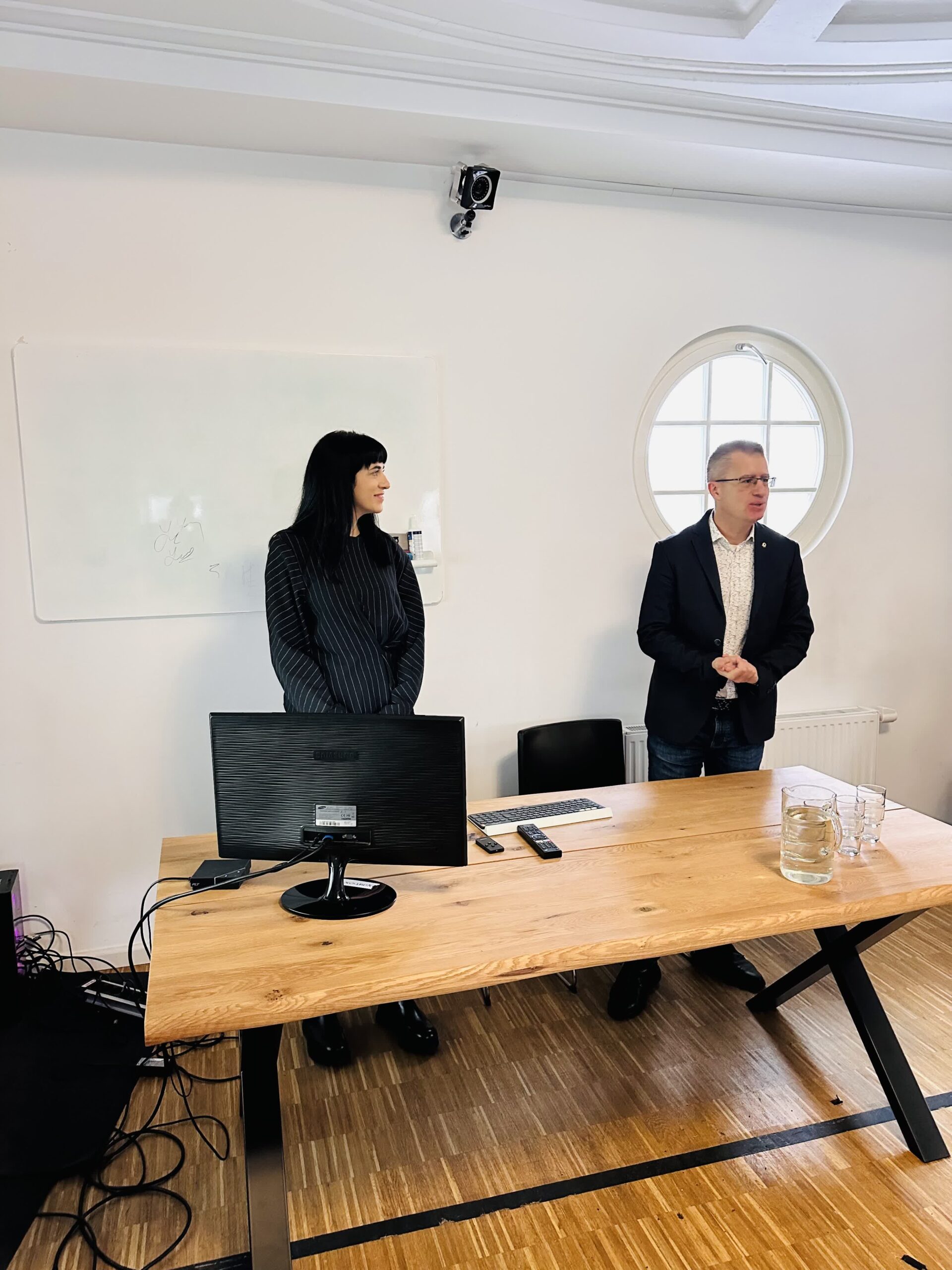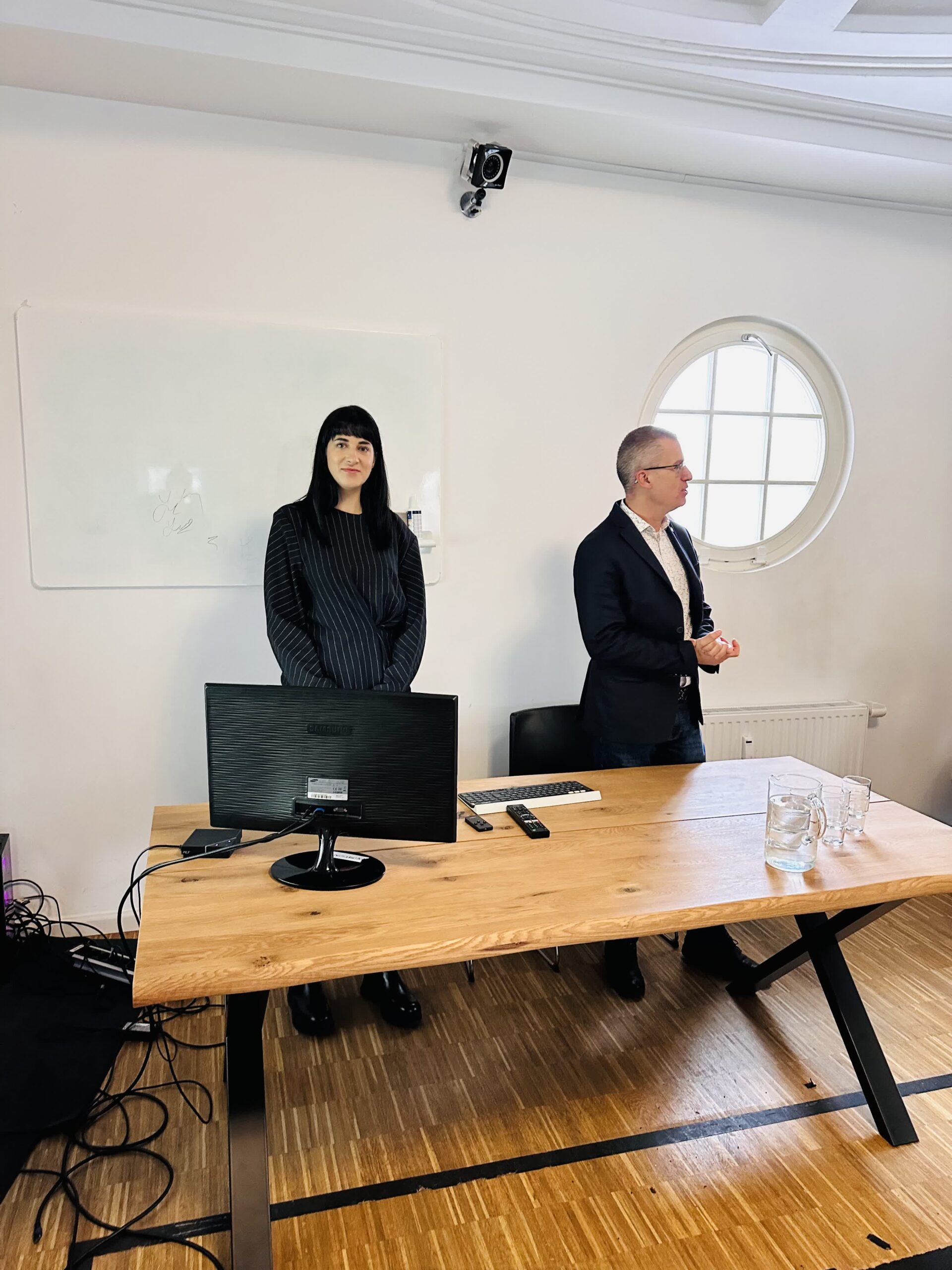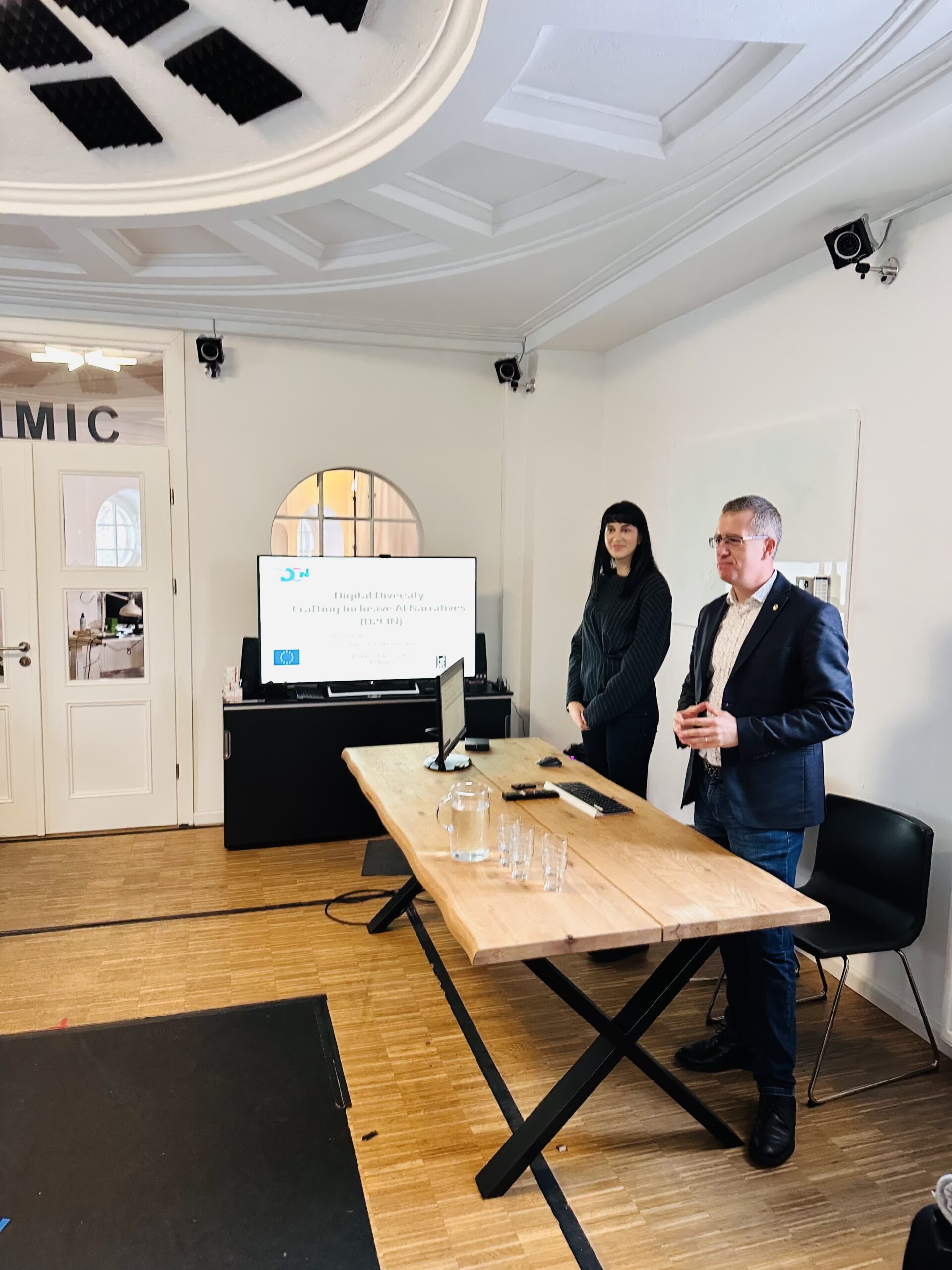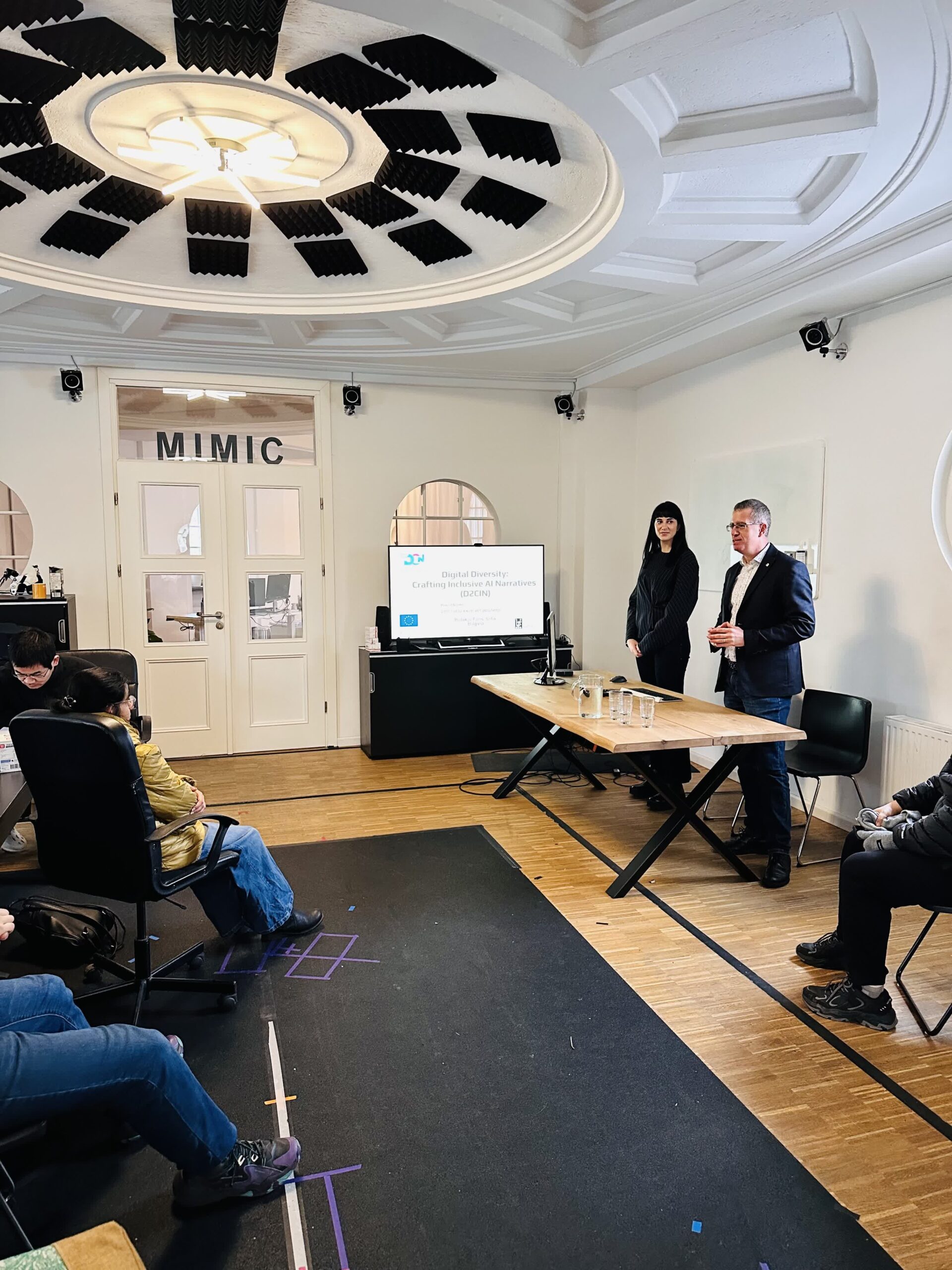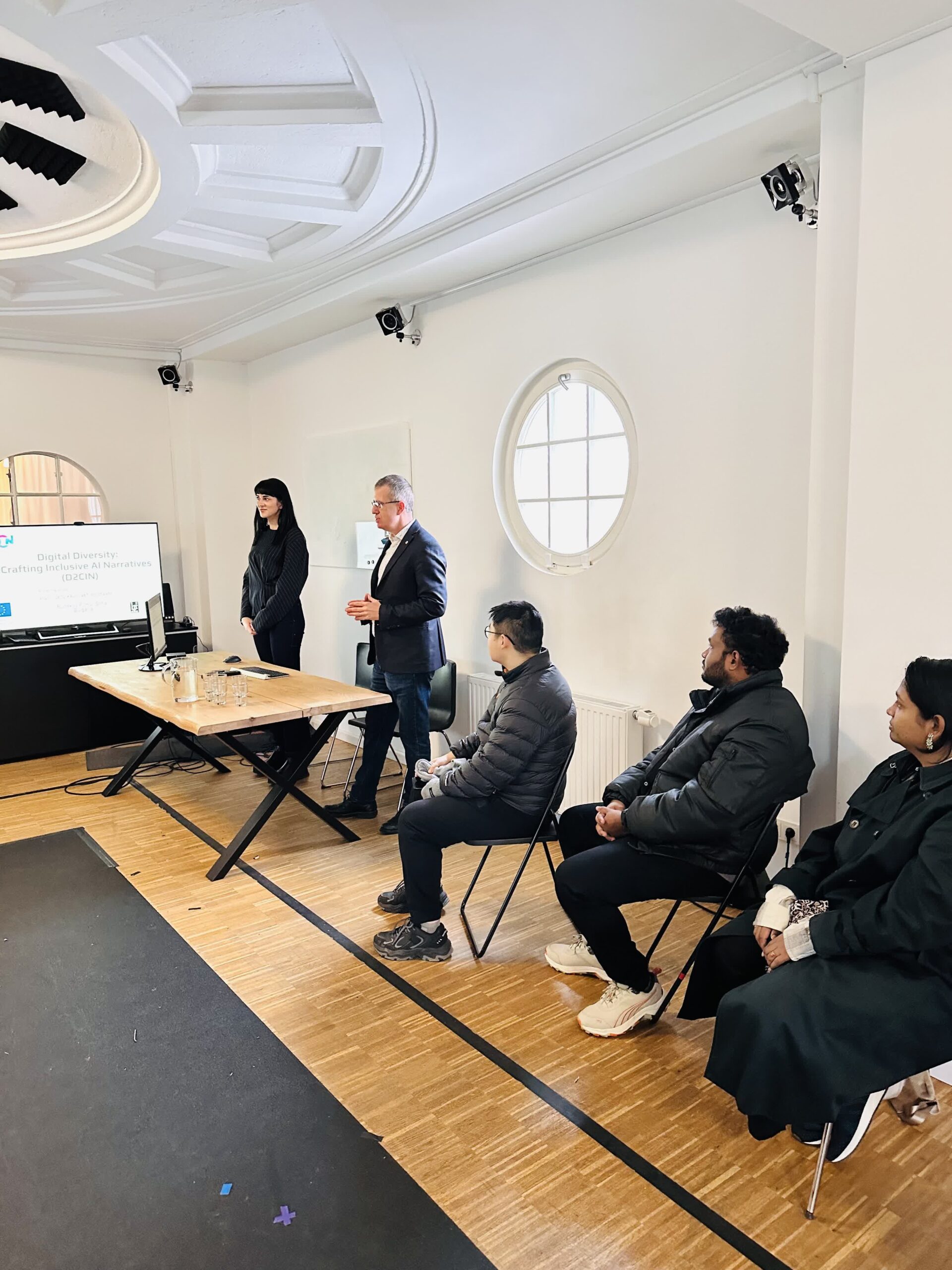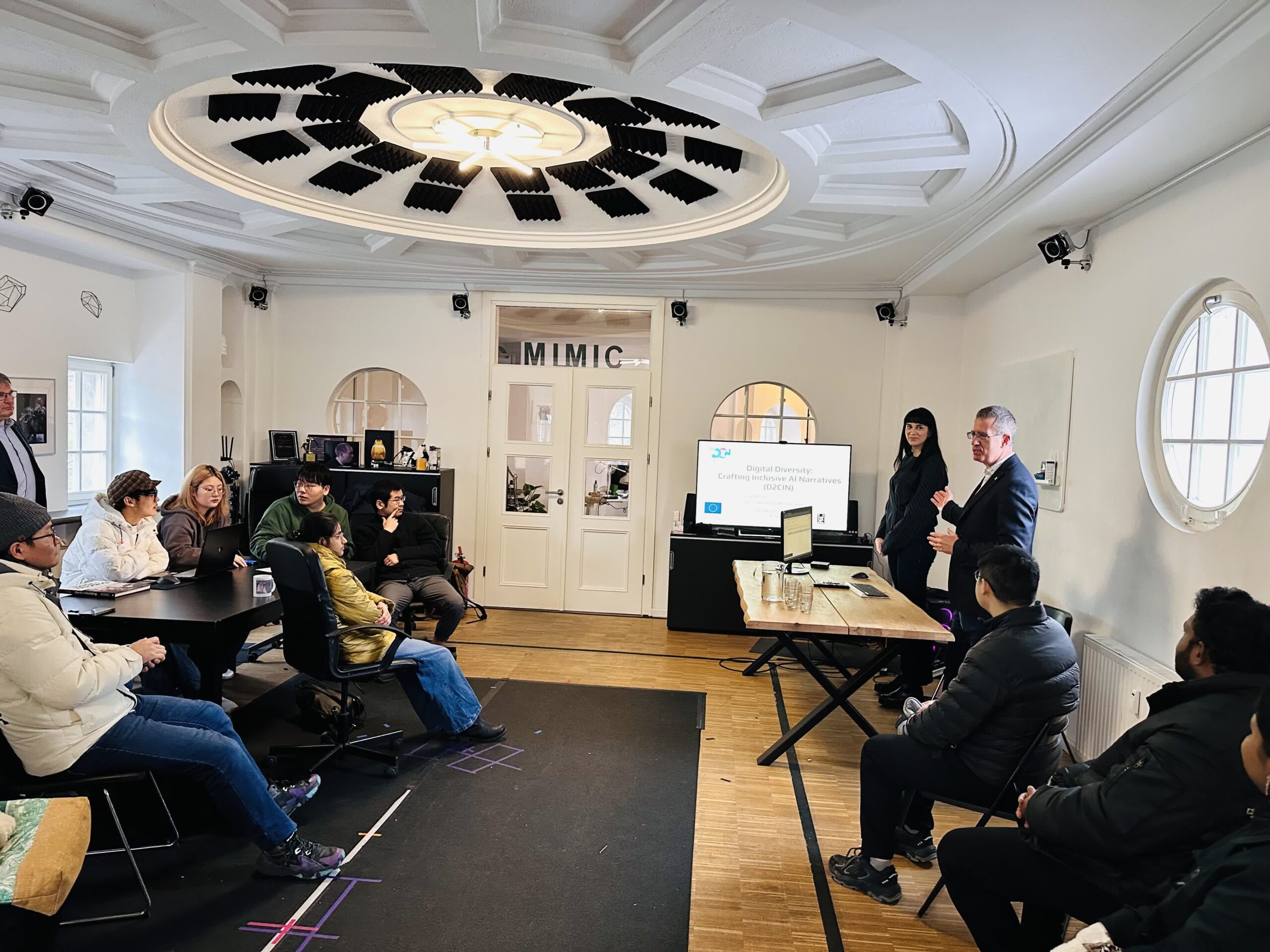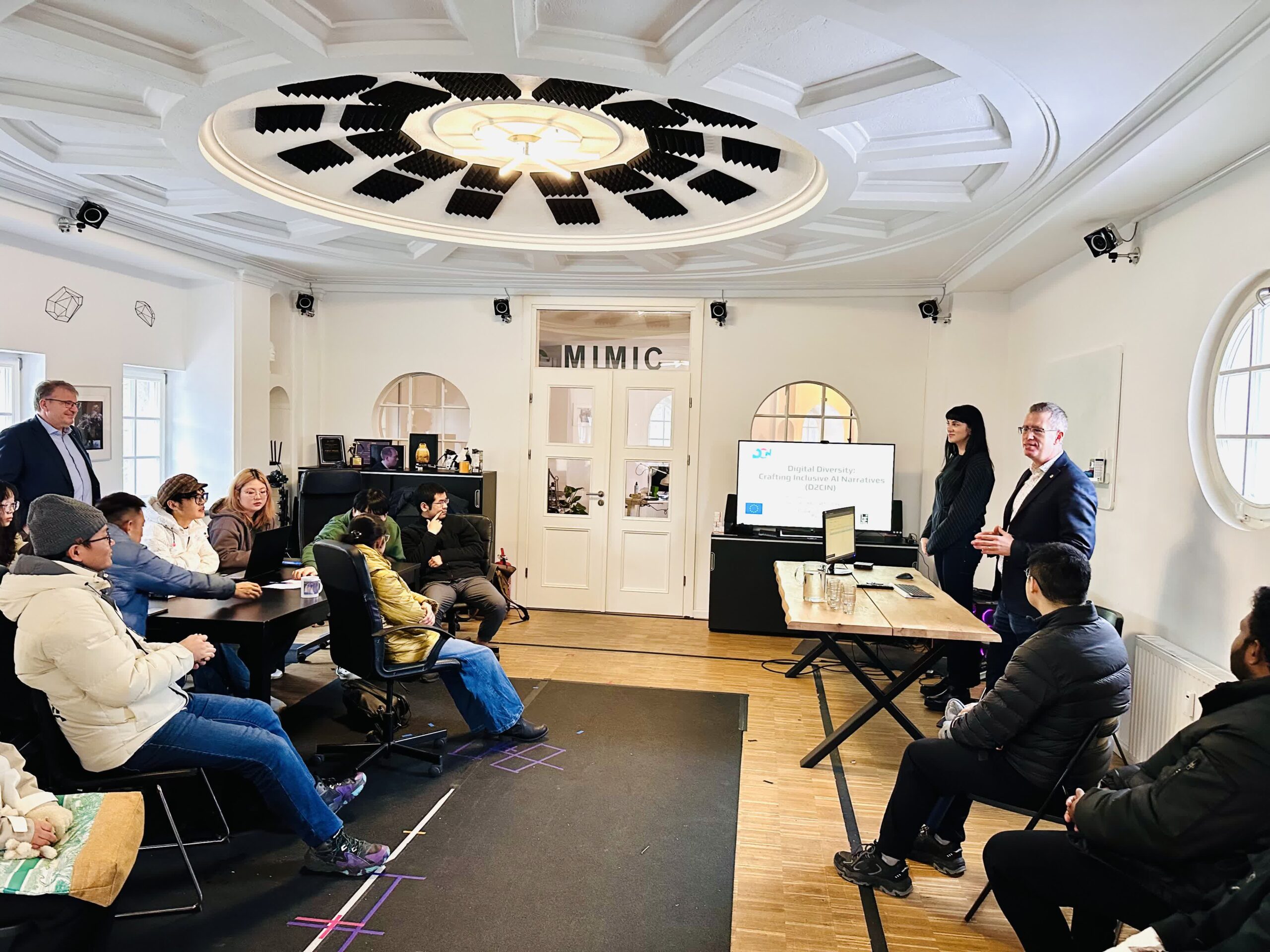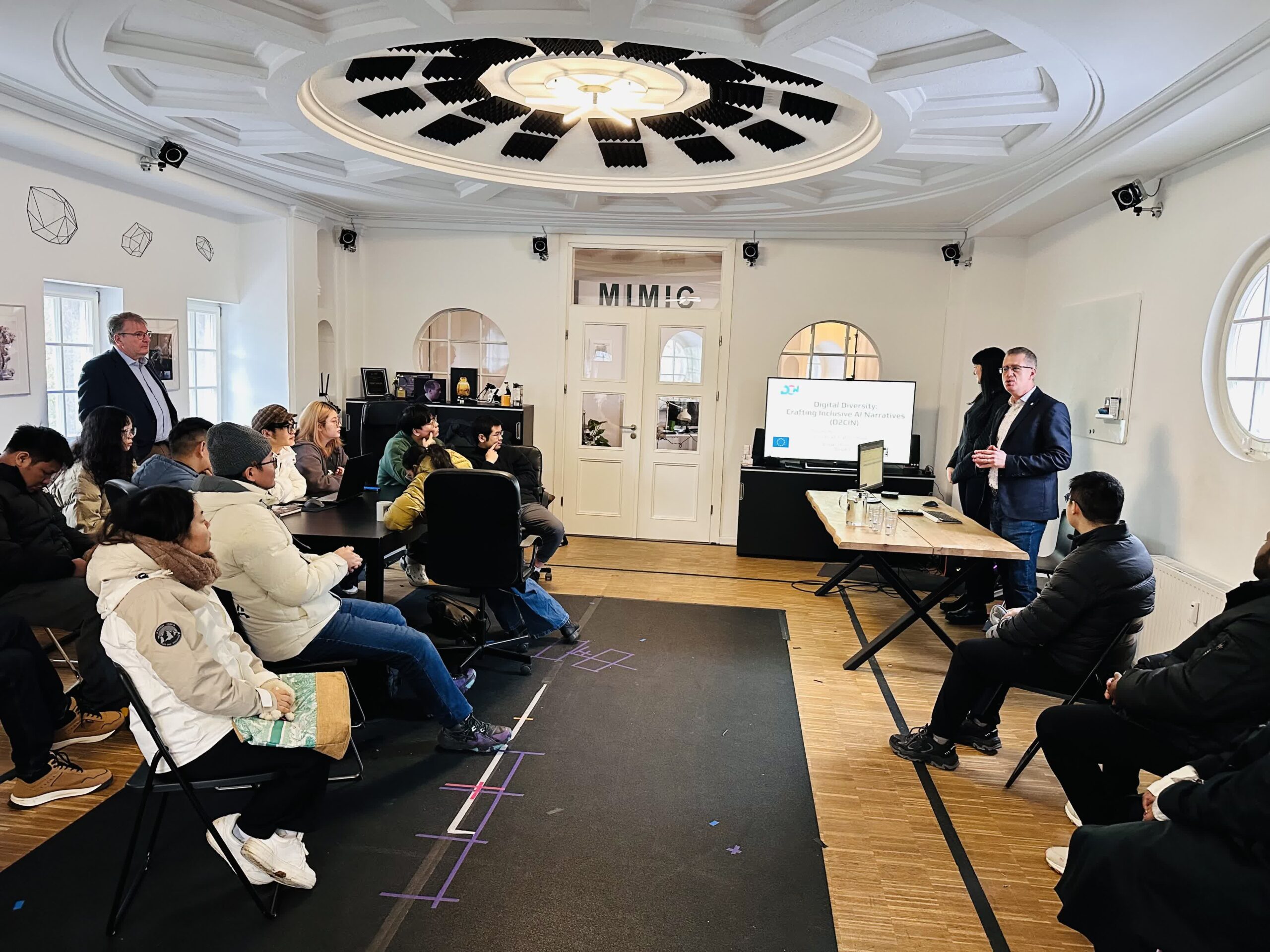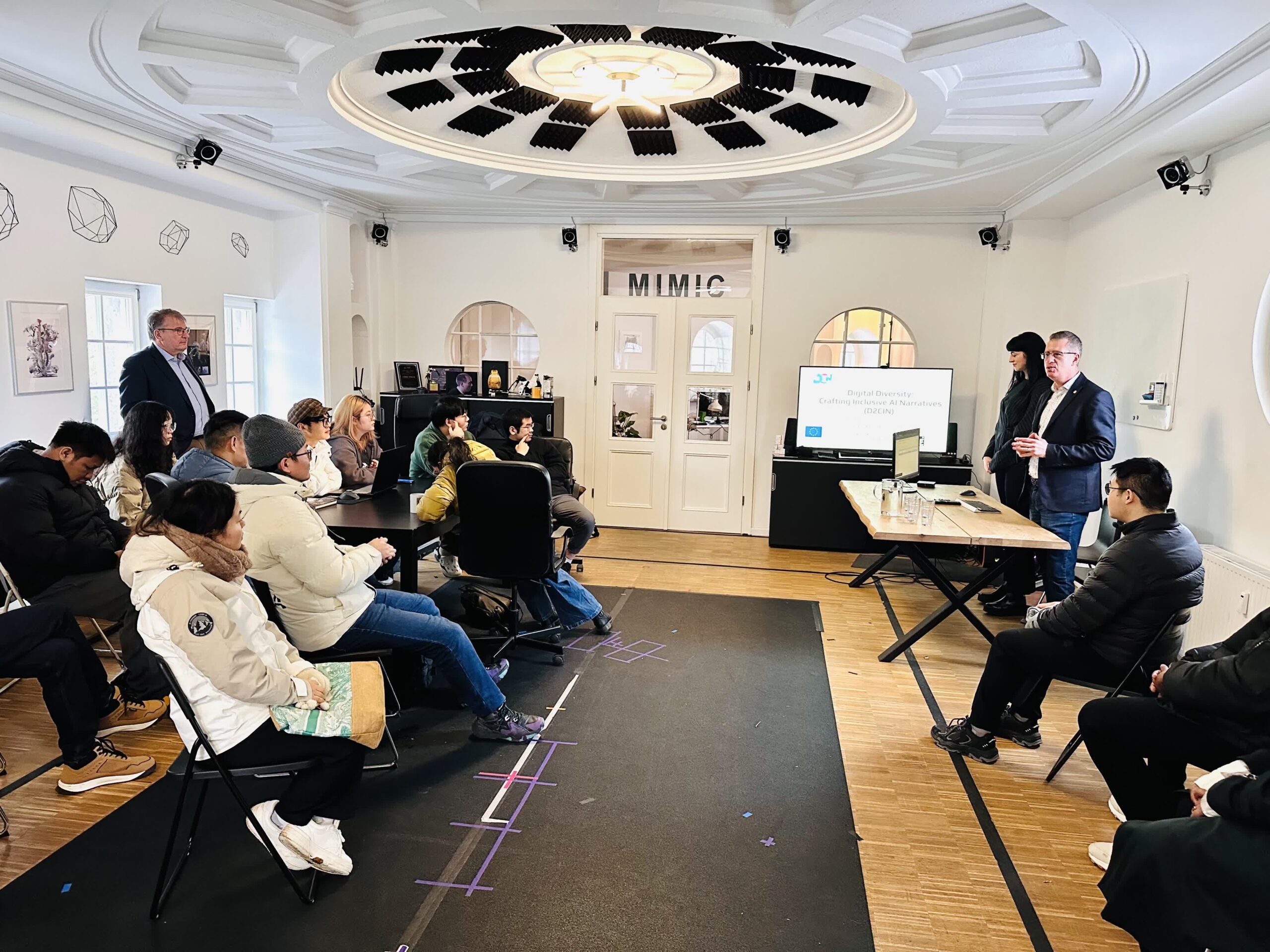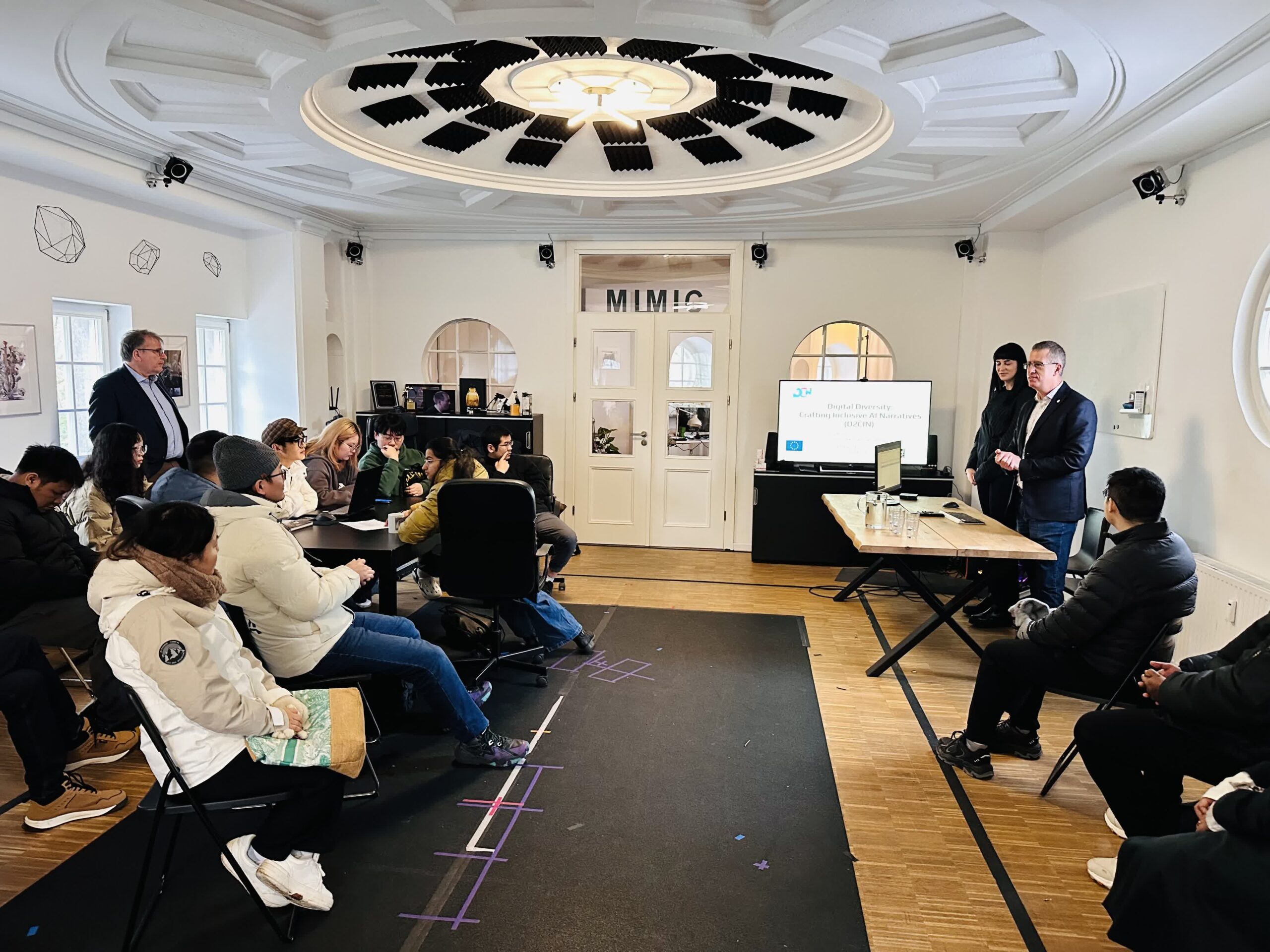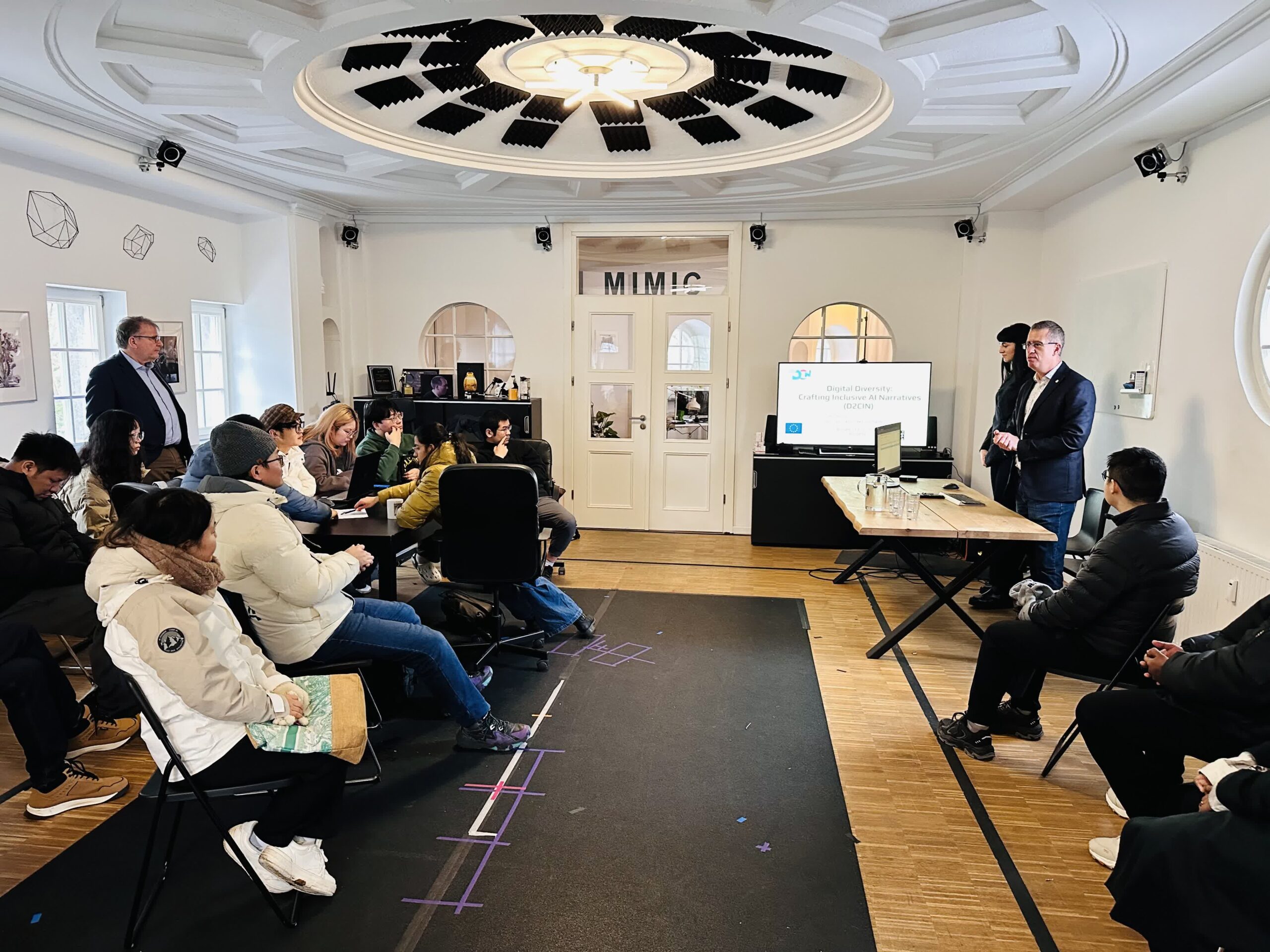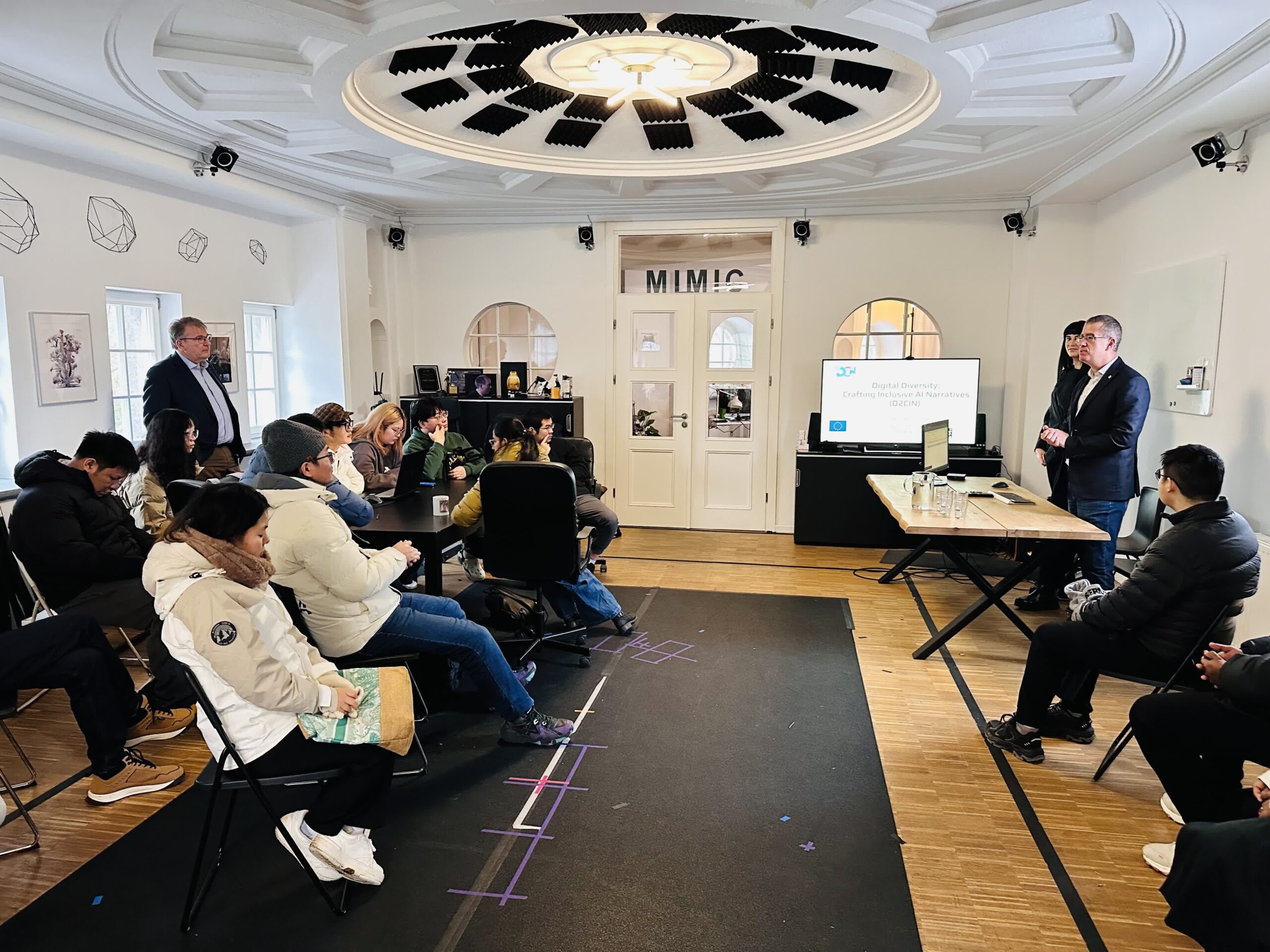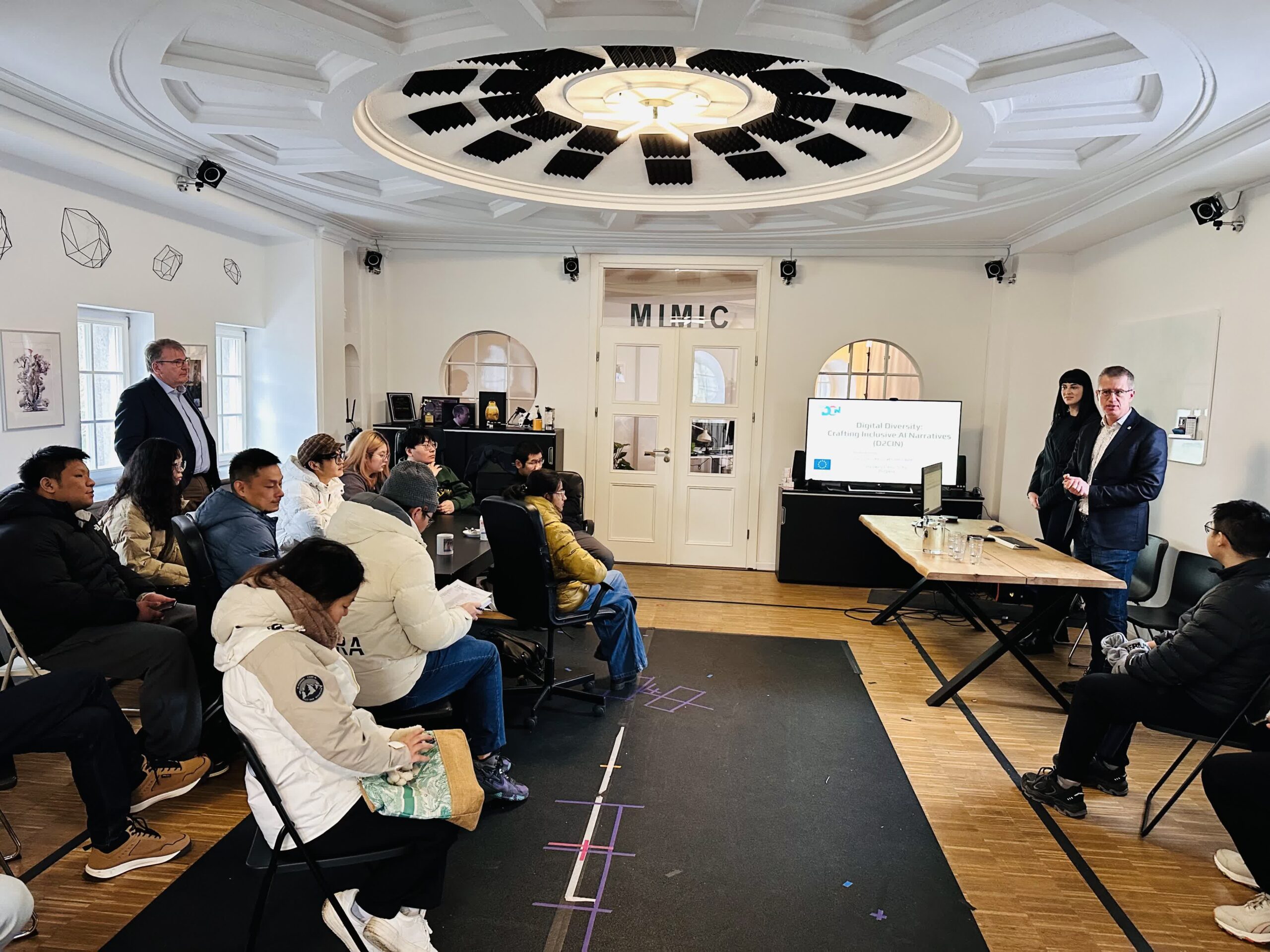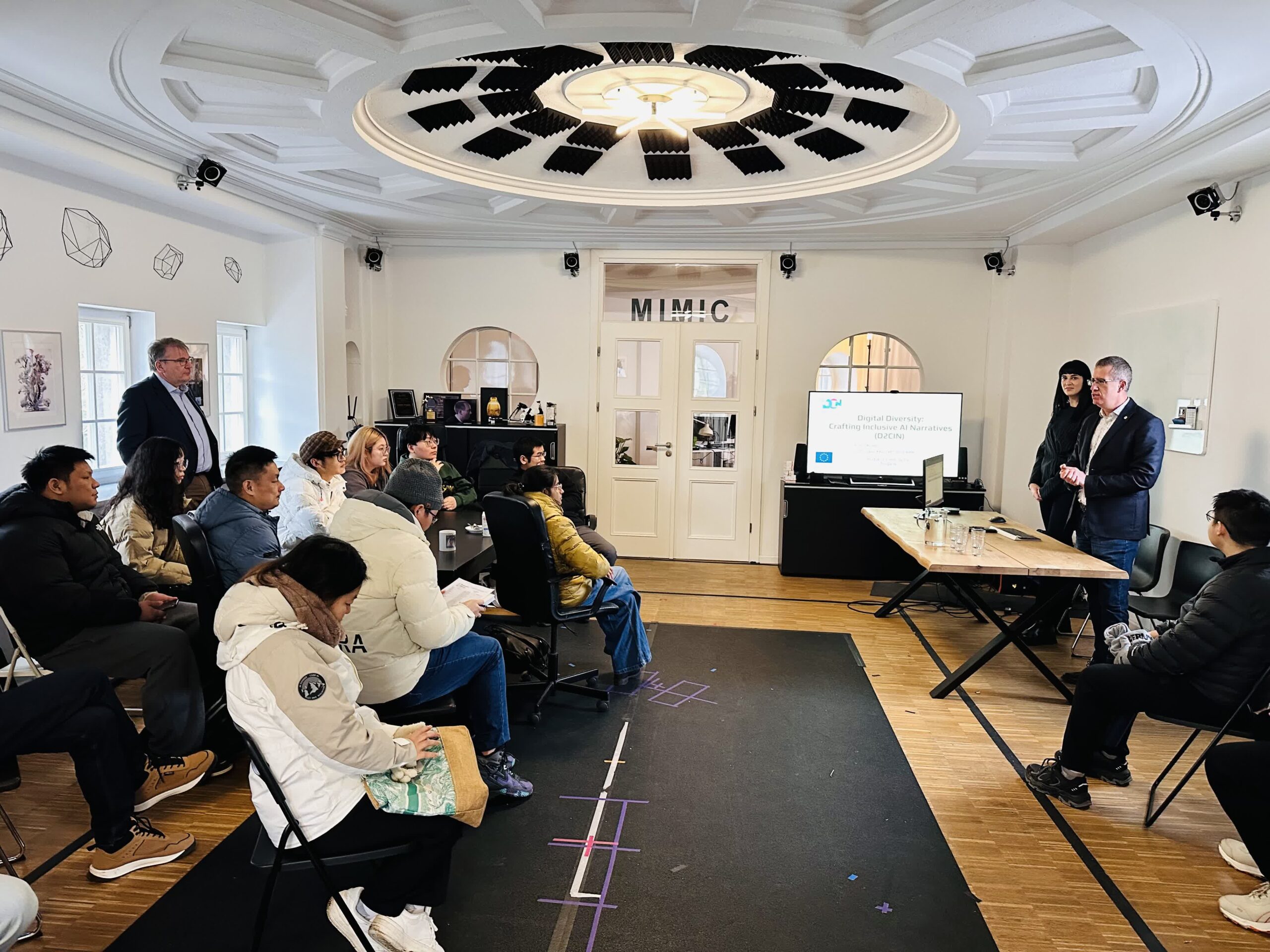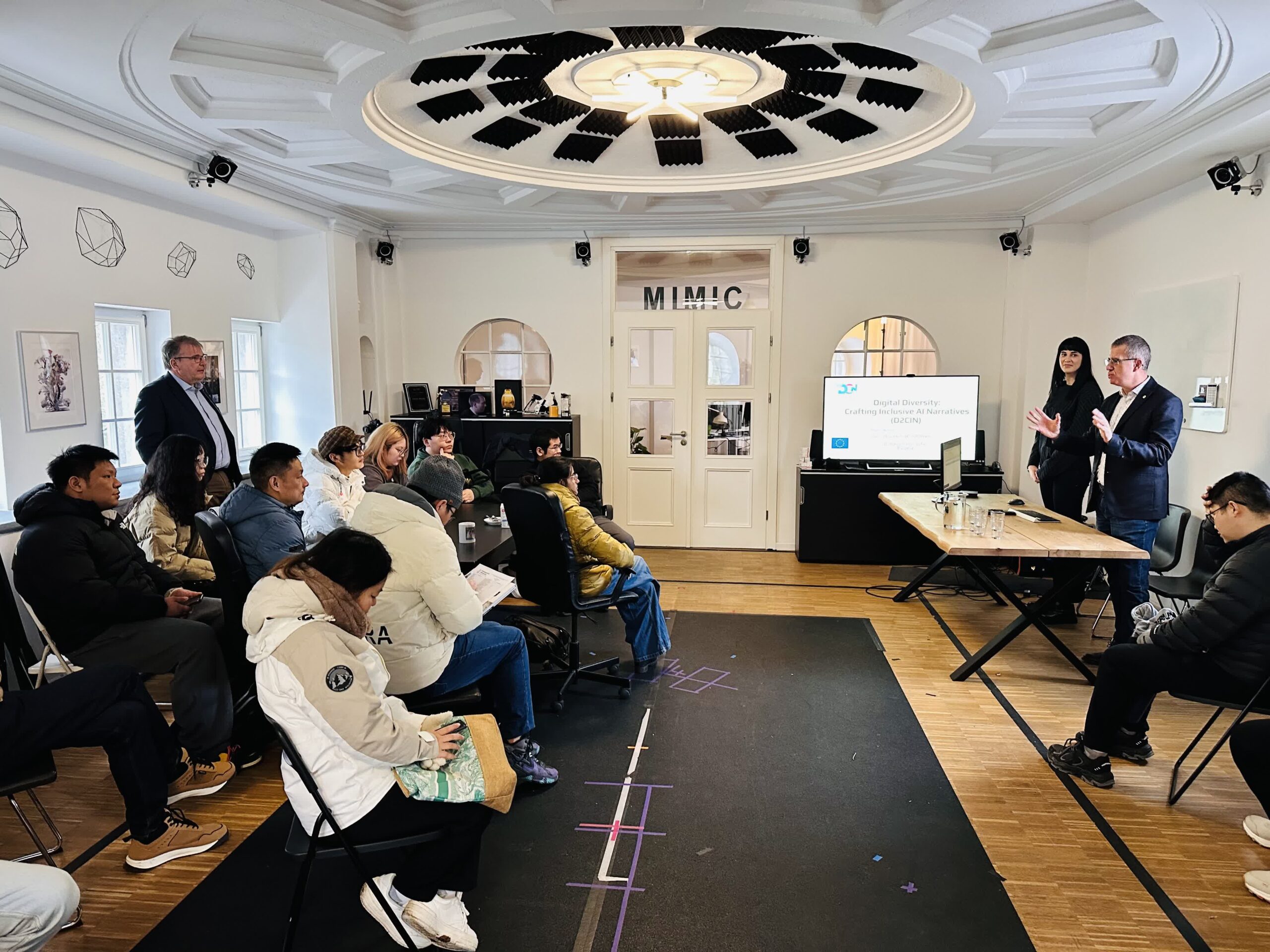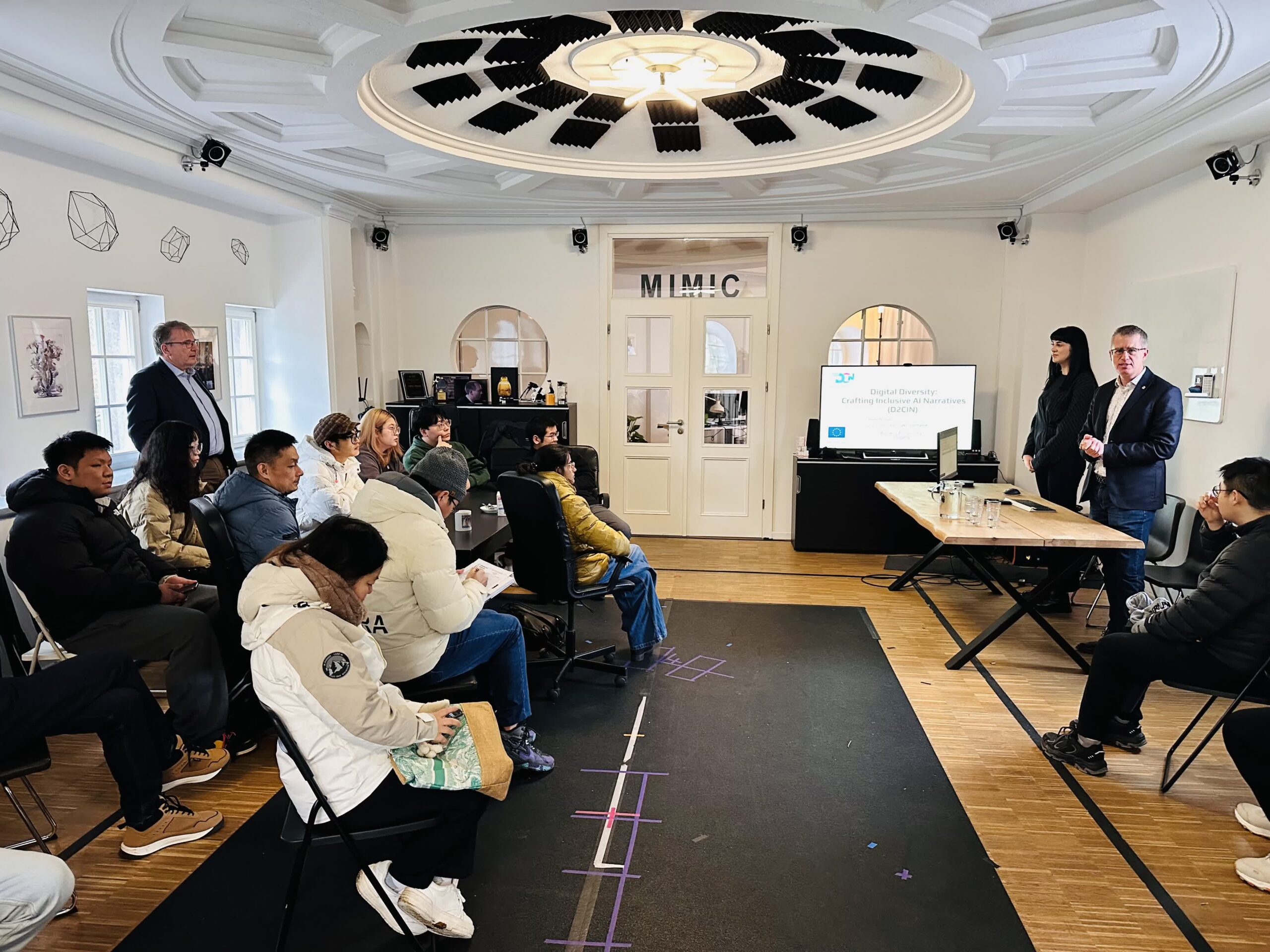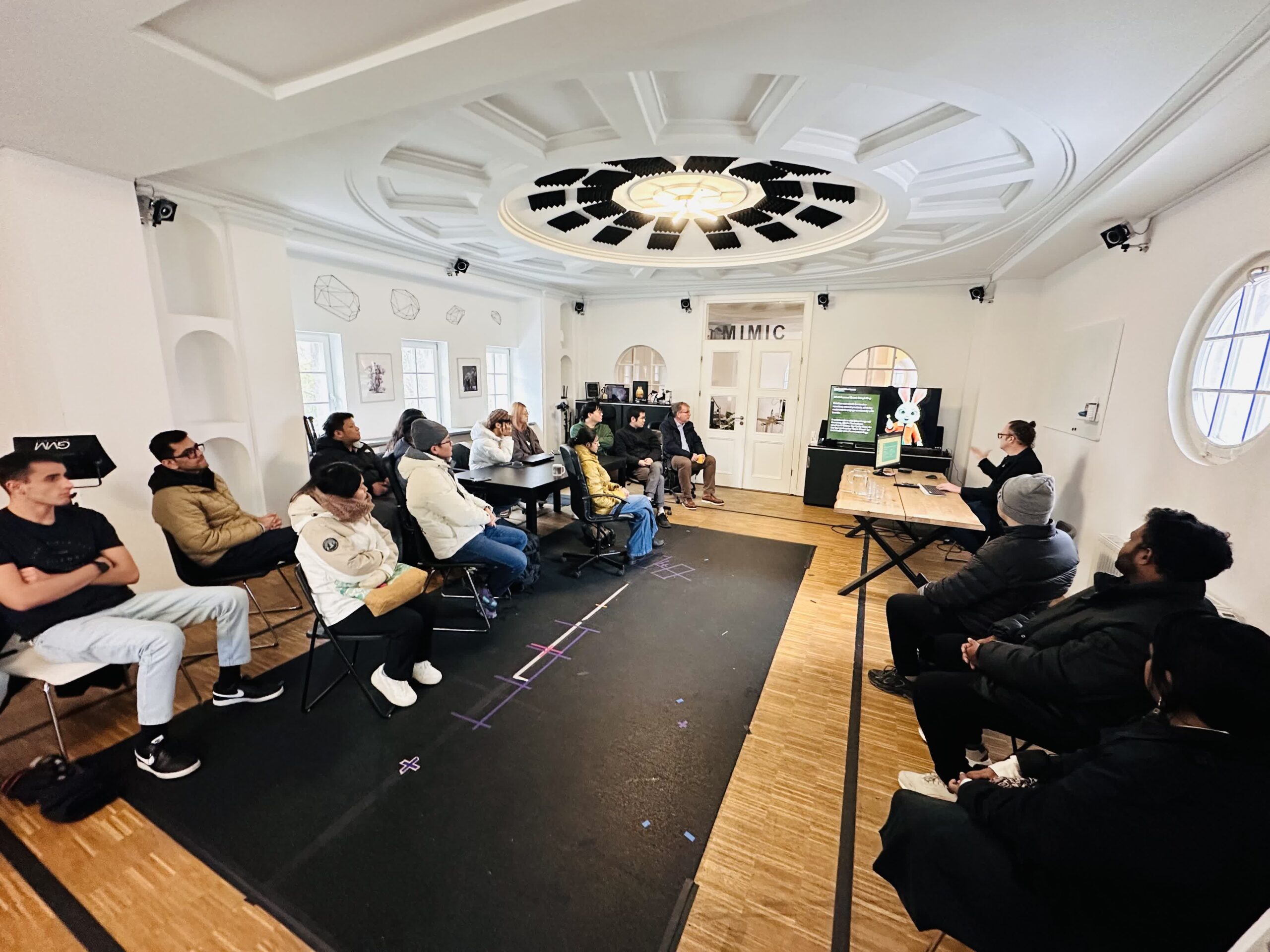

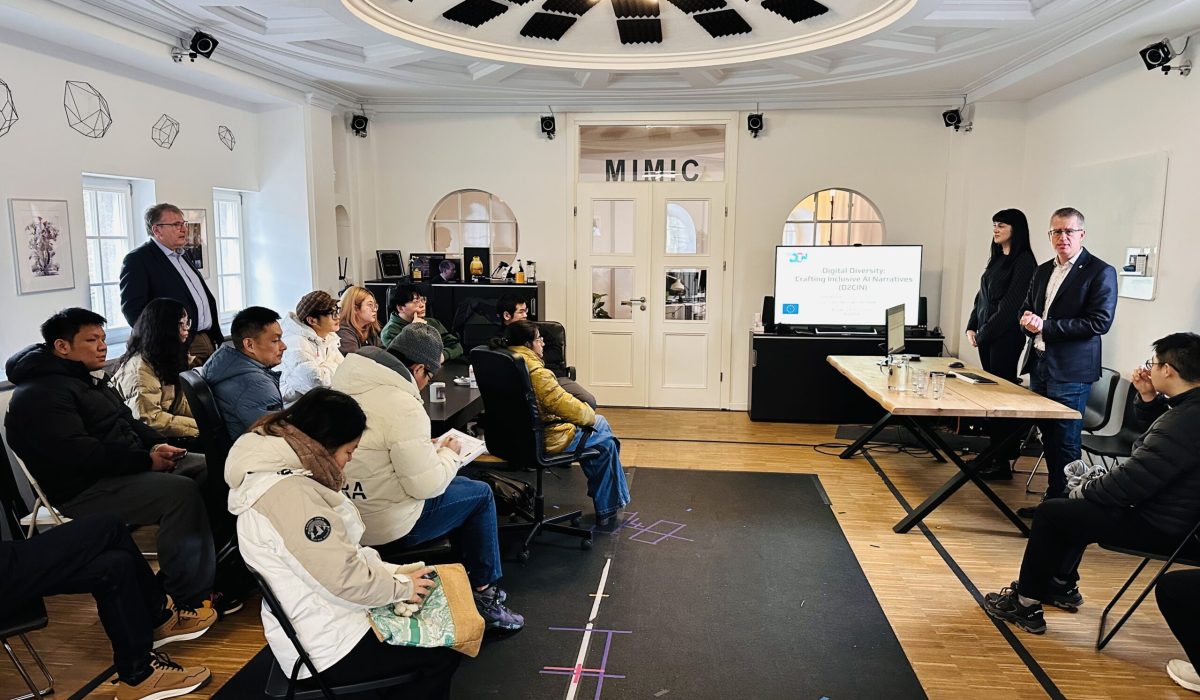
The D2CIN project (Digital Design & Creative Innovation Network), Project No. 2025-1-DE02-KA210-VET-000354956, was presented to a wide academic audience during the event “How to Create Conversational Avatars,” held as part of the XU Exponential University EXPO Week in Berlin. More than 30 students and academics attended the session, demonstrating strong interest in the intersection of artificial intelligence, creative technologies, and digital design—core areas addressed by the project.
Hosted by Mimic Productions, one of Berlin’s leading creative technology studios, the event offered participants an in-depth look at how AI avatars are created, from motion capture and 3D scanning to design workflows and conversational AI integration. The session showed how creative and technological disciplines merge to create digital humans used in film, gaming, virtual influencers, and immersive experiences.
Introducing D2CIN and Its Objectives
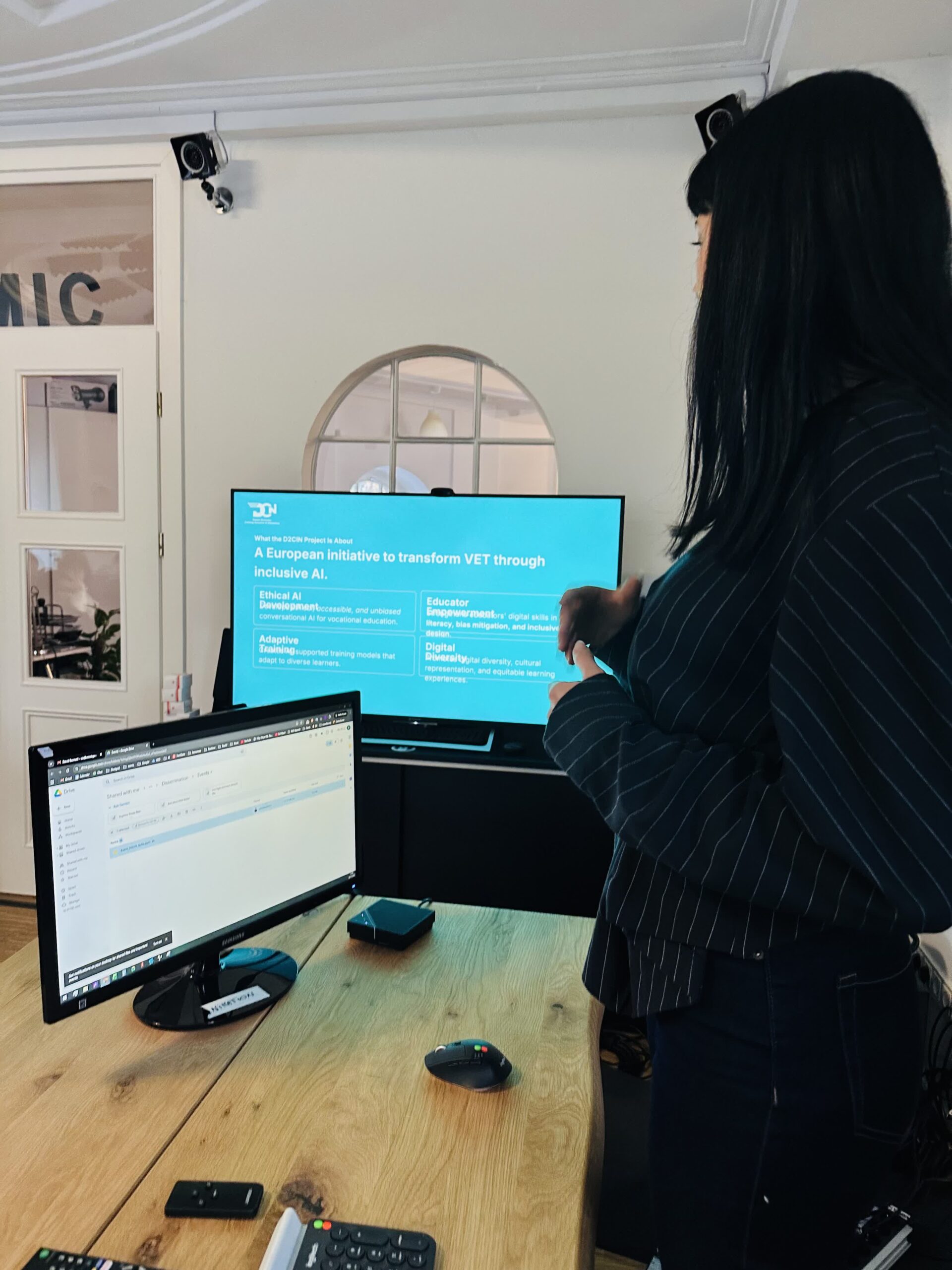
During the visit, representatives of XU University introduced the D2CIN project and its first activities. The project aims to enhance digital creativity competences among VET learners by developing innovative learning materials, strengthening collaboration between industry and education, and building a Digital Creative Innovation Network across Europe.
Activity 1, which focuses on identifying emerging digital design and AI-related skills, was highlighted in detail. Students learned how these competencies will be integrated into learning pathways that help prepare young professionals for the rapidly evolving digital and creative industries.
In addition to presenting the project activities, students were informed about European Union values, opportunities within the Erasmus+ programme, and the broader role of EU-funded initiatives in supporting innovation, skills development, and cross-border cooperation. This provided participants with a clearer understanding of how European funding supports their educational and professional development.
Industry Insights from Mimic Productions
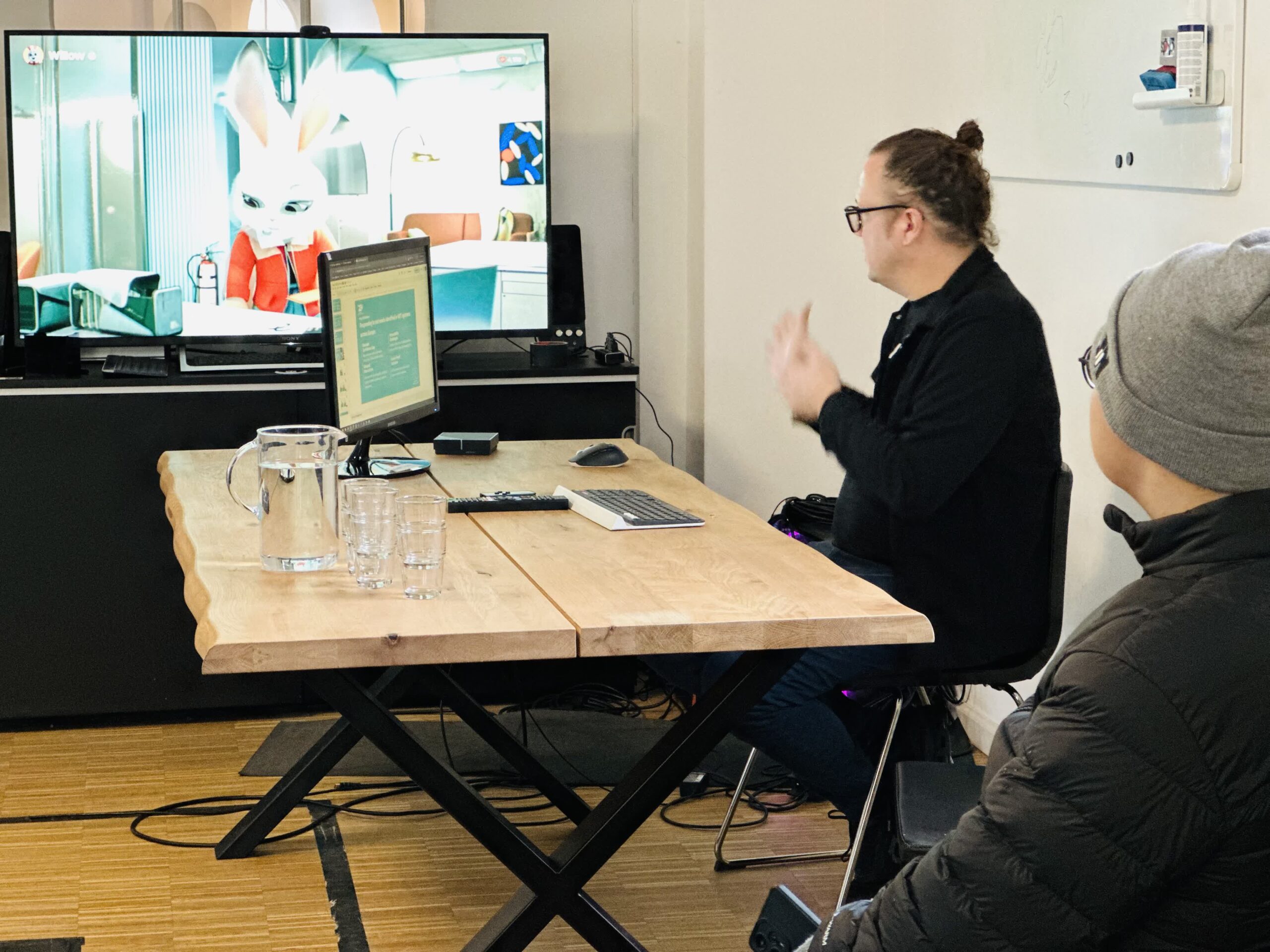
A major component of the event was the presentation delivered by David Bennett, CEO of Mimic Productions. He explained the technical and creative processes behind the development of conversational AI avatars, including:
-
Motion capture and volumetric 3D scanning
-
Avatar modelling, rigging, and animation
-
Integration of speech and AI-driven interaction
-
Applications across entertainment, marketing, education, and virtual worlds
This real-world perspective complemented the aims of D2CIN by showing students the practical relevance of digital creativity skills in professional contexts.
Impact on Learners and the Academic Community
The visit offered significant value to attending students and academics by linking project results with industry practice. Participants gained:
-
A clearer understanding of current and emerging digital creative competencies
-
Insights into how AI is reshaping creative professions
-
Exposure to professional workflows and tools
-
Knowledge of EU funding mechanisms and mobility opportunities
By combining theoretical knowledge with hands-on experience, the event reinforced the importance of cross-sector collaboration for developing future-ready learning environments.
Strengthening the Digital Creative Innovation Network
The collaboration between XU University, Mimic Productions, and the D2CIN partnership illustrates the project’s commitment to strengthening networks between education providers, creative technology companies, and learners. Such interactions are essential for ensuring that modern VET and higher education programmes remain aligned with industry innovation and labour market needs.
The D2CIN project will continue to build on this momentum through upcoming activities, learning opportunities, and cross-country cooperation.
For more updates, project progress, and upcoming events, stay connected through our blog and communication channels.
Funded by the European Union. Views and opinions expressed are however those of the author(s) only and do not necessarily reflect those of the European Union or the European Education and Culture Executive Agency (EACEA). Neither the European Union nor EACEA can be held responsible for them.
Project No: 2025-1-DE02-KA210-VET-000354956